
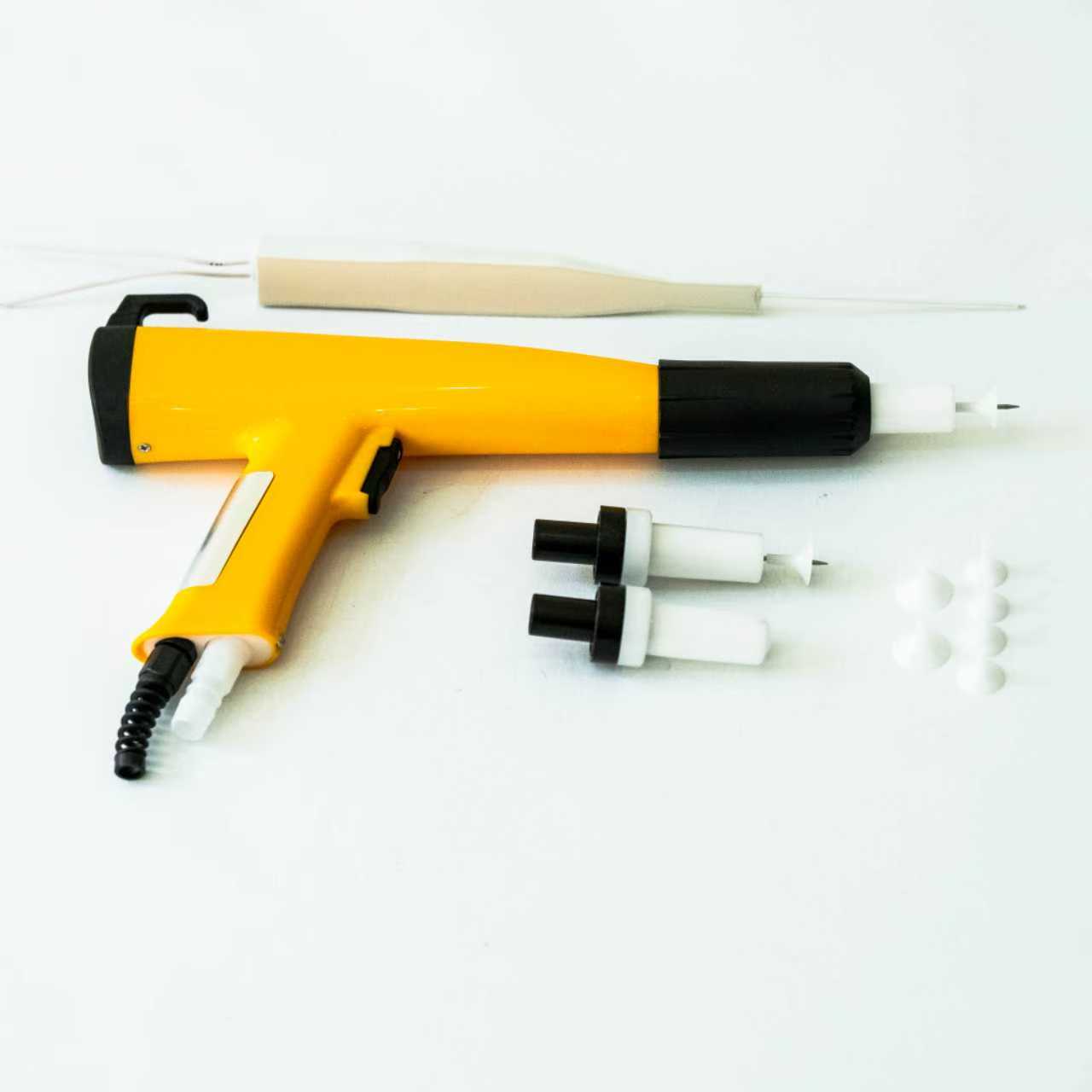
Different powder coating spray guns can produce noticeably different results, even when they use the same powder and coating settings. The practical differences show up in transfer efficiency, film consistency, edge coverage, operator control, and the amount of adjustment required. Understanding how a powder coating spray gun performs helps production teams connect equipment choice with part geometry, throughput, and finish requirements rather than relying on a single headline specification.

Performance is not determined by the gun alone. Its electrostatic output, powder delivery, nozzle configuration, operator technique, and relationship to the workpiece all matter. A powder coating spray gun suited to broad, flat panels may not deliver the same control on recessed parts or narrow profiles. Comparing these factors gives buyers a more useful picture of expected results and helps identify what should be tested before a production change.
Core factors that shape spray gun performance
Electrostatic charging and transfer efficiency
An electrostatic powder coating spray gun charges powder so particles are attracted to a grounded workpiece. Charging consistency influences how much powder reaches the part and how evenly it deposits. A powder coating spray gun with stable, adjustable output can make it easier to balance attraction and deposition for different parts. Actual transfer efficiency still depends on grounding, booth airflow, powder characteristics, and application distance, so equipment specifications alone cannot predict the result.
High voltage is not automatically better in every situation. Excessive output can contribute to back ionization or uneven buildup, especially in deep recesses and corners. A capable powder coating spray gun lets operators tune settings to part geometry and coating conditions instead of treating one setting as universal. When comparing systems, look at the range and repeatability of adjustment, then validate settings on representative parts using the actual powder and line conditions.
Powder flow and pattern control
The delivery system determines how steadily powder moves from the supply to the workpiece. Variations in feed, air pressure, hose condition, or powder fluidization can create a changing pattern even with a well-designed powder coating spray gun. Consistent flow supports predictable film build and reduces the need for repeated touch-up. For a fair comparison, assess pattern stability over a normal production run rather than judging a brief demonstration.
Nozzle shape and size affect the width and concentration of the spray pattern. A broad pattern can cover open surfaces efficiently, while a narrower pattern may offer more control around small features. The right powder coating spray gun should make it practical to select a pattern for the part instead of forcing operators to compensate with awkward passes. Evaluate coverage at normal gun distance and speed, including transitions between flat areas and edges.
Performance differences by part and production task
Open surfaces compared with complex geometry
Large, flat components reward stable, even coverage and an application pattern that spans useful area. For these jobs, a powder coating spray gun that maintains consistent flow and straightforward settings can help operators sustain repeatable passes. Excessive precision is less important than uniform film build across the panel. Compare edge deposition and overlap between passes as well as the appearance at the center, since different patterns can leave distinct coverage profiles.
Complex parts place greater demands on access and electrostatic control. Recesses, corners, and Faraday cage areas can resist powder entry or collect excess material. A powder coating spray gun with adjustable output and suitable nozzle options may help operators approach these areas more deliberately, but geometry remains a limiting factor. Test actual production parts, rotate or reposition them where feasible, and inspect hidden surfaces instead of judging only the visible face.
Manual flexibility and automated repeatability
Manual application offers flexibility when product mix changes frequently or parts vary in size. Here, a powder coating spray gun is closely tied to operator skill, comfort, and the clarity of controls. A responsive trigger and accessible adjustments can make small corrections easier, while training supports consistent distance and motion. Performance comparisons should include how quickly operators can achieve an acceptable result on representative parts, not just the maximum output setting.
Automated lines place more weight on repeatable settings, mounting, and integration with conveyor speed and part presentation. A powder coating spray gun used in automation must deliver a stable pattern over repeated cycles and remain accessible for cleaning and maintenance. The best fit depends on line layout and product variation, not simply whether the gun is manual or automatic. Compare the repeatability of measured film results and the time required to restore settings after routine service.
Evaluating equipment for dependable results
Use production-based comparison criteria
A controlled trial is more informative than comparing isolated specifications. Use the same substrate preparation, powder batch, grounding checks, booth conditions, and target film thickness for each powder coating spray gun. Record settings and inspect multiple locations on each part, including edges and recesses. This approach helps separate equipment effects from process variation and reveals whether a performance difference is meaningful for the actual application.
Include material use, touch-up, changeover, and cleaning in the evaluation. A powder coating spray gun that produces a smooth pattern but requires frequent intervention may not suit a high-mix workflow. Conversely, a system with more adjustments may be valuable when jobs vary substantially. Compare the total work needed to achieve an acceptable finish, and involve operators who will use and maintain the equipment in the trial.
Match controls and maintenance to the process
Controls should be understandable enough for operators to reproduce approved settings across shifts. Clear adjustment ranges and recorded recipes can reduce avoidable variation from one powder coating spray gun setup to another. Confirm which settings can be locked or documented, and define how operators respond when powder, part geometry, or environmental conditions change. This is especially useful where several people share equipment or where production runs alternate between different products.
Maintenance also influences performance over time. Worn nozzles, contaminated components, damaged cables, or inconsistent grounding can undermine a powder coating spray gun that performed well during initial trials. Check access to routine inspection points and establish cleaning practices that fit the production schedule. For electrostatic systems, the high-voltage module is one element of the charging arrangement; its suitability should be evaluated alongside the complete gun, controls, and application process.
FAQ
Which performance difference matters most for flat panels?
For flat panels, prioritize consistent pattern width, stable powder delivery, and uniform film across the center and edges. A powder coating spray gun should be assessed at realistic line speed and application distance. Confirm results through coating inspection rather than assuming a broader pattern will automatically improve coverage.
Can one gun work for both simple and complex parts?
Often, but the achievable consistency depends on adjustment range, nozzle options, part access, and operator technique. A powder coating spray gun may handle mixed geometries when settings and application methods can be adapted. Trials on the most challenging parts show where a dedicated setup may be necessary.
How should teams compare guns before changing equipment?
Keep process conditions consistent, run representative parts, and compare film uniformity, transfer, touch-up, setup time, and maintenance needs. Include operators in the assessment and document settings. This allows each powder coating spray gun to be judged against production requirements rather than a short demonstration.