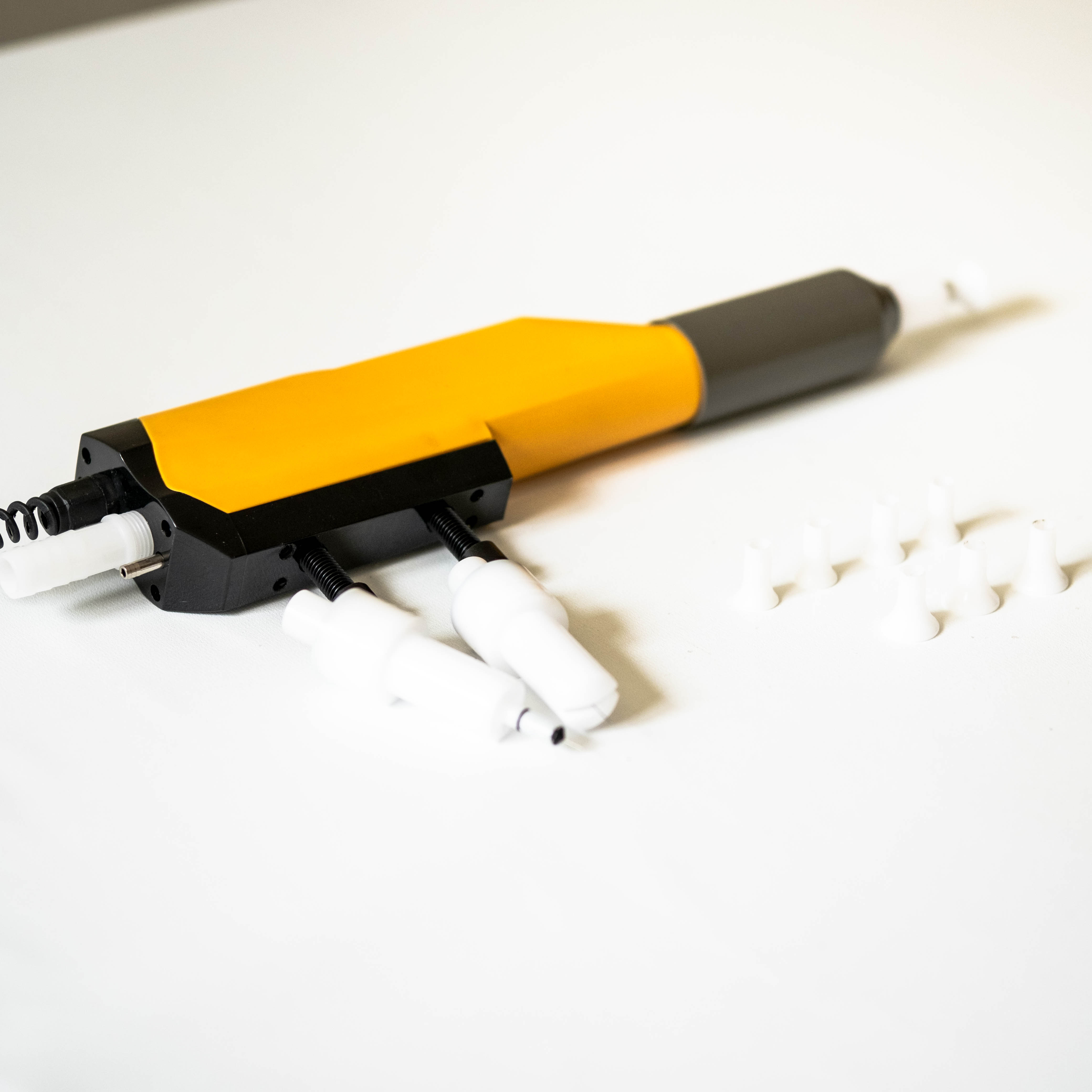
electrostatic spray gun
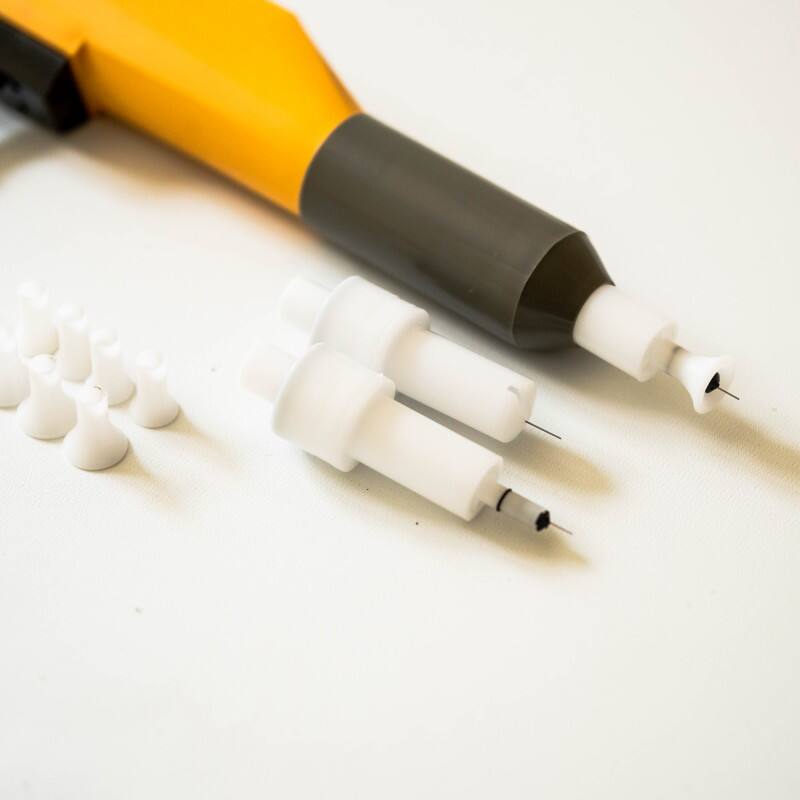
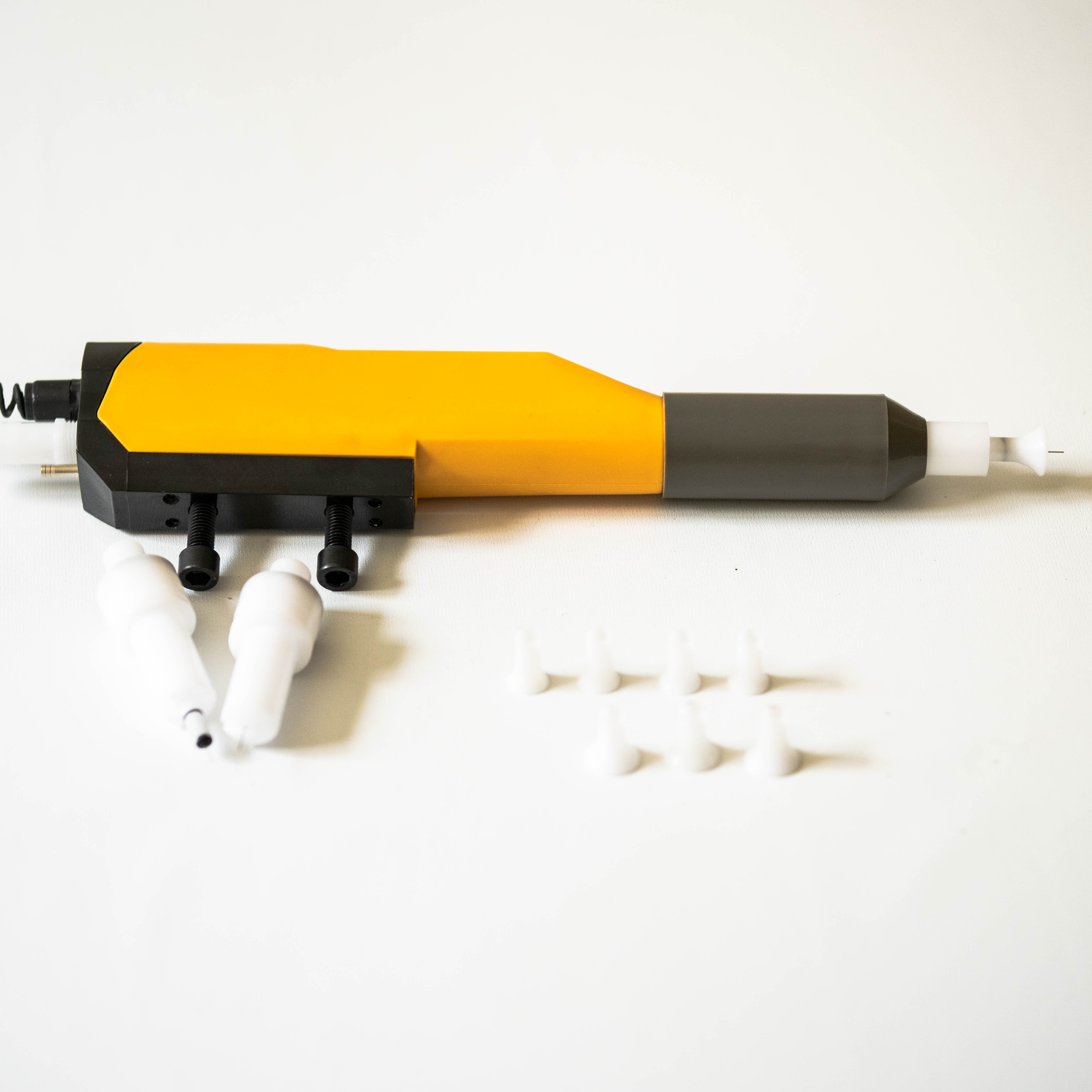
An electrostatic spray gun represents a sophisticated coating application tool that utilizes electrical charge principles to achieve superior finish quality and material efficiency. This innovative device charges paint particles as they exit the nozzle, creating an electromagnetic attraction between the coating material and the grounded workpiece. The fundamental operation involves generating a high-voltage electrostatic field that imparts a negative charge to atomized paint droplets, while the target surface maintains a positive ground connection. This opposing charge relationship ensures paint particles actively seek out and adhere to all exposed surfaces, including hard-to-reach areas and complex geometries. Modern electrostatic spray guns incorporate advanced atomization technology, precise flow control systems, and ergonomic designs that facilitate extended operation without operator fatigue. The equipment typically consists of a high-voltage power supply, a specially designed spray nozzle, fluid delivery components, and safety mechanisms that protect users during application processes. These tools excel in automotive refinishing, industrial manufacturing, furniture production, metal fabrication, and architectural applications where consistent, high-quality finishes are essential. The technology accommodates various coating materials including solvent-based paints, water-based formulations, primers, clear coats, and specialized industrial coatings. Different nozzle configurations allow operators to adjust spray patterns, droplet size, and application rates according to specific project requirements. The electrostatic spray gun delivers measurable performance improvements over conventional spray methods, particularly in transfer efficiency where up to ninety percent of discharged material reaches the intended surface. This dramatic reduction in overspray translates directly into material savings, reduced environmental impact, and cleaner working conditions. Professional operators appreciate the consistent film thickness, reduced orange peel effects, and enhanced edge coverage that electrostatic technology provides across diverse substrates and component shapes.