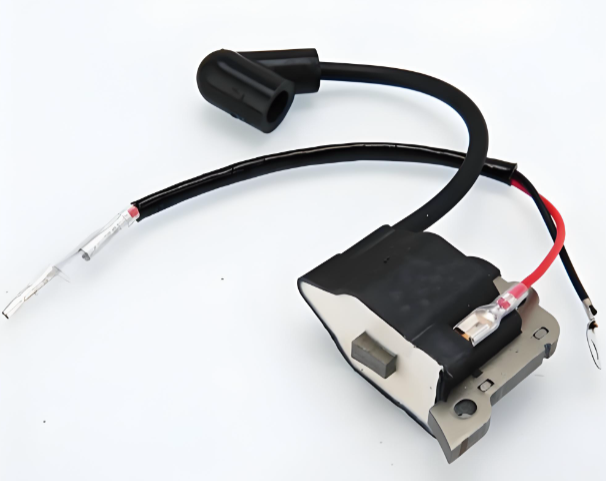
EE20 Core Flyback Transformer - Compact Power Solution for Efficient Voltage Conversion

Get a Free Quote

Our representative will contact you soon.
Email
Mobile/WhatsApp
Name
Company Name
Message
0/1000

ee20 core flyback transformer

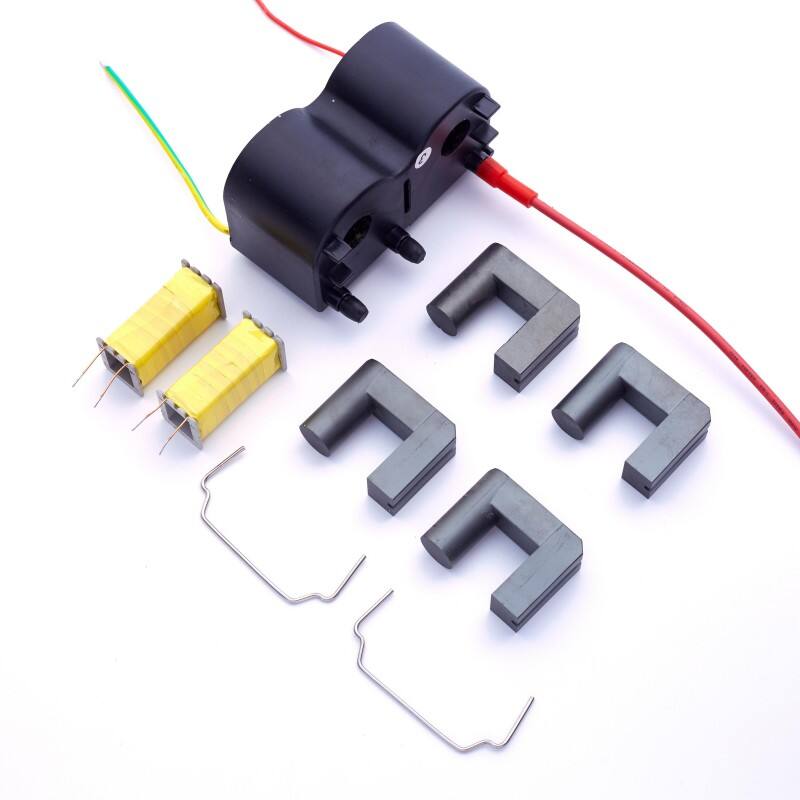
The ee20 core flyback transformer represents a compact yet powerful solution in modern power conversion systems, designed to meet the demanding requirements of various electronic applications. This specialized transformer utilizes an EE20 ferrite core configuration, which refers to the physical dimensions and shape of the magnetic core measuring approximately 20mm in width. The flyback topology distinguishes this component from conventional transformers through its unique energy storage and transfer mechanism, making it exceptionally versatile for isolated power supply designs. At its core, the ee20 core flyback transformer serves multiple critical functions including voltage conversion, electrical isolation between input and output circuits, and energy storage within its magnetic structure. The device operates by storing energy in its magnetic field during the switching transistor's on-time and releasing this energy to the output during the off-time, enabling efficient power transfer across a wide range of voltage ratios. Technologically, the ee20 core flyback transformer incorporates high-quality ferrite materials that exhibit excellent magnetic properties, including high permeability and low core losses across typical operating frequencies ranging from 50kHz to 200kHz. The bobbin construction allows for precise winding arrangements, ensuring optimal coupling between primary and secondary windings while maintaining necessary isolation barriers that comply with international safety standards. The compact EE20 footprint makes this transformer particularly suitable for space-constrained applications where board real estate comes at a premium. Applications for the ee20 core flyback transformer span across numerous industries and product categories, including switch-mode power supplies for consumer electronics, LED lighting drivers, battery chargers, telecommunications equipment, industrial control systems, and medical devices. Its ability to provide multiple isolated outputs with different voltage levels from a single input makes it invaluable in complex power distribution scenarios. The transformer's inherent isolation capability also provides crucial safety benefits by preventing dangerous voltages from reaching user-accessible circuits.

New Product Releases

Choosing an ee20 core flyback transformer for your power supply design brings numerous practical benefits that directly impact product performance, cost-effectiveness, and reliability. First and foremost, the compact size of this transformer allows manufacturers to create smaller end products without sacrificing power delivery capabilities. This space-saving advantage translates into lighter devices that consumers prefer and reduced material costs for enclosures and circuit boards. The efficient design means you can pack more functionality into portable devices, giving your products a competitive edge in markets where size matters. Cost efficiency stands out as another major advantage, as the flyback topology requires fewer external components compared to other transformer-based designs. You will need fewer capacitors, inductors, and support circuitry, which reduces both component costs and assembly time. This simplified bill of materials directly improves your profit margins while making manufacturing processes more streamlined and less prone to assembly errors. The ee20 core flyback transformer delivers excellent voltage regulation across varying load conditions, ensuring your devices receive stable power even when demand fluctuates. This stability protects sensitive electronic components from voltage spikes and brownouts, extending product lifespan and reducing warranty claims. Your customers will appreciate devices that perform consistently without unexpected shutdowns or performance degradation. Energy efficiency represents a crucial benefit in today's environmentally conscious market. These transformers achieve high conversion efficiency, often exceeding 85 percent, which means less energy wasted as heat. Lower heat generation reduces cooling requirements, eliminating the need for expensive fans or elaborate heat sinks in many applications. This efficiency translates to lower electricity bills for end users and helps manufacturers meet increasingly stringent energy consumption regulations worldwide. The electrical isolation provided by the ee20 core flyback transformer protects both users and equipment from electrical hazards. This built-in safety feature prevents dangerous currents from flowing between input and output sides, meeting safety certification requirements for consumer products. You gain peace of mind knowing your products incorporate fundamental protection mechanisms that prevent accidents and liability issues. Flexibility in output configuration allows designers to create multiple voltage rails from a single transformer, supporting complex electronic systems that require various operating voltages. This versatility reduces component count and simplifies power supply architecture, making product development faster and more cost-effective. The wide operating frequency range accommodates different design requirements, whether you need higher switching frequencies for smaller component sizes or lower frequencies for reduced electromagnetic interference.

Latest News

Thermal Management Strategies for High-Frequency High Voltage Modules

12

May

Thermal Management Strategies for High-Frequency High Voltage Modules

Why Thermal Management Is Critical for High-Voltage Modules Thermal runaway risks and reliability degradation at high voltage and >10 MHz switching High-voltage modules operating above 10 MHz face exponentially greater thermal runaway risks due to ...
View More
Core Material Selection: Ferrite vs. Nanocrystalline in Flyback Transformer Design

02

Jun

Core Material Selection: Ferrite vs. Nanocrystalline in Flyback Transformer Design

Ferrite Cores in Flyback Transformers: Performance and Limitations Permeability, saturation flux density (Bsat), and thermal stability from 100–500 kHz Ferrite cores dominate flyback transformer designs for their high permeability—typic...
View More
Advanced Testing Methods for Flyback Transformer Insulation and Leakage Inductance

15

Jun

Advanced Testing Methods for Flyback Transformer Insulation and Leakage Inductance

Insulation Integrity Testing Under High-Frequency Flyback Stress Dielectric Withstand and Partial Discharge Testing per VDE 0806 & IEC 61558 Dielectric withstand testing applies high-potential AC/DC voltages to verify insulation breakdown threshold...
View More
How does a flyback transformer contribute to energy saving and efficiency

08

Apr

How does a flyback transformer contribute to energy saving and efficiency

In modern power electronics, the demand for energy-efficient solutions has never been more critical. Industries worldwide are seeking components that not only deliver reliable performance but also minimize energy waste and operational costs. The flyb...
View More

Get a Free Quote

Our representative will contact you soon.
Email
Mobile/WhatsApp
Name
Company Name
Message
0/1000

ee20 core flyback transformer

Superior Magnetic Performance Through Advanced Ferrite Core Technology

Superior Magnetic Performance Through Advanced Ferrite Core Technology

The ee20 core flyback transformer achieves exceptional magnetic performance through carefully selected ferrite materials that form the foundation of its operation. These advanced ferrite cores exhibit remarkably high magnetic permeability, allowing them to concentrate and guide magnetic flux with minimal losses, which directly translates to improved energy conversion efficiency in your power supply designs. The material composition undergoes precise engineering to optimize properties across the typical operating temperature range of negative forty to positive one hundred twenty-five degrees Celsius, ensuring reliable performance in diverse environmental conditions from arctic cold to industrial heat. The EE core geometry itself contributes significantly to performance advantages through its symmetrical structure that promotes uniform flux distribution throughout the magnetic circuit. This balanced design minimizes localized saturation effects that can degrade transformer performance and generate unwanted harmonics in the electrical output. The center leg of the EE structure provides a concentrated magnetic path that enhances coupling between windings while the outer legs complete the magnetic circuit efficiently. Manufacturing precision in core assembly ensures minimal air gaps at mating surfaces, reducing reluctance in the magnetic path and preventing flux leakage that would otherwise compromise efficiency. Low core loss characteristics represent another critical aspect of the ferrite material selection, enabling the ee20 core flyback transformer to operate at elevated switching frequencies without excessive heating. Reduced losses mean more input energy converts to useful output power rather than being dissipated as heat, improving overall system efficiency and reducing cooling requirements. This thermal advantage allows for more compact designs and enhances reliability by keeping component temperatures within safe operating ranges. The magnetic properties remain stable across millions of switching cycles, providing long-term consistency that ensures your products maintain performance specifications throughout their operational lifetime. Temperature stability of the ferrite material prevents magnetic property degradation during thermal cycling, which commonly occurs in power electronics that experience varying load conditions. Your designs benefit from predictable transformer behavior that simplifies power supply control algorithms and reduces the need for complex compensation circuitry.
Optimized Physical Design for Maximum Space Efficiency and Thermal Management

Optimized Physical Design for Maximum Space Efficiency and Thermal Management

The physical architecture of the ee20 core flyback transformer exemplifies thoughtful engineering that addresses the critical challenges of modern electronics design, particularly the constant demand for miniaturization without performance compromise. The standardized EE20 footprint measures approximately twenty millimeters in core width, creating a compact profile that fits comfortably on densely populated circuit boards where every square millimeter counts toward product competitiveness. This standardization also ensures compatibility with established PCB layouts and mounting schemes, facilitating easy integration into existing product designs or enabling straightforward upgrades from older transformer technologies. The bobbin structure that holds the windings incorporates carefully designed pin configurations that provide secure mechanical mounting while establishing reliable electrical connections to the circuit board. These pins typically feature sufficient spacing to meet creepage and clearance requirements mandated by international safety standards, ensuring adequate electrical isolation between different voltage domains. The robust pin design withstands the mechanical stresses of automated assembly processes, reducing manufacturing defects and improving production yields. Winding arrangement on the bobbin follows optimized patterns that maximize coupling efficiency between primary and secondary coils while maintaining necessary isolation barriers. Layer insulation systems prevent voltage breakdown between windings, utilizing high-quality insulating materials rated for the voltage stresses present in flyback converter operation. The controlled winding technique minimizes parasitic capacitance between layers, which reduces high-frequency losses and electromagnetic interference generation. Proper interleaving techniques can be employed when multiple outputs are required, ensuring balanced leakage inductance across all secondary windings for consistent voltage regulation. Thermal management benefits from the compact design through efficient heat dissipation pathways. The ferrite core material conducts heat away from the windings to the mounting surface, where it can dissipate into the surrounding environment or through the circuit board copper layers. The relatively low profile of the ee20 core flyback transformer promotes natural convection cooling, often eliminating the need for forced air cooling in moderate power applications. This passive cooling capability reduces system complexity and improves reliability by eliminating mechanical components like fans that are prone to failure. Mounting flexibility accommodates both horizontal and vertical orientations depending on specific application requirements and airflow considerations.
Versatile Application Range with Reliable Isolation and Multi-Output Capabilities

Versatile Application Range with Reliable Isolation and Multi-Output Capabilities

The ee20 core flyback transformer demonstrates remarkable versatility across diverse application scenarios, making it an ideal choice for engineers developing products spanning consumer, industrial, medical, and telecommunications sectors. In consumer electronics, this transformer powers everything from smartphone chargers to smart home devices, providing the compact, efficient power conversion necessary for battery-operated and line-powered equipment. The ability to generate multiple isolated output voltages from a single input proves invaluable in complex devices that require various voltage rails for different subsystems, such as microcontrollers, displays, wireless modules, and sensor arrays. LED lighting applications particularly benefit from the ee20 core flyback transformer configuration because the flyback topology naturally provides current regulation characteristics suitable for driving LED strings. The transformer can efficiently step down AC line voltage to the lower DC voltages required by LED arrays while providing isolation that enhances safety and simplifies circuit protection schemes. Dimming control integrates easily with flyback designs through pulse-width modulation techniques, enabling smooth brightness adjustment without flickering or color shift. Industrial control systems rely on the robust isolation provided by the ee20 core flyback transformer to protect sensitive logic circuits from harsh electrical environments common in factory settings. Motors, relays, and high-power actuators generate electrical noise and voltage transients that could damage microprocessors and communication interfaces without adequate isolation barriers. The transformer-based isolation creates an effective barrier against these disturbances while maintaining power flow to critical control circuitry. Temperature extremes and vibration present in industrial environments demand components with proven reliability, which the ee20 core flyback transformer delivers through its solid construction and stable magnetic materials. Medical device applications impose stringent safety requirements that the ee20 core flyback transformer helps designers meet through its inherent isolation properties. Patient safety regulations mandate multiple levels of protection against electrical shock, and the transformer isolation serves as a fundamental safety barrier. Medical devices ranging from portable diagnostic equipment to bedside monitors incorporate these transformers to ensure safe operation in close proximity to patients and healthcare providers. The component's reliability becomes especially critical in medical contexts where equipment failure could compromise patient care or safety. Telecommunications equipment utilizes the ee20 core flyback transformer in power supplies for networking gear, where reliability and efficiency directly impact operational costs and service quality.

Get a Free Quote

Our representative will contact you soon.
Email
Mobile/WhatsApp
Name
Company Name
Message
0/1000
Newsletter
Please Leave A Message With Us