
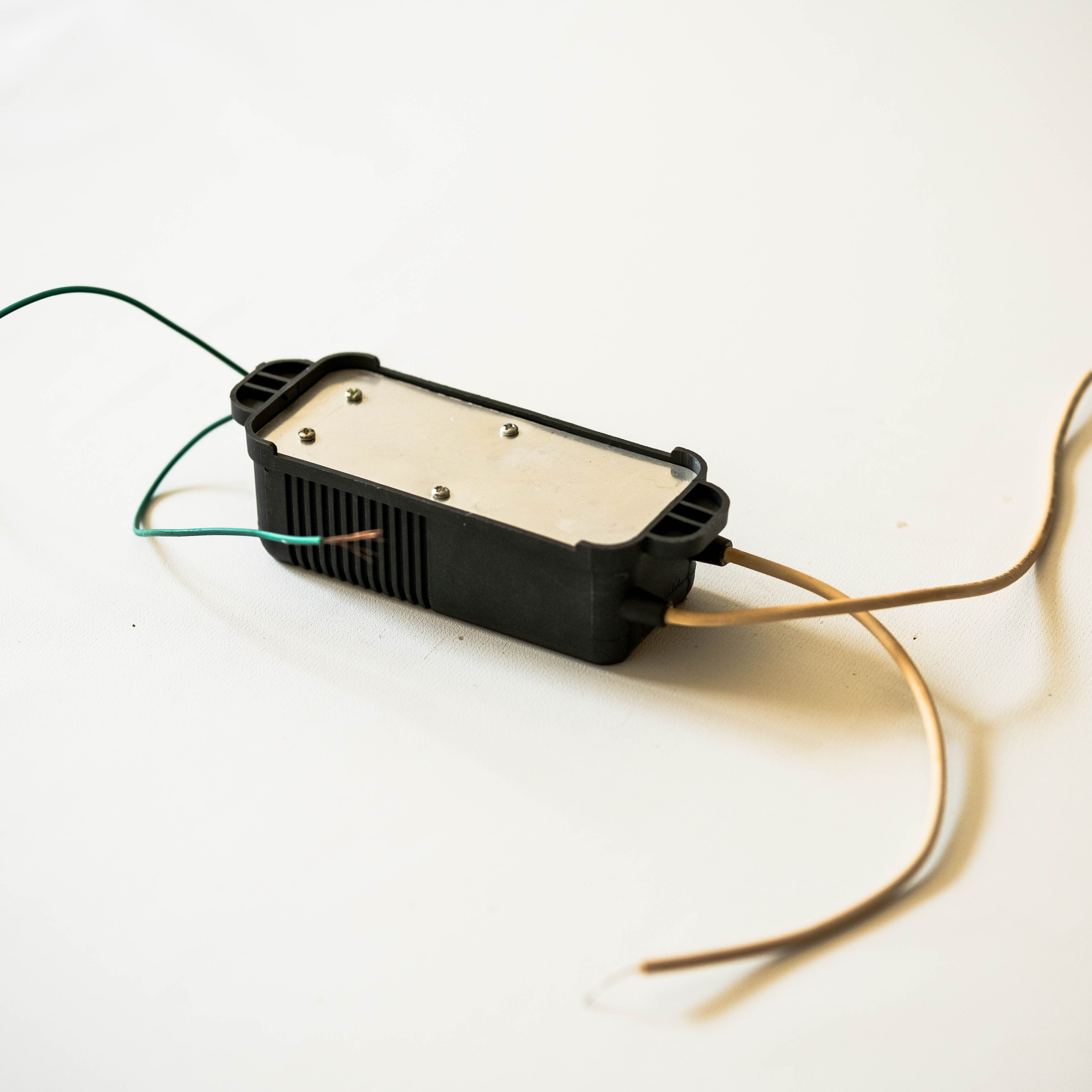
In modern power electronics, the demand for energy-efficient solutions has never been more critical. Industries worldwide are seeking components that not only deliver reliable performance but also minimize energy waste and operational costs. The flyback transformer has emerged as a cornerstone component in this pursuit, offering unique design characteristics that directly contribute to energy conservation and system efficiency. Understanding how this device achieves these benefits requires examining its operational principles, design advantages, and real-world applications across various power conversion scenarios.
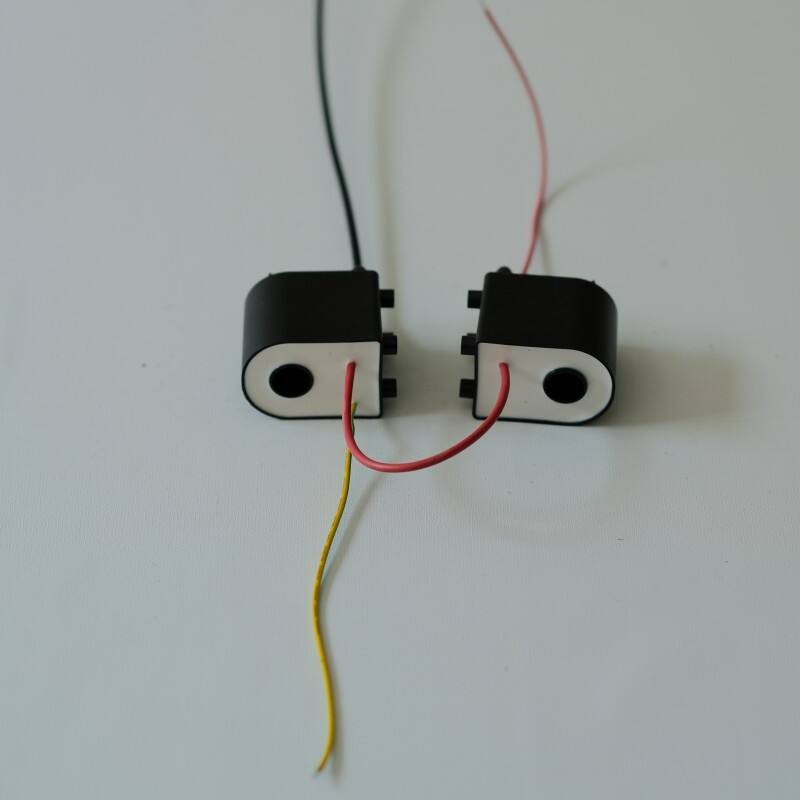
The energy-saving capabilities of a flyback transformer stem from its dual-function architecture that combines magnetic energy storage with voltage transformation in a single compact unit. Unlike conventional transformers that transfer energy simultaneously through electromagnetic induction, the flyback transformer stores energy in its magnetic core during one phase of operation and releases it during another. This discontinuous energy transfer mechanism, when properly designed and controlled, enables precise power management with minimal losses. For engineers and procurement professionals evaluating power supply solutions, recognizing these efficiency mechanisms is essential for making informed decisions that align with both performance requirements and sustainability goals.
Fundamental Energy Storage Mechanism in Flyback Transformers
Magnetic Core Energy Accumulation Process
The flyback transformer operates on a principle fundamentally different from traditional transformers, storing energy in its magnetic core during the switch-on period rather than transferring it continuously. When the primary switch closes, current flows through the primary winding, building up magnetic flux in the core. This magnetic field represents stored energy that accumulates proportionally to the square of the current and the inductance of the primary winding. The core material and air gap design determine how much energy can be stored efficiently without saturation, directly affecting the overall energy conversion efficiency of the system.
During this energy storage phase, the secondary winding remains effectively isolated due to the polarity of the windings and the presence of an output diode. This isolation prevents simultaneous energy transfer and allows the flyback transformer to accumulate maximum magnetic energy. The amount of energy stored is determined by the inductance value and peak current reached before the switch opens. Engineers optimize this storage capacity by carefully selecting core materials with appropriate saturation flux density and designing air gaps that maintain linearity across the operating range, ensuring that energy storage occurs with minimal hysteresis losses.
Controlled Energy Release for Efficiency Optimization
When the primary switch opens, the stored magnetic energy must be released to the secondary circuit. The collapsing magnetic field induces a voltage in the secondary winding according to the turns ratio, transferring the stored energy to the output capacitor and load. This controlled release mechanism is central to the energy-saving characteristics of a flyback transformer because it allows for precise power delivery matching load requirements. The output diode conducts during this phase, rectifying the secondary voltage and ensuring unidirectional energy flow that maximizes transfer efficiency.
The efficiency of this energy release depends on several design parameters including winding resistance, leakage inductance, and switching speed. Lower winding resistance reduces conduction losses during current flow, while minimized leakage inductance ensures that more of the stored energy reaches the output rather than being dissipated as electromagnetic interference or heat. Modern flyback transformer designs incorporate interleaved winding techniques and optimized layer arrangements to reduce these parasitic elements. The switching controller timing also plays a crucial role, as proper dead-time management prevents simultaneous conduction paths that would waste energy through shoot-through currents.
Discontinuous Versus Continuous Conduction Modes
The flyback transformer can operate in different conduction modes that significantly affect energy efficiency. Discontinuous conduction mode occurs when all stored energy is completely transferred to the output before the next switching cycle begins, leaving the core fully demagnetized. This mode typically offers better efficiency at light loads because it reduces circulating currents and allows the converter to skip switching cycles when the output capacitor maintains sufficient voltage. Many energy-saving applications deliberately operate in this mode to minimize standby power consumption, which is increasingly important for meeting international efficiency standards.
Continuous conduction mode, where some residual energy remains in the core at the start of each cycle, generally provides better efficiency at higher power levels. The flyback transformer in this mode maintains a continuous current flow through the windings, reducing peak current stress and associated resistive losses. However, this mode requires more sophisticated control circuitry to maintain stability and prevent subharmonic oscillations. The choice between modes depends on the specific application requirements, with efficiency-focused designs often implementing boundary conduction mode control that dynamically transitions between discontinuous and continuous operation to maintain optimal efficiency across varying load conditions.
Design Features That Enhance Energy Efficiency
Core Material Selection and Loss Reduction
The magnetic core material fundamentally determines the energy losses within a flyback transformer during each switching cycle. Ferrite cores dominate modern designs due to their high electrical resistivity, which minimizes eddy current losses at switching frequencies typically ranging from 50 kHz to several hundred kHz. Different ferrite grades offer varying trade-offs between saturation flux density, core loss characteristics, and temperature stability. Power-optimized ferrite materials such as 3C95, 3F3, or equivalent grades from various manufacturers exhibit low core losses across wide frequency ranges, directly contributing to the overall energy-saving performance of the flyback transformer.
Core geometry also significantly impacts efficiency through its effect on magnetic path length and winding window utilization. Pot cores and RM cores provide excellent magnetic shielding and efficient use of winding area, though E-cores remain popular due to manufacturing cost advantages and ease of assembly. The introduction of an air gap in the core structure linearizes the magnetic characteristics and prevents saturation, but must be carefully calculated to balance inductance requirements against fringing flux losses. Advanced designs employ distributed air gaps or powder core materials that inherently contain microscopic gaps throughout their structure, reducing localized flux concentrations that contribute to losses in the flyback transformer.
Winding Configuration for Minimal Resistive Losses
Copper losses in the windings represent a major efficiency consideration for any flyback transformer design. These resistive losses occur due to DC resistance and AC effects including skin effect and proximity effect at higher frequencies. To minimize DC resistance, designers specify wire gauges that provide sufficient current-carrying capacity with minimal resistance, balancing this against winding window space constraints. For transformers operating at higher frequencies, Litz wire consisting of multiple insulated strands reduces skin effect losses by distributing current across a larger effective surface area, though at increased cost and manufacturing complexity.
The spatial arrangement of primary and secondary windings significantly affects both leakage inductance and proximity losses. Interleaved winding techniques, where primary and secondary layers alternate, reduce leakage inductance by ensuring tight magnetic coupling between windings. This configuration minimizes energy stored in leakage fields that would otherwise dissipate as heat or electromagnetic interference. However, interleaving increases inter-winding capacitance, which can cause efficiency-degrading displacement currents at higher frequencies. Optimal flyback transformer designs balance these competing effects through careful layer sequencing and appropriate insulation thickness selection that meets safety requirements while controlling parasitic capacitance.
Thermal Management and Temperature-Dependent Efficiency
Operating temperature directly affects the efficiency of a flyback transformer through multiple mechanisms. Copper windings exhibit positive temperature coefficients, meaning their resistance increases with temperature, leading to higher conduction losses as the component heats up. Core materials similarly show temperature-dependent loss characteristics, with most ferrites experiencing increased losses at elevated temperatures until approaching their Curie point where magnetic properties deteriorate rapidly. Effective thermal management strategies are therefore essential for maintaining the energy-saving benefits of flyback transformer designs throughout their operational lifetime.
Modern high-efficiency designs incorporate thermal considerations from the initial design phase rather than treating heat dissipation as an afterthought. This includes selecting core materials with favorable temperature stability, designing for adequate winding current density to limit hot-spot formation, and specifying appropriate bobbin materials with good thermal conductivity. External factors such as mounting orientation, proximity to other heat-generating components, and airflow patterns also significantly impact operational temperatures. Some advanced applications employ thermal monitoring with dynamic load derating or switching frequency adjustment to maintain optimal efficiency across varying ambient conditions, ensuring the flyback transformer continues delivering energy savings even under challenging thermal environments.
Control Strategies That Maximize Efficiency Gains
Pulse Width Modulation and Frequency Optimization
The control methodology employed with a flyback transformer directly determines its energy conversion efficiency. Pulse width modulation remains the most common approach, varying the duty cycle of the primary switch to regulate output voltage while maintaining constant switching frequency. This technique offers predictable frequency spectrum characteristics that simplify electromagnetic compatibility filter design, though efficiency varies with duty cycle. At very light loads, fixed-frequency PWM can become inefficient because the control circuitry and switching losses remain constant even when minimal power transfer is required, reducing the percentage efficiency of the flyback transformer under these conditions.
Variable frequency control offers an alternative that can significantly enhance light-load efficiency by reducing switching frequency as power demand decreases. This approach maintains optimal flux swing in the core regardless of load conditions, ensuring each switching event transfers meaningful energy. The reduction in switching frequency directly decreases switching losses in both the power transistor and the flyback transformer itself, as fewer magnetization and demagnetization cycles occur per unit time. However, variable frequency control introduces challenges including wider EMI spectrum requiring more sophisticated filtering, and potential audible noise when switching frequencies fall into the human hearing range below 20 kHz.
Synchronous Rectification for Secondary-Side Efficiency
Traditional flyback transformer circuits employ diode rectifiers on the secondary side, which introduce forward voltage drop losses typically ranging from 0.4V for Schottky diodes to 0.7V or higher for standard silicon diodes. At low output voltages, this forward drop represents a significant percentage of output voltage, directly degrading efficiency. Synchronous rectification replaces the output diode with a MOSFET switch that conducts during the appropriate phase of the switching cycle, reducing the voltage drop to the product of output current and MOSFET on-resistance. For a well-designed synchronous rectifier with low RDS(on), this can reduce secondary-side conduction losses by 50 percent or more compared to diode rectification.
Implementing synchronous rectification with a flyback transformer requires precise timing control to turn the MOSFET on when the secondary winding voltage forward-biases what would be the diode, and turn it off before the primary switch closes again. Self-driven synchronous rectification derives gate drive from the secondary winding voltage itself, offering simplicity but limited optimization. Active timing control using dedicated controllers monitors the flyback transformer winding voltages and optimizes MOSFET switching instants to minimize body diode conduction and prevent cross-conduction with the primary switch. This additional control complexity increases cost but delivers substantial efficiency improvements, particularly valuable in battery-powered applications where every percentage point of efficiency extends operating time.
Adaptive Load-Dependent Operating Modes
Modern high-efficiency power supplies implement adaptive control strategies that dynamically adjust operating parameters based on instantaneous load conditions. For flyback transformer applications, this might include transitioning between continuous and discontinuous conduction modes, implementing burst-mode operation at very light loads, or adjusting switching frequency to maintain operation in the most efficient region. These adaptive techniques recognize that no single operating point delivers optimal efficiency across the entire load range, and that energy-saving requirements increasingly demand excellent light-load efficiency to minimize standby power consumption.
Burst mode operation, sometimes called pulse-skipping or green mode, delivers power in short bursts separated by sleep periods when load demand is minimal. During sleep periods, the control circuitry enters a low-power state and the flyback transformer experiences no switching stress, dramatically reducing losses. The output capacitor supplies load current between bursts, with burst frequency and duration determined by the voltage ripple limits on the output. While this creates larger output ripple than continuous operation, it can achieve standby power consumption below 10 milliwatts, meeting stringent efficiency regulations. The flyback transformer benefits from reduced thermal stress during burst operation, potentially extending operational lifetime while delivering energy savings that compound over years of operation in always-on applications.
Real-World Applications and Efficiency Impact
Consumer Electronics and Standby Power Reduction
In consumer electronics applications, the flyback transformer has become instrumental in meeting increasingly stringent energy efficiency regulations such as Energy Star, EU Ecodesign directives, and California's Title 20. Phone chargers, laptop adapters, and television power supplies commonly employ flyback topologies specifically because their energy storage and controlled release mechanism enables excellent efficiency across wide load ranges. A well-designed phone charger using an optimized flyback transformer can achieve over 90 percent efficiency at rated load and maintain better than 75 percent efficiency down to 25 percent load, with standby power consumption below the 30 milliwatt threshold required by many regulations.
The energy-saving impact of these efficiency improvements becomes substantial when multiplied across billions of devices worldwide operating continuously. A flyback transformer design improvement that reduces standby power from 500 milliwatts to 50 milliwatts saves 0.45 watts per device. For one billion devices operating 8000 hours annually in standby mode, this represents 3.6 billion kilowatt-hours of energy saved yearly, equivalent to the output of a medium-sized power plant. These cumulative savings demonstrate why regulatory bodies focus intensely on standby power, and why designers invest significant effort in optimizing flyback transformer efficiency even for incremental percentage gains.
Industrial Power Supplies and Operating Cost Reduction
Industrial applications of flyback transformers in control system power supplies, sensor networks, and distributed power architectures offer different efficiency advantages focused on operational cost reduction and system reliability. In factory automation systems where hundreds of power supplies operate continuously, a two-percentage-point efficiency improvement translates directly to reduced electricity costs and lower cooling requirements for electrical cabinets. A 100-watt industrial power supply operating at 88 percent efficiency dissipates 13.6 watts as heat, while the same supply at 90 percent efficiency dissipates only 11.1 watts, reducing cooling load by nearly 20 percent.
The flyback transformer topology proves particularly valuable in isolated sensor applications requiring multiple output voltages from a single input source. The ability to create multiple secondary windings with different turns ratios allows a single flyback transformer to generate diverse voltages simultaneously, eliminating the need for multiple power conversion stages that would each introduce additional losses. This architecture simplification inherently improves system-level efficiency while reducing component count, board space, and potential failure points. Industrial facilities implementing distributed sensing networks have documented 15 to 25 percent reductions in power infrastructure energy consumption by transitioning to optimized flyback transformer-based power supplies from older linear regulator approaches.
Renewable Energy Systems and Conversion Efficiency
In renewable energy applications, particularly solar photovoltaic microinverters and panel-level power optimizers, the flyback transformer serves as a key component for efficient DC-DC conversion with galvanic isolation. These systems require high efficiency to maximize energy harvest from solar panels, with even small losses compounding over the system's 25-year operational lifetime. Advanced flyback transformer designs in these applications achieve 96 to 97 percent peak efficiency through careful optimization of all loss mechanisms including core selection, winding configuration, and synchronous rectification implementation.
The isolation provided by a flyback transformer proves essential in photovoltaic applications for safety compliance, allowing safe system grounding configurations while maintaining electrical separation between panel-side and grid-side circuitry. This isolation could theoretically be achieved through capacitive or other means, but the flyback transformer simultaneously provides voltage conversion, isolation, and energy storage functions in a single component. The energy-saving contribution extends beyond the immediate efficiency percentage, as reduced losses translate to lower operating temperatures that improve semiconductor reliability and extend system lifetime, reducing the total lifecycle energy cost of manufacturing and replacing failed components in deployed renewable energy installations.
FAQ
What makes a flyback transformer more energy-efficient than other transformer types?
The flyback transformer achieves superior energy efficiency through its unique energy storage and controlled release mechanism that allows precise power delivery matching load requirements. Unlike conventional transformers that continuously transfer energy with inherent magnetizing current losses, the flyback transformer accumulates energy in its magnetic core during one switching phase and releases it during another, enabling discontinuous operation modes that minimize losses at light loads. This architecture, combined with the ability to skip switching cycles when load demand is low, allows modern flyback designs to maintain high efficiency across a wide operating range. Additionally, the compact single-component design eliminates the separate inductor required in other topologies, reducing total system losses and component count while simplifying thermal management for improved overall efficiency.
How does switching frequency affect the energy-saving performance of a flyback transformer?
Switching frequency influences flyback transformer efficiency through multiple competing mechanisms that must be carefully balanced. Higher switching frequencies allow smaller magnetic core sizes because less energy is stored per cycle, reducing core material costs and physical dimensions. However, increased frequency also raises switching losses in the power transistor and control circuitry, increases AC losses in the windings due to skin and proximity effects, and may increase core losses depending on the ferrite material characteristics. Conversely, lower frequencies reduce switching-related losses but require larger cores to store adequate energy per cycle, potentially increasing core losses through higher flux density operation. Optimal energy-saving performance typically occurs in the 65 kHz to 150 kHz range for most flyback transformer applications, though specific designs may favor higher frequencies up to 500 kHz when miniaturization outweighs efficiency concerns, or lower frequencies when maximum efficiency justifies larger component size.
Can flyback transformers maintain efficiency across varying input voltage ranges?
Modern flyback transformer designs effectively maintain high efficiency across wide input voltage ranges through careful design optimization and adaptive control strategies. The energy storage mechanism inherently accommodates varying input voltages by adjusting the duty cycle to maintain constant output regulation, though efficiency does vary somewhat across the input range due to changing current stress and loss distribution. Designs intended for universal input applications covering 90 to 265 VAC must account for the threefold difference in DC bus voltage, which affects peak currents, switching losses, and stress on components. Advanced controllers implement input voltage feedforward compensation and adaptive timing to optimize efficiency at each operating point. Well-designed flyback transformers for universal input applications typically maintain peak efficiency within three to five percentage points across the full voltage range, with careful attention to component ratings ensuring that efficiency remains acceptable even at voltage extremes where current or voltage stress reaches maximum levels.
What role does the air gap in a flyback transformer play in energy efficiency?
The air gap in a flyback transformer core serves the critical function of storing magnetic energy while preventing core saturation, directly impacting energy efficiency through multiple mechanisms. Without an air gap, the core would saturate at relatively low current levels due to the DC current component during energy storage, drastically reducing inductance and potentially causing catastrophic failure. The air gap linearizes the magnetic characteristics and allows controlled energy storage proportional to current squared, enabling predictable and efficient operation. However, the air gap also introduces fringing flux that can cause localized heating in nearby conductors and increases the magnetomotive force required for a given flux level, potentially increasing copper losses. Optimal gap design balances these factors, typically placing the gap in the center leg of E-cores or distributed in powder cores to minimize fringing effects. Properly designed air gaps contribute to energy efficiency by enabling operation at higher flux densities without saturation risk, allowing smaller core sizes with lower losses while maintaining the inductance values necessary for efficient discontinuous mode operation across the intended load range.
Table of Contents
- Fundamental Energy Storage Mechanism in Flyback Transformers
- Design Features That Enhance Energy Efficiency
- Control Strategies That Maximize Efficiency Gains
- Real-World Applications and Efficiency Impact
-
FAQ
- What makes a flyback transformer more energy-efficient than other transformer types?
- How does switching frequency affect the energy-saving performance of a flyback transformer?
- Can flyback transformers maintain efficiency across varying input voltage ranges?
- What role does the air gap in a flyback transformer play in energy efficiency?