
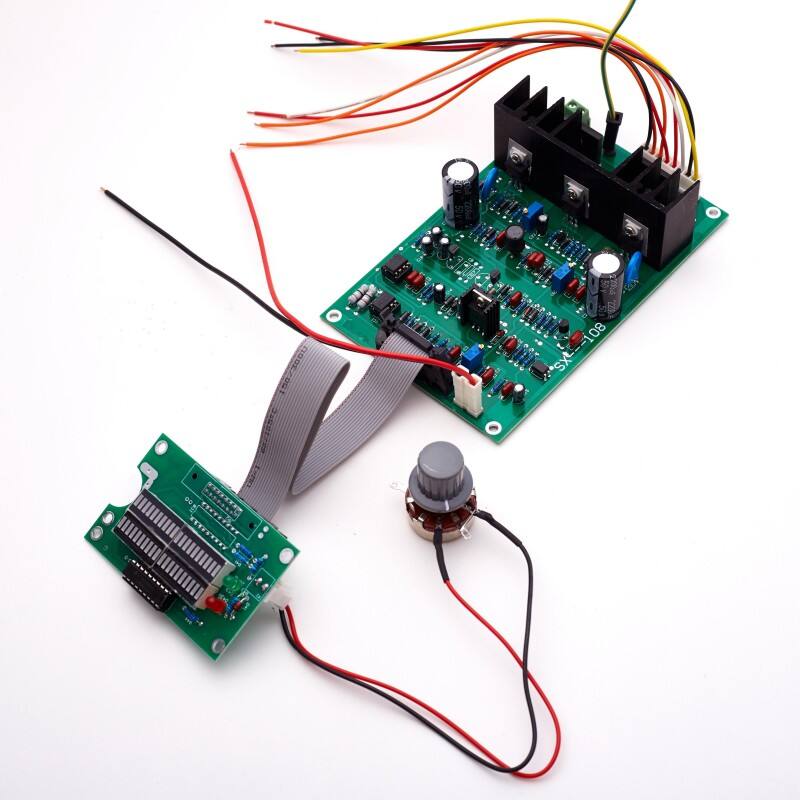
Why Thermal Management Is Critical for High-Voltage Modules
Thermal runaway risks and reliability degradation at high voltage and 10 MHz switching
High-voltage modules operating above 10 MHz face exponentially greater thermal runaway risks due to switching losses. Power dissipation can surge by 40–60% compared to lower-frequency operation, triggering self-reinforcing heat cycles. Unchecked, this accelerates insulation degradation, semiconductor junction failure, electromigration in interconnects, and dielectric breakdown. The Arrhenius equation quantifies the impact: every 10°C rise above rated limits halves component lifespan. Effective thermal management interrupts this cascade—preserving signal integrity in RF-dense environments and enabling long-term reliability.
How junction temperature excursions accelerate aging in SiC/GaN-based high voltage modules
Junction temperature fluctuations critically degrade wide-bandgap semiconductors like SiC and GaN. Repeated thermal cycling induces CTE mismatches between ceramic substrates (e.g., AlN, Si₃N₄) and metallic interconnects, causing solder joint fatigue and delamination. Research shows 50°C swings increase delamination risk by 300% over 5,000 power cycles. Sustained temperatures above 175°C activate trap-assisted tunneling in GaN HEMTs, permanently increasing on-resistance; for SiC MOSFETs, gate oxide degradation accelerates above 150°C, reducing blocking voltage capability by ~15% annually. Managing these excursions is essential to achieving 100,000+ hour lifetimes in aerospace and EV applications.
Optimizing the Junction-to-Coolant Thermal Pathway
Direct liquid cooling vs. cold-plate integration: balancing pressure drop, thermal resistance, and system scalability
Direct liquid cooling reduces thermal resistance by up to 40% versus traditional cold-plate integration—critical for high-voltage modules operating above 10 MHz—while maintaining pressure drops below 15 kPa. Its compact thermal pathway supports high power density in electric vehicle drivetrains. Though cold plates offer simpler scalability for multi-module arrays, topology-optimized microchannel designs now bridge the gap: they achieve 15°C lower junction temperatures than pin-fin heatsinks at identical flow rates without exceeding pressure constraints.
PCB-level conduction enhancements: thermal vias, embedded heat spreaders, and heatsink-free designs
PCB thermal design directly influences reliability by mitigating CTE mismatch-induced stress. Strategic thermal via arrays—such as 0.3 mm vias on a 1 mm grid beneath power devices—cut thermal resistance to inner layers by 60%. When combined with embedded copper or graphite heat spreaders, these configurations dissipate up to 35 W/cm² without secondary heatsinks. Best practices include:
- Placing vias directly under BGA packages with direct copper plane connections
- Using anisotropic thermal interface materials to reduce mechanical stress
- Isolating RF components from high-heat zones via split ground planes
This integrated approach prevents thermal runaway while maintaining signal fidelity in high-frequency GaN systems.
Advanced Substrate and Interface Materials for High-Voltage Module Packaging
AlN, Si₃N₄, and AMB substrates: comparing thermal conductivity, CTE matching, and high-frequency parasitic effects
Substrate selection profoundly affects thermal performance and reliability in high-voltage modules operating above 10 MHz. Aluminum Nitride (AlN) delivers exceptional thermal conductivity (170–200 W/mK) and low dielectric loss (<0.001), minimizing signal distortion—making it ideal for high-frequency switching. However, its CTE mismatch with silicon demands careful interface engineering. Silicon Nitride (Si₃N₄) offers superior CTE compatibility (2.8 ppm/K vs. silicon’s 2.6 ppm/K) and high fracture toughness, though its moderate thermal conductivity (80–90 W/mK) often requires supplemental cooling. Active Metal Brazed (AMB) substrates—typically Al₂O₃ or Si₃N₄ ceramics bonded to copper—enable tunable CTE gradients but introduce parasitic capacitance and eddy current losses at high frequencies, sometimes requiring electromagnetic shielding. Engineers must weigh these tradeoffs to ensure robust packaging for demanding applications.
Emerging Metrics and Validation Methods Beyond Rth,jc
Traditional junction-to-case thermal resistance (Rth,jc) measurements fail to capture dynamic thermal behavior in high-voltage modules operating above 10 MHz. Modern validation prioritizes transient thermal impedance (Zth), which accounts for nanosecond-scale switching losses and localized hotspots in GaN/SiC dies. Lock-in thermography maps thermal propagation paths at 10 µm resolution—revealing cross-die coupling that accelerates aging—while structure-function analysis correlates shifts in thermal diffusivity with power cycling stress. Industry data shows a 40% deviation between static Rth,jc and dynamic Zth values during 100 ns switching events in 1.2 kV modules. This discrepancy explains why 68% of unexpected field failures occur despite passing standard thermal validation (IEEE Thermal Management Benchmark 2023). Next-generation simulation frameworks now integrate electro-thermal modeling with acoustic emission sensing to predict delamination risks under real-world operating profiles.
Frequently Asked Questions
What is thermal runaway, and why is it a concern in high-voltage modules?
Thermal runaway refers to the cycle of increased temperature leading to increased power dissipation, causing even higher temperatures. It can lead to component failures and is particularly concerning in high-voltage modules operating above 10 MHz due to higher switching losses.
How does junction temperature affect the lifespan of SiC and GaN components?
Fluctuations in junction temperature can cause mismatches in thermal expansion coefficients, leading to mechanical failures like solder joint fatigue. Sustained high temperatures can degrade semiconductors, reducing their performance and lifespan.
What cooling methods are best for optimizing thermal pathways in high-voltage modules?
Direct liquid cooling is effective in reducing thermal resistance and maintaining acceptable pressure drops, supporting high power density applications. Cold-plate integration can be useful for scalability, while microchannel designs offer advanced temperature management without excessive pressure drops.
Why are advanced substrate materials like AlN and Si₃N₄ crucial for module packaging?
These materials provide high thermal conductivity and low dielectric loss essential for high-frequency operation. They help balance thermal expansion mismatches and contribute to improved mechanical robustness in stressful environmental conditions.
What is transient thermal impedance, and how does it differ from traditional Rth,jc measurements?
Transient thermal impedance (Zth) accounts for rapid thermal changes and localized hotspots that occur during high-frequency switching, offering a more accurate measure of thermal management challenges compared to static Rth,jc values.
Table of Contents
- Why Thermal Management Is Critical for High-Voltage Modules
- Optimizing the Junction-to-Coolant Thermal Pathway
- Advanced Substrate and Interface Materials for High-Voltage Module Packaging
- Emerging Metrics and Validation Methods Beyond Rth,jc
-
Frequently Asked Questions
- What is thermal runaway, and why is it a concern in high-voltage modules?
- How does junction temperature affect the lifespan of SiC and GaN components?
- What cooling methods are best for optimizing thermal pathways in high-voltage modules?
- Why are advanced substrate materials like AlN and Si₃N₄ crucial for module packaging?
- What is transient thermal impedance, and how does it differ from traditional Rth,jc measurements?