

The flyback transformer has long been a cornerstone of power electronics, enabling efficient energy transfer in applications ranging from consumer electronics to industrial power supplies. Yet the technology is far from static. In recent years, a wave of engineering innovation has reshaped how designers approach the flyback transformer, pushing boundaries in switching frequency, thermal management, miniaturization, and integration. Understanding where this technology is heading is essential for engineers, procurement specialists, and product developers who rely on it for next-generation designs.
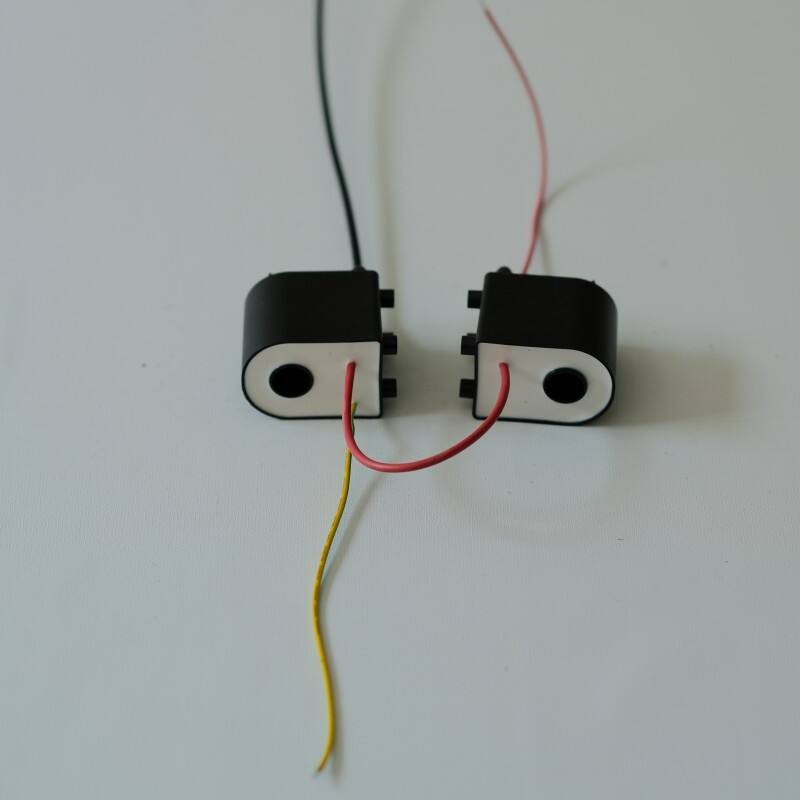
From wide-bandgap semiconductor integration to AI-assisted design workflows, the flyback transformer is entering a new era of performance and precision. This article explores the most significant recent innovations and the future trends that will define how the flyback transformer evolves over the coming decade. Whether you are designing a compact charger, a high-voltage industrial supply, or an automotive power module, these developments have direct implications for your work.
Wide-Bandgap Semiconductors and Their Impact on Flyback Transformer Design
The Shift from Silicon to GaN and SiC
One of the most transformative forces reshaping the flyback transformer is the widespread adoption of gallium nitride (GaN) and silicon carbide (SiC) switching devices. These wide-bandgap materials allow switching frequencies to climb well beyond what traditional silicon MOSFETs could sustain, often reaching several megahertz in practical designs. For the flyback transformer, this means the magnetic core can be dramatically reduced in size while still delivering the same power output.
Higher switching frequencies reduce the energy stored per cycle, which directly translates into smaller core volumes and thinner winding structures. Engineers designing a flyback transformer for compact USB-C chargers or IoT power modules are already leveraging GaN switches to achieve power densities that were unthinkable five years ago. The thermal characteristics of GaN also reduce switching losses, which eases the thermal burden on the transformer itself.
SiC devices, on the other hand, are making a strong impact in higher-voltage flyback transformer applications, particularly in industrial and automotive contexts. Their ability to handle elevated junction temperatures and high blocking voltages makes them ideal partners for flyback transformer designs operating in harsh environments or demanding duty cycles.
Redesigning Magnetics for High-Frequency Operation
The move to higher switching frequencies forces a fundamental rethink of the magnetic materials used in a flyback transformer. Traditional ferrite cores, while still widely used, are being supplemented and in some cases replaced by advanced nanocrystalline and amorphous alloy cores that exhibit lower core losses at elevated frequencies. These materials maintain high permeability even as frequency climbs, preserving efficiency in the flyback transformer without requiring oversized cores.
Winding design is also evolving. Litz wire, which bundles many fine insulated strands to combat skin and proximity effects, is seeing renewed interest as frequencies push into the megahertz range. Planar winding structures, where flat copper traces replace round wire, offer tighter coupling and more predictable leakage inductance in a flyback transformer, both of which are critical for controlling voltage spikes and improving EMI performance.
Miniaturization and Integration Trends in Flyback Transformer Technology
Planar and Integrated Magnetics
Miniaturization is one of the defining trends in modern power electronics, and the flyback transformer is no exception. Planar transformer technology, which uses PCB-embedded or stamped copper windings sandwiched between flat ferrite cores, has matured significantly. A planar flyback transformer offers a dramatically reduced profile, excellent thermal contact with the PCB, and highly repeatable electrical characteristics that simplify mass production.
Beyond planar designs, integrated magnetics represent the next frontier. In an integrated approach, the flyback transformer shares its core structure with other magnetic components such as output inductors or common-mode chokes. This level of integration reduces component count, shrinks the overall power supply footprint, and can improve cross-regulation in multi-output designs. Research institutions and leading power IC manufacturers are actively developing reference designs that demonstrate integrated flyback transformer solutions for sub-10W and sub-30W applications.
The practical benefit for product designers is significant. A smaller flyback transformer with integrated magnetics can enable thinner consumer devices, more compact industrial control modules, and lighter automotive power converters. As packaging constraints tighten across virtually every end market, this trend will only accelerate.
On-Chip and Near-Chip Transformer Concepts
At the cutting edge of miniaturization, researchers are exploring on-chip and near-chip flyback transformer concepts where the magnetic structure is fabricated directly on or adjacent to the semiconductor die. While full on-chip flyback transformer implementations remain largely in the research phase for power levels above a few watts, near-chip approaches using embedded magnetic layers in advanced packaging substrates are beginning to appear in commercial products targeting very low power IoT and wearable applications.
These developments signal a longer-term trajectory where the flyback transformer becomes an increasingly embedded and invisible component within the power delivery architecture, rather than a discrete through-hole or surface-mount device. For high-volume consumer applications, this could eventually translate into significant cost and space savings at the system level.
Advanced Control Topologies and Digital Intelligence
Digital Control and Adaptive Algorithms
Modern flyback transformer designs are increasingly paired with digital control ICs that bring adaptive algorithms, real-time monitoring, and dynamic response capabilities to the power supply. Unlike analog controllers, digital controllers can adjust switching frequency, duty cycle, and dead time on a cycle-by-cycle basis in response to load changes, temperature variations, or input voltage fluctuations. This level of intelligence allows the flyback transformer to operate closer to its theoretical efficiency limits across a much wider range of operating conditions.
Active clamp flyback topologies, which use a secondary switch to recycle the energy stored in the leakage inductance of the flyback transformer, have become mainstream in high-efficiency charger designs. Digital controllers make it far easier to implement the precise timing required for active clamp operation, enabling zero-voltage switching (ZVS) and dramatically reducing the voltage stress on the primary switch. The result is a flyback transformer system that achieves efficiency levels previously associated only with more complex resonant topologies.
AI-Assisted Design and Simulation
Artificial intelligence is beginning to influence how engineers design and optimize a flyback transformer. Machine learning tools trained on large datasets of transformer designs can suggest optimal core geometries, winding configurations, and air gap settings for a given set of electrical specifications. This accelerates the design cycle and reduces the number of physical prototypes needed before a flyback transformer design is finalized.
Simulation platforms are also becoming more sophisticated, with finite element analysis (FEA) tools now capable of modeling the coupled electromagnetic, thermal, and mechanical behavior of a flyback transformer in a single integrated workflow. Engineers can predict hot spots, leakage flux paths, and acoustic noise characteristics before a single prototype is wound. As these tools become more accessible and computationally efficient, they will become standard practice in flyback transformer development across all market segments.
The combination of digital control and AI-assisted design is creating a feedback loop where real-world performance data from deployed flyback transformer units can be used to continuously refine design models, leading to faster iteration and higher first-pass success rates in new product development.
Sustainability, Efficiency Standards, and Regulatory Drivers
Tightening Global Efficiency Regulations
Regulatory pressure is one of the most powerful external forces shaping the future of the flyback transformer. Energy efficiency standards such as the US Department of Energy Level VI, the European ErP Directive, and China's MEPS requirements are continuously tightening the allowable no-load and average active efficiency thresholds for external power supplies and chargers. Since the flyback transformer is the central energy conversion element in most of these products, meeting these standards requires ongoing improvement in core materials, winding techniques, and control strategies.
Designers are responding by adopting burst-mode and frequency-foldback control schemes that keep the flyback transformer operating efficiently at light loads, where traditional fixed-frequency designs tend to suffer. Synchronous rectification on the secondary side, enabled by intelligent gate drivers, further reduces conduction losses and helps products meet the most demanding efficiency tiers without sacrificing reliability.
Sustainable Materials and End-of-Life Considerations
Sustainability is emerging as a design criterion for the flyback transformer, not just an afterthought. The use of halogen-free insulation materials, lead-free solder compatibility, and recyclable bobbin materials is becoming standard practice in response to RoHS, REACH, and similar environmental regulations. Some manufacturers are also exploring bio-based insulation films and reduced-rare-earth core alloys to lower the environmental footprint of the flyback transformer throughout its lifecycle.
End-of-life disassembly and material recovery are also receiving more attention, particularly in the European market where extended producer responsibility frameworks are expanding. A flyback transformer designed with material separation in mind, using snap-fit bobbins rather than adhesive-bonded assemblies, for example, can simplify recycling and reduce landfill contribution. These considerations are beginning to influence procurement decisions in sustainability-conscious B2B supply chains.
Emerging Application Areas Driving Flyback Transformer Innovation
Electric Vehicles and Automotive Power Systems
The rapid growth of electric vehicles is creating new demand for the flyback transformer in automotive-grade power applications. Isolated gate driver power supplies, battery management system auxiliaries, and onboard charger subsystems all rely on the flyback transformer to provide galvanic isolation and voltage conversion in environments characterized by wide input voltage ranges, extreme temperatures, and stringent EMC requirements. Automotive-qualified flyback transformer designs must meet AEC-Q200 standards and demonstrate long-term reliability under vibration, humidity, and thermal cycling conditions.
The push toward 800V battery architectures in next-generation EVs is also raising the voltage stress requirements for the flyback transformer, driving demand for higher-voltage primary switches and improved insulation systems. This is an area where SiC-based active clamp flyback transformer designs are gaining traction, offering the combination of high blocking voltage, fast switching, and robust thermal performance that automotive applications demand.
Renewable Energy and Industrial IoT
In renewable energy systems, the flyback transformer plays a key role in auxiliary power supplies for solar inverters, wind turbine controllers, and energy storage management systems. These applications require the flyback transformer to operate reliably over decades with minimal maintenance, often in outdoor or semi-outdoor environments. The trend toward higher system voltages in utility-scale solar and storage installations is pushing flyback transformer designs toward higher isolation ratings and improved partial discharge performance.
Industrial IoT is another growth area where the flyback transformer is seeing increased deployment. Smart sensors, wireless field devices, and edge computing nodes all require compact, isolated power supplies that can be powered from industrial bus voltages ranging from 24V to 400V DC. The flyback transformer is well suited to these applications due to its inherent isolation capability, wide input voltage range tolerance, and ability to generate multiple output voltages from a single magnetic structure. As industrial IoT deployments scale into the billions of nodes, the cumulative demand for efficient, miniaturized flyback transformer solutions will be substantial.
FAQ
What makes the flyback transformer different from other transformer topologies in switching power supplies?
The flyback transformer is unique because it functions as both a transformer and an energy storage inductor within the same magnetic structure. During the switch-on phase, energy is stored in the core gap, and during the switch-off phase, that energy is transferred to the output. This dual function allows the flyback transformer to generate multiple isolated output voltages from a single core, making it highly versatile and cost-effective for low-to-medium power applications where simplicity and isolation are both required.
How are GaN devices changing the design requirements for a flyback transformer?
GaN switches enable much higher switching frequencies than traditional silicon MOSFETs, which means the flyback transformer can be designed with a smaller core and fewer winding turns for the same power level. However, the faster switching transitions also generate steeper voltage edges that increase EMI and place greater stress on the insulation system of the flyback transformer. Designers must therefore pay close attention to winding layout, shielding, and snubber design to fully realize the efficiency and size benefits that GaN enables.
What efficiency levels can a modern flyback transformer achieve?
A well-optimized flyback transformer design using active clamp topology, synchronous rectification, and GaN or SiC switching devices can achieve full-load efficiencies in the range of 93 to 96 percent for power levels between 30W and 150W. At light loads, burst-mode control helps maintain high efficiency by reducing switching frequency and minimizing core losses. These performance levels are sufficient to meet the most stringent current global efficiency standards for external power supplies and chargers.
What are the key reliability considerations for a flyback transformer in automotive or industrial applications?
Reliability in demanding environments depends on several factors specific to the flyback transformer design. Insulation system quality, including the choice of wire coating, bobbin material, and potting compound, determines long-term dielectric integrity under thermal cycling and humidity exposure. Core material stability over temperature ensures consistent inductance and magnetizing current behavior throughout the product lifetime. Winding tension, impregnation quality, and mechanical fixturing all influence how well the flyback transformer withstands vibration and shock. For automotive applications, compliance with AEC-Q200 qualification testing is the standard benchmark for demonstrating these reliability attributes.
Table of Contents
- Wide-Bandgap Semiconductors and Their Impact on Flyback Transformer Design
- Miniaturization and Integration Trends in Flyback Transformer Technology
- Advanced Control Topologies and Digital Intelligence
- Sustainability, Efficiency Standards, and Regulatory Drivers
- Emerging Application Areas Driving Flyback Transformer Innovation
-
FAQ
- What makes the flyback transformer different from other transformer topologies in switching power supplies?
- How are GaN devices changing the design requirements for a flyback transformer?
- What efficiency levels can a modern flyback transformer achieve?
- What are the key reliability considerations for a flyback transformer in automotive or industrial applications?