
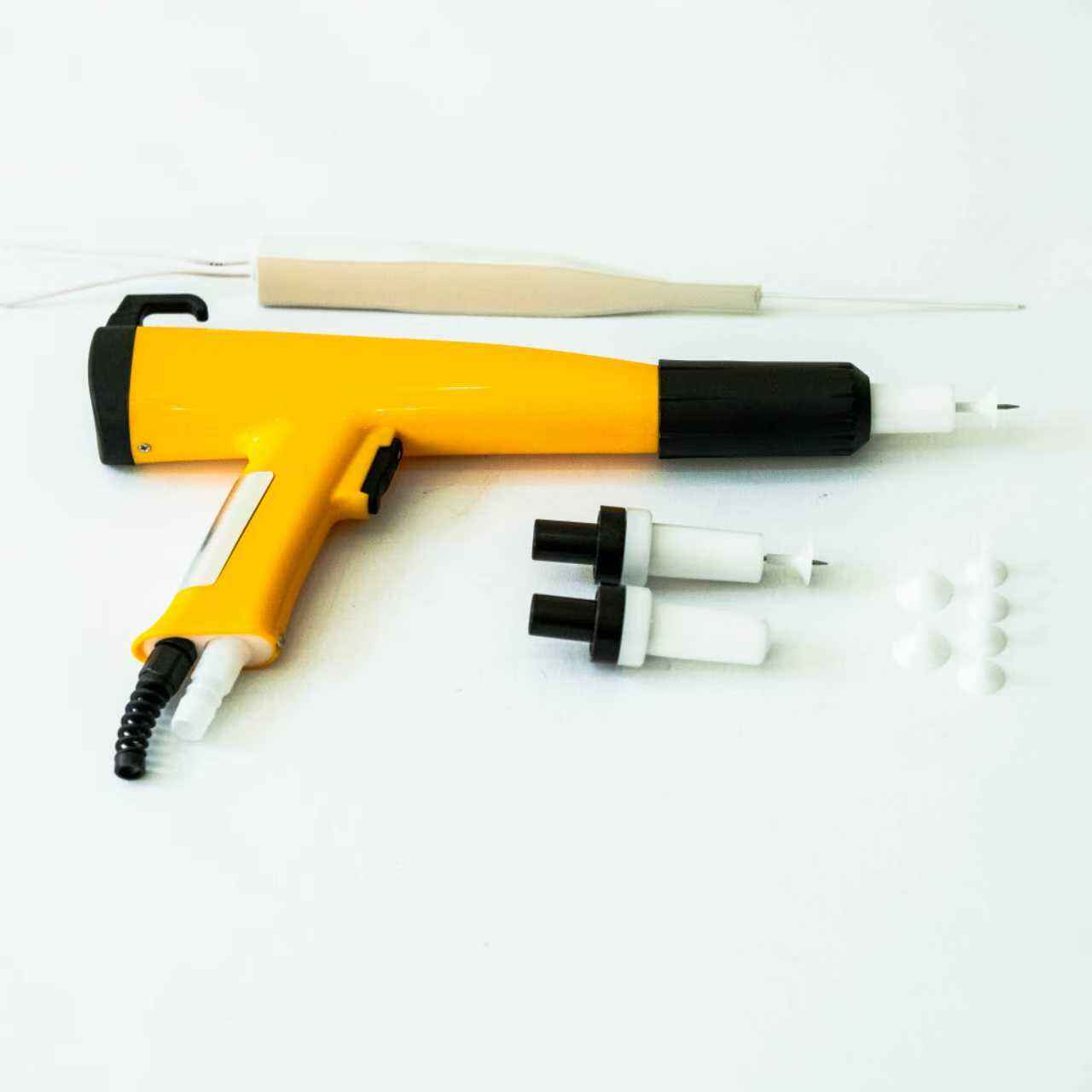
Selecting the right powder coating spray gun for your production line is one of the most consequential equipment decisions you will make as a finishing operation manager or procurement professional. The wrong choice can lead to inconsistent film thickness, excessive powder waste, frequent maintenance interruptions, and ultimately a reduction in throughput quality that affects your bottom line. With so many gun types, voltage ranges, and triggering mechanisms on the market today, the selection process demands a structured, criteria-driven approach rather than a simple price comparison.

This guide is designed to walk you through exactly how to evaluate a powder coating spray gun against the real-world requirements of your production environment. Whether you are setting up a new line, upgrading existing equipment, or troubleshooting recurring finish defects, understanding the technical and operational variables that differentiate one gun from another is the foundation of a sound capital or replacement decision. From electrostatic output and charge efficiency to gun ergonomics and controller compatibility, each factor plays a distinct role in coating performance.
Understanding the Core Technologies Behind a Powder Coating Spray Gun
Corona Discharge vs. Tribo Charging
Every powder coating spray gun relies on one of two fundamental electrostatic charging principles: corona discharge or tribo charging. In a corona charging system, a high-voltage electrode at the gun tip creates an ionized field that charges powder particles as they pass through it. This approach is by far the most common in industrial settings because it works with virtually any powder chemistry and is easy to adjust via an external voltage control unit.
Tribo guns, on the other hand, generate charge through friction between powder particles and a specially designed barrel material, typically PTFE or a similar polymer. These guns require no high-voltage power supply, which eliminates certain electrical hazards and can improve penetration into recessed geometry. However, they are more sensitive to powder formulation, humidity, and air flow rates, making them less versatile for operations that frequently change colors or coating types.
For most general-purpose industrial production lines, a corona-type powder coating spray gun delivers the best balance of versatility, repeatability, and ease of maintenance. Tribo guns become the preferred choice when your parts have deep Faraday cage areas and your powder supply is consistent and controlled.
Integrated vs. External High-Voltage Modules
Within the corona category, a key design distinction is whether the high-voltage generation circuit is housed inside the gun handle or in a separate remote control unit. Integrated high-voltage modules place the power conversion electronics directly within or very close to the gun head, simplifying cabling and reducing signal loss across long hose runs. This design is particularly beneficial in automated spray booths where guns are mounted on reciprocators or robots and must maintain precise, consistent charge output over extended shifts.
A powder coating spray gun equipped with an advanced integrated high-voltage module can deliver tightly regulated output even as environmental conditions such as temperature and humidity fluctuate inside a production booth. This level of charge stability directly translates into more uniform powder deposition and reduced rework rates.
External high-voltage systems offer the advantage of easier serviceability since the electronics are not embedded in the gun body, which is the component most exposed to wear and powder buildup. For manual operators who swap guns frequently or who service equipment in the field, an external control box with a replaceable gun head can significantly reduce downtime during maintenance windows.
Matching Gun Specifications to Your Production Line Requirements
Throughput Volume and Duty Cycle
Before evaluating any specific powder coating spray gun model, you need an honest assessment of your line's throughput demands. A low-volume job shop running a few hundred parts per shift has fundamentally different requirements than a high-speed continuous conveyor line processing thousands of components per hour. The duty cycle of a gun — meaning what percentage of operating time it is actively spraying — affects its thermal management needs, component longevity, and the appropriate cleaning interval between production runs.
Automatic guns designed for robotic or reciprocator mounting are engineered for near-continuous duty and are built with materials and sealing specifications that far exceed those of manual guns. If your production line operates in extended or multi-shift patterns, investing in a powder coating spray gun rated for high-duty-cycle automation will reduce unplanned downtime and lower your total cost of ownership over a three-to-five-year horizon.
For manual operators, the gun weight and trigger resistance become critically important ergonomic factors. An operator using a heavy gun for six or more hours daily will experience fatigue that directly affects spray consistency, pattern uniformity, and part quality. Evaluating the ergonomics of a powder coating spray gun is not a secondary concern — it is a production quality variable.
Part Geometry and Coverage Requirements
The geometry of the parts you are coating has a direct influence on which powder coating spray gun configuration will perform best. Flat, open surfaces such as sheet metal panels or structural profiles are easy to coat with a wide flat-jet or round-cone pattern, and virtually any well-maintained gun will produce acceptable results on these geometries. The challenge arises with complex, three-dimensional parts that include interior corners, recesses, tubes, and enclosed cavities.
For penetrating recessed areas, lower voltage settings on a corona gun help reduce the back-ionization effect that can repel powder from deep Faraday zones. Some powder coating spray gun models include adjustable voltage ramping features or 'soft charge' modes specifically designed to improve deposition in difficult geometries without sacrificing overall transfer efficiency on open surfaces.
When your product mix includes both flat and complex parts, selecting a powder coating spray gun with a wide voltage adjustment range and interchangeable nozzle configurations gives your operators the flexibility to adapt the spray parameters to the part at hand rather than compromising on one fixed setting. This adaptability is a significant production quality advantage in mixed-product finishing environments.
Evaluating Transfer Efficiency and Powder Waste Reduction
The Business Case for High Transfer Efficiency
Transfer efficiency — the percentage of sprayed powder that actually adheres to the part rather than becoming overspray — is one of the most directly measurable performance indicators of a powder coating spray gun. In practical industrial terms, a gun that achieves 70% transfer efficiency versus one achieving only 55% on the same part profile will deliver a substantial reduction in powder consumption, booth cleaning frequency, and waste disposal costs over a production year.
High transfer efficiency is not solely a function of the gun itself. It is the combined result of gun design, charging voltage, powder flow rate, gun-to-part distance, and the grounding quality of the part being coated. However, the powder coating spray gun serves as the primary enabling variable, and choosing a model with a well-engineered charge field geometry and optimized powder distribution pattern is the starting point for maximizing on-part deposition.
When calculating the return on investment for a higher-specification powder coating spray gun, factor in not just the purchase price differential but also the annualized powder savings, the reduction in cleaning downtime, and the lower incidence of reject parts that require stripping and recoating. In most high-volume operations, a more efficient gun pays back its cost premium within a single production year.
Nozzle Selection and Pattern Control
The nozzle type fitted to a powder coating spray gun is one of the most underappreciated determinants of application efficiency. Flat-jet nozzles are preferred for flat or moderately curved surfaces because they distribute powder in a wide, even band that maximizes coverage speed. Round-cone nozzles concentrate the powder stream for more precise application on narrow profiles, tubes, or target areas where overspray control matters more than coverage width.
Deflector-style nozzles create a rotating powder cloud and are often used when a very uniform build-up is required on three-dimensional objects. Understanding which nozzle type suits each part in your production mix allows you to specify a powder coating spray gun platform that accepts multiple nozzle options, turning one gun body into a versatile application tool rather than a single-purpose instrument.
Regular inspection and replacement of nozzles is also a maintenance discipline that preserves the original transfer efficiency of the gun over time. Worn or powder-contaminated nozzles distort the spray pattern and reduce charge consistency, effectively degrading the performance of an otherwise well-specified powder coating spray gun to below its rated capability.
Integration with Automated Production Systems
Compatibility with Reciprocators and Robotic Arms
If your production line uses automated reciprocators or robotic spray systems, the powder coating spray gun you select must be fully compatible with the mounting, triggering, and control interfaces of those automation platforms. Automatic guns are designed with standardized mounting brackets, air-actuated triggers that accept external PLC signals, and lightweight profiles that minimize the inertia load on the moving arm or carriage.
Communication between the gun's high-voltage control system and your line's supervisory control architecture is another integration consideration. Modern automatic powder coating spray gun systems often include digital interfaces that allow the line controller to log voltage output, powder flow, and alarm states in real time, providing the data needed for process monitoring, quality documentation, and predictive maintenance scheduling.
Before specifying an automatic powder coating spray gun, verify that its operating voltage range, trigger response time, and physical envelope are compatible with your existing automation infrastructure. Retrofitting a gun that does not match these parameters can require costly mechanical and electrical modifications that negate the efficiency benefits of the upgrade.
Control System Features and Programmability
The control unit paired with a powder coating spray gun is as important as the gun itself in determining coating consistency across a production shift. Advanced control units allow operators or programmers to save and recall recipes for each part type, locking in the optimal voltage, current limit, and powder feed settings so that every batch is processed identically. This recipe-based approach reduces operator-to-operator variation and is a cornerstone of quality system compliance in regulated industries.
Look for control features such as adjustable current limiting, which prevents back-ionization on dense or closely spaced parts, and soft-start voltage ramping, which reduces the risk of dielectric breakdown on thin or sensitive substrates. A powder coating spray gun system with these programmable safeguards gives your quality engineers far greater control over the process than a simple fixed-voltage unit.
Remote diagnostics and fault alerting capabilities are increasingly standard on industrial-grade control units and deserve serious consideration in high-uptime production environments. The ability to detect a faulty electrode, a blocked powder path, or an out-of-specification voltage reading before it causes a batch of rejects is a measurable operational advantage that justifies investing in a more capable control platform alongside your powder coating spray gun.
Maintenance Planning and Total Cost of Ownership
Wear Parts and Serviceability
Every powder coating spray gun has a set of consumable wear parts — electrodes, nozzles, powder tubes, and seals — that require periodic replacement as part of normal operation. When selecting a gun for your production line, evaluate the availability, lead time, and cost of these wear parts just as carefully as you evaluate the initial capital cost. A gun with proprietary consumables that must be sourced from a single supplier with long delivery cycles creates a supply chain vulnerability that can stop your production line.
Disassembly time is another serviceability factor worth quantifying. A powder coating spray gun that can be fully stripped, cleaned, and reassembled in under ten minutes by a trained technician allows you to perform color changes and routine maintenance within a short window without disrupting line flow. Complex gun architectures with many small components or specialized tools requirements translate directly into longer maintenance windows and higher skilled-labor costs.
Establish a preventive maintenance schedule based on the gun manufacturer's recommended service intervals and adjust it based on your actual production conditions — particularly powder type, throughput volume, and booth temperature. A well-maintained powder coating spray gun operating within its design parameters will consistently outperform a higher-rated gun that is run without disciplined service practices.
Calculating Five-Year Total Cost of Ownership
The purchase price of a powder coating spray gun is rarely the most significant cost element in a five-year ownership model. Powder consumption, consumable parts, labor for maintenance, downtime losses, and reject rates all contribute to the total cost of ownership in ways that can dwarf the initial capital outlay. Performing a realistic TCO analysis before committing to a gun platform ensures that your decision is based on economic reality rather than sticker price alone.
In a TCO model for a powder coating spray gun, assign annual cost estimates to each of the following categories: powder material consumed per part, booth cleaning frequency and labor, electrode and nozzle replacement cycles, unplanned downtime events per year, and reject part rework or scrap rates. Compare these figures across two or three candidate gun specifications and the economically superior choice often becomes apparent even when the initial prices differ significantly.
Sharing this analysis with your finance and procurement stakeholders converts the conversation from a unit-price negotiation into a value-based justification, which is particularly important when the better-performing powder coating spray gun carries a higher upfront price. In most industrial finishing operations, the data consistently supports investing in higher-specification equipment when the operational savings are properly quantified over a multi-year period.
FAQ
What is the most important factor when choosing a powder coating spray gun for a new production line?
The most important factor is matching the gun's charging technology and voltage range to the geometry of your parts and the diversity of your powder types. A powder coating spray gun that excels on flat, open panels may underperform on complex, recessed components, so understanding your part mix before selecting a gun is the essential first step. Transfer efficiency, duty cycle rating, and control system programmability are the next most critical criteria after technology type.
How often should the electrode on a powder coating spray gun be replaced?
Electrode replacement frequency depends on throughput volume, powder abrasiveness, and booth operating conditions, but a general guideline for high-volume production is to inspect the electrode at every color change and replace it whenever visible wear, contamination, or a measurable drop in charge output is detected. For most continuous-duty operations, electrodes on a powder coating spray gun are replaced every two to four weeks of production. Following the manufacturer's specification and tracking actual performance data from your control unit is the most reliable way to set your specific interval.
Can a manual powder coating spray gun be upgraded for use in an automated system?
In most cases, no. Manual and automatic powder coating spray gun platforms are engineered with fundamentally different trigger mechanisms, mounting geometries, and electrical interfaces. Manual guns use a mechanical finger trigger and are balanced for hand-held use, while automatic guns incorporate pneumatic or solenoid actuators that accept external control signals from a PLC or line controller. Attempting to mount a manual gun on a reciprocator is generally not recommended and may void the manufacturer's warranty and certification.
Does the type of powder affect which powder coating spray gun I should choose?
Yes, significantly. Certain powder chemistries — particularly metallic and effect powders — are sensitive to high electrostatic fields and may require a powder coating spray gun with carefully controlled current limiting to avoid particle agglomeration or pattern distortion. Very fine particle powders can also behave differently in a corona charge field compared to standard particle-size powders. If your production line uses specialty powder formulations, consult with your powder supplier and gun manufacturer together to confirm that the selected gun platform and its operating parameters are compatible with your specific powder products.
Table of Contents
- Understanding the Core Technologies Behind a Powder Coating Spray Gun
- Matching Gun Specifications to Your Production Line Requirements
- Evaluating Transfer Efficiency and Powder Waste Reduction
- Integration with Automated Production Systems
- Maintenance Planning and Total Cost of Ownership
-
FAQ
- What is the most important factor when choosing a powder coating spray gun for a new production line?
- How often should the electrode on a powder coating spray gun be replaced?
- Can a manual powder coating spray gun be upgraded for use in an automated system?
- Does the type of powder affect which powder coating spray gun I should choose?