

The latest flyback transformer innovations are changing how engineers balance size, efficiency, isolation, and cost in compact power supplies. Advances in switching devices, magnetic materials, control methods, and manufacturing are influencing both current designs and future development. Understanding these changes helps engineers identify which improvements matter for a specific application rather than adopting a trend without considering its trade-offs.
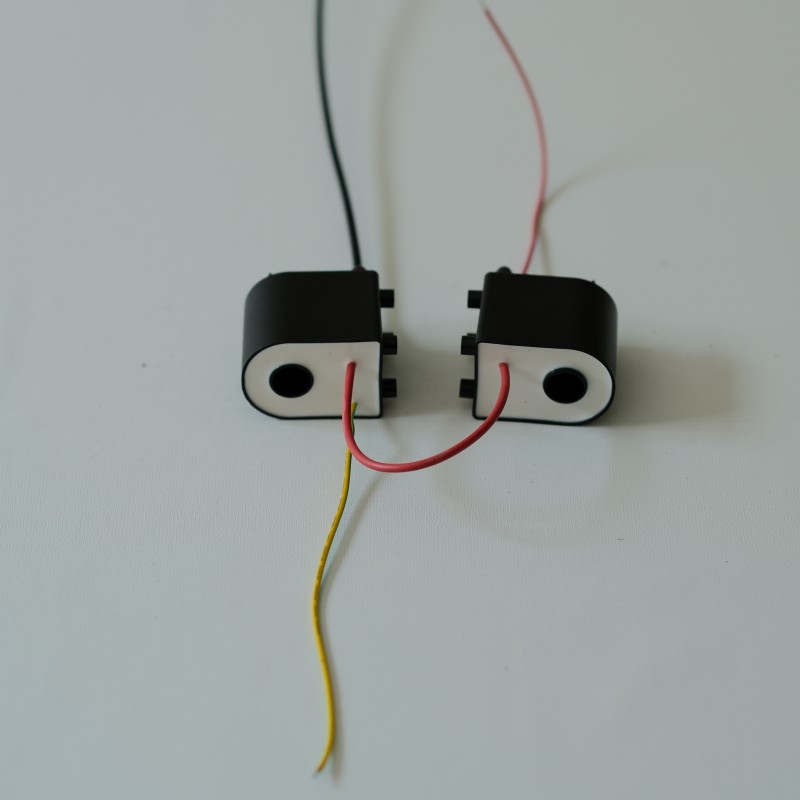
The flyback transformer remains a central component in isolated, low-to-medium-power conversion, but its role is evolving alongside faster switches and more demanding operating environments. Current innovation is not one breakthrough; it is a series of coordinated improvements to switching frequency, core behavior, winding structure, thermal performance, and feedback. These developments can help teams meet tighter packaging and regulatory targets while preserving safe isolation and dependable operation.
Innovations reshaping current flyback designs
Wide-bandgap switching and higher frequencies
Silicon carbide and gallium nitride switching devices can operate at higher frequencies and with lower switching losses in suitable circuits. This gives engineers more flexibility to reduce the size of energy-storage components, while the flyback transformer must handle faster voltage transitions and associated parasitic effects. Better switching devices do not guarantee a smaller or more efficient supply; layout, drive design, insulation, and thermal paths still determine the practical outcome.
As switching frequency rises, a flyback transformer may use a smaller magnetic core, but core loss and winding loss need careful review. Skin and proximity effects can increase conductor heating, and leakage inductance can produce voltage spikes that stress the switch. Designers increasingly combine device selection with magnetic simulation and prototype measurements, validating waveforms and temperature under intended load conditions before freezing a design.
Magnetic materials and winding construction
Core materials with improved high-frequency behavior are expanding design options, especially where compact dimensions and controlled losses matter. Selecting a flyback transformer core requires more than comparing a material's headline properties: flux density, operating temperature, waveform, and frequency all influence performance. Material availability and manufacturing consistency also matter because the chosen core must be repeatable in production, not merely effective in an isolated laboratory sample.
Winding innovations focus on reducing leakage inductance, controlling capacitance, and supporting isolation requirements within limited space. Layer arrangement, conductor shape, insulation systems, and winding tension can each influence electrical and thermal behavior. A flyback transformer designed with a deliberate winding strategy can simplify snubber demands, but close coupling may raise interwinding capacitance. Engineers therefore balance the specific coupling, insulation, and electromagnetic compatibility needs of the end product.
Digital control and system-level integration
Adaptive regulation and smarter protection
Digital control is enabling more configurable power conversion, including adjustments to switching behavior across changing input and load conditions. In a flyback transformer supply, control algorithms can help manage startup, transient response, standby operation, and fault recovery. These features depend on the controller and complete circuit, rather than the magnetic component alone, so engineers must assess the transformer alongside sensing, switching, and feedback choices.
Improved protection strategies are also shaping the flyback transformer design process. Overcurrent, overvoltage, short-circuit, and overtemperature responses need to work together without creating nuisance shutdowns or unsafe stress. Engineers can use measured operating data to tune thresholds and recovery behavior, then verify the result across realistic line, load, and ambient conditions. This system-level approach supports reliability without assuming that added software automatically removes electrical design risks.
Integration with compact power platforms
More applications require power conversion in crowded enclosures, including sensors, communication equipment, industrial controls, and auxiliary rails. A flyback transformer may be tailored to fit a particular board outline or insulation architecture, while the wider supply design addresses airflow, creepage, clearance, and service access. Integration can reduce interconnects and assembly steps, but it may also concentrate heat and complicate repair, making early mechanical review valuable.
The trend toward application-specific modules makes electrical and mechanical requirements more closely linked. When specifying a flyback transformer, teams should share input range, output requirements, isolation class, environmental limits, and mounting constraints early. A component such as this flyback transformer can be considered in the context of its intended circuit, but engineers still need to confirm its ratings and construction suit their own requirements.
Future trends and practical design priorities
Efficiency, thermal design, and sustainability
Future development will continue to emphasize efficiency across a wider range of operating conditions, not only at a single full-load point. The flyback transformer contributes through core and copper losses, while the switch, rectifier, and control strategy contribute their own losses. Engineers should evaluate standby and light-load behavior as well as rated operation because equipment may spend substantial time outside its peak-load condition.
Thermal modeling is becoming more important as designs shrink and power density rises. A flyback transformer can experience localized winding or core heating that is not obvious from a single case-temperature reading. Combining thermal estimates with testing helps teams assess insulation aging, nearby component temperatures, and enclosure limits. Future designs are likely to give more attention to material traceability, repairability, and energy use over the product lifecycle.
Data-informed qualification and customization
Simulation tools can shorten exploration of core geometry, winding arrangements, and electrical parasitics, but they do not replace physical validation. For each flyback transformer, measurement should confirm inductance, leakage, insulation performance, losses, and temperature rise against the actual operating waveform. Production-oriented checks are equally important: tolerances, winding placement, and assembly methods can shift performance between prototypes and repeat builds.
Customization is likely to remain a strong trend because power supplies face different constraints in industrial, medical, lighting, and communications equipment. A flyback transformer optimized for one use case may not fit another, even if the nominal power appears similar. Clear specifications and early supplier engineering discussions can clarify trade-offs in size, voltage, isolation, and thermal margin. This makes design intent—not novelty—the best guide to adopting future innovations.
FAQ
What is the most significant current innovation?
There is no single universal winner. Wide-bandgap switches, improved magnetic materials, and advanced control can each influence a flyback transformer design, but their value depends on frequency, power level, cost, thermal limits, and compliance needs. Evaluate them as parts of a complete converter.
Will higher switching frequency always make a supply smaller?
No. Higher frequency can reduce some component dimensions, but it may increase magnetic, switching, and electromagnetic interference challenges. A flyback transformer and its surrounding circuit must be designed together, then tested for losses, temperature, and isolation at realistic conditions.
How should engineers prepare for future trends?
Define measurable electrical, mechanical, environmental, and safety requirements before choosing new technology. Compare a flyback transformer against the actual operating profile, validate prototypes thoroughly, and confirm that construction and tolerances can be maintained in production. That process keeps innovation tied to application needs.