
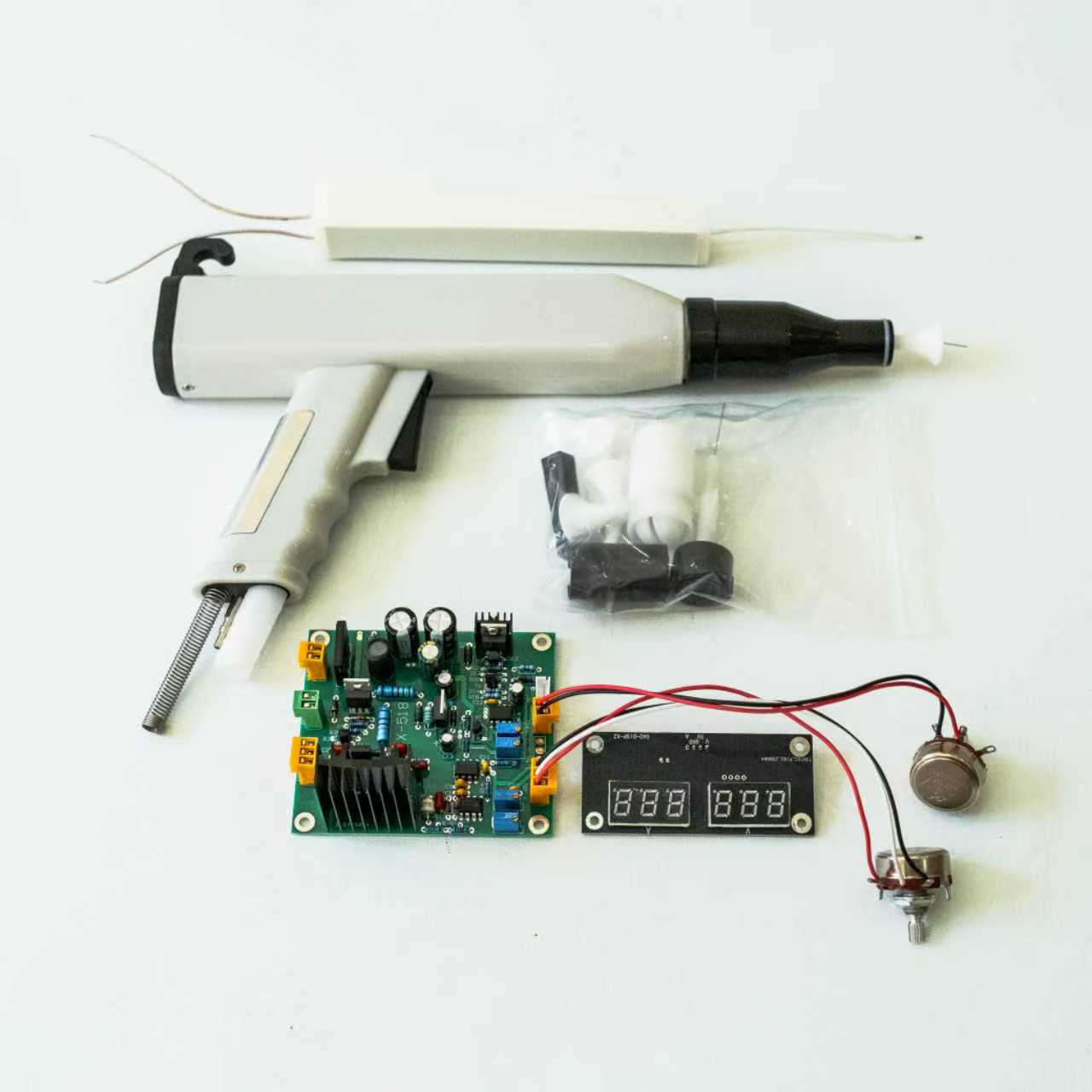
Electrostatic technology improves a powder coating spray gun by charging powder particles as they leave the nozzle, helping them move toward a grounded workpiece. The result is more controlled deposition than a simple air-driven spray process can provide. Understanding how a powder coating spray gun creates and uses that charge helps production teams connect equipment settings with coverage, material use, and finish consistency.

The efficiency gain is not simply a matter of applying more voltage. A powder coating spray gun works within a system that includes powder feed, compressed air, grounding, operator technique, and part geometry. When those elements are coordinated, electrostatic attraction can support more even coverage and reduce airborne powder that does not reach the part. This article explains the mechanism and the practical controls behind that improvement.
How electrostatic charging improves powder transfer
Charging powder as it leaves the nozzle
A powder coating spray gun uses a high-voltage field to give powder particles an electrical charge as they pass through or near the electrode. The particles then respond to the electric field around a grounded workpiece. This attraction helps direct the powder toward the surface, while the powder coating spray gun still relies on air to convey and shape the cloud. Effective charging therefore complements, rather than replaces, sound powder delivery.
For operators, the important change is the path the particles take after leaving the nozzle. A powder coating spray gun can deposit particles on accessible faces with less dependence on direct impact alone, which supports transfer efficiency when settings and grounding are suitable. The effect depends on powder characteristics, part distance, and the strength of the electrical field. A stable powder coating spray gun setup makes this attraction more predictable from part to part.
Connecting charge, grounding, and deposition
The workpiece must provide a reliable ground so charged powder has a clear destination. If hooks, contact points, or fixtures accumulate insulating powder, the powder coating spray gun may not achieve the intended attraction. Operators can inspect contact cleanliness and verify grounding as part of routine preparation. In this way, efficiency is not only a feature of the powder coating spray gun; it also reflects the condition of the entire workholding path.
A useful process check compares deposited powder with powder remaining in filters, booth recovery, and other collection areas. A powder coating spray gun may appear to produce a strong cloud while still sending excessive powder past the part. Monitor the workpiece ground, application distance, and powder feed together instead of increasing voltage automatically. This diagnostic approach helps distinguish an electrical issue from air movement or delivery variation at the powder coating spray gun.
Efficiency gains in real production conditions
Improving coverage while limiting overspray
Electrostatic attraction can help a powder coating spray gun place a larger share of the powder on the intended surface, reducing waste when the process is properly balanced. Less overspray may also ease the load on booth recovery and cleanup routines. These outcomes are not automatic: part shape, line speed, airflow, and operator motion all affect deposition. The powder coating spray gun performs best when the full application area is considered.
Coverage quality matters alongside powder use. A powder coating spray gun should deliver a consistent layer without creating heavy edges, thin corners, or patchy faces that require correction. Operators can use test panels and representative parts to assess the coating pattern after adjusting charge and flow. Comparing results across shifts gives teams practical evidence about whether a powder coating spray gun setting is improving coverage or merely changing the visible powder cloud.
Managing complex shapes and recesses
Part geometry can limit electrostatic deposition. Deep recesses, narrow channels, and interior corners may develop a Faraday-cage effect, where the electric field makes it difficult for charged particles to enter. A powder coating spray gun may need a different approach in these areas, such as adjusting voltage, flow, angle, or distance. The aim is balanced coverage, not maximum charge at every surface of the part.
For complex components, teams can divide the application into deliberate passes. The powder coating spray gun can first address recessed zones with controlled settings, then coat open faces with a pattern suited to broader coverage. A grounded fixture and consistent part presentation help make these passes repeatable. Recording the approach for recurring components turns the powder coating spray gun from an operator-dependent tool into a more controlled part of the production process.
Practical setup and control for reliable results
Balancing voltage, air, and powder feed
Voltage is only one process variable. A powder coating spray gun also depends on suitable conveying air, powder volume, nozzle condition, and distance from the workpiece. Excessive air can disturb the powder cloud, while insufficient flow can make delivery uneven. Adjust one variable at a time and observe the coating result. This method helps teams understand how the powder coating spray gun responds instead of masking one problem with another setting.
Powder consistency also matters because particle size, moisture, and fluidization influence how material moves through the equipment. Before changing a powder coating spray gun setting, check whether the feed is stable and the supply container is prepared according to process requirements. Inspect the electrode and nozzle for buildup or wear as well. Clean, repeatable delivery allows the powder coating spray gun to make better use of electrostatic charging.
Maintaining repeatability across shifts
A repeatable process needs defined checks, not just experienced judgment. Teams can document the powder coating spray gun settings associated with approved parts, along with grounding checks, application distance, and any geometry-specific technique. This record provides a useful starting point after color changes, maintenance, or a shift handover. If results drift, operators can compare current conditions with the established powder coating spray gun process before making broad adjustments.
When a high-voltage component needs evaluation, confirm compatibility with the equipment and follow applicable electrical safety procedures. A powder coating spray gun relies on stable charging, but servicing should be handled by qualified personnel. Reviewing the module, connections, and operating behavior can help identify whether inconsistent deposition relates to the electrical supply or to powder handling and application conditions.
FAQ
Does electrostatic charging eliminate overspray?
No. A powder coating spray gun can improve particle attraction to a grounded part, but it cannot eliminate overspray in every application. Part shape, booth airflow, operator technique, and settings still affect how much powder reaches the surface. Treat the powder coating spray gun as part of a complete application system, and assess recovered powder and finish quality together when judging efficiency.
Why can recesses remain difficult to coat?
The electric field may make it harder for charged powder to enter narrow or enclosed areas, creating a Faraday-cage effect. A powder coating spray gun may require lower voltage, a changed spray angle, or a separate controlled pass for these features. Test the method on representative parts, because the best powder coating spray gun approach depends on the dimensions and geometry being coated.
Which checks should operators make first?
Start with workpiece grounding, stable powder feed, clean contact points, and the condition of the nozzle and electrode. Then review distance, air flow, and voltage in a controlled sequence. These checks help identify why a powder coating spray gun is producing uneven deposition before the team makes larger process changes. Consistent records make the powder coating spray gun easier to set up and troubleshoot over time.