
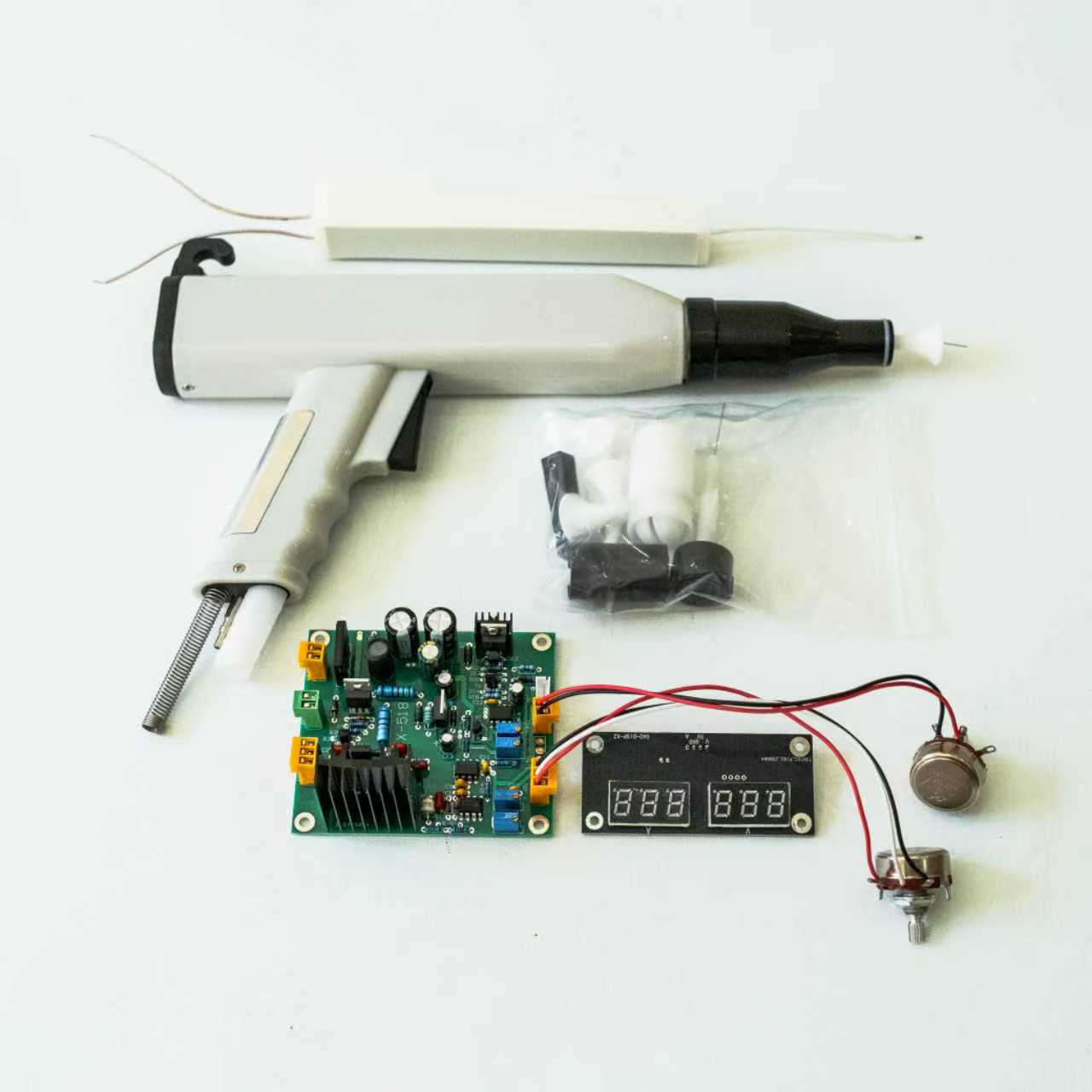
A powder coating spray gun improves coating quality by controlling how powder is charged, directed, and deposited on a part. When its settings suit the part geometry and powder, the result can be more even coverage, fewer defects, and a film that meets the specified finish. The gun is not a standalone fix: consistent preparation, grounding, and operator technique all influence the outcome.

Understanding the gun’s contribution helps production teams diagnose inconsistent finishes instead of adjusting settings by guesswork. A powder coating spray gun can support controlled transfer and repeatable application, but quality depends on the complete process. The following explains the mechanisms that matter, the settings and practices that make them useful, and the checks that help confirm whether a change has improved the finished coating.
How the gun controls powder deposition
Electrostatic charging attracts powder to the part
In electrostatic application, the powder coating spray gun gives powder particles an electrical charge as they travel toward a grounded workpiece. The difference in charge encourages particles to adhere to the surface before curing. This attraction helps reduce airborne overspray and supports a more controlled deposit, provided the part has a reliable ground path and the gun’s electrical system is operating within its intended range.
Charging is only one part of the transfer process. A powder coating spray gun must also deliver a stable powder cloud at a suitable rate, while the component’s shape and position affect the electric field. Recesses, sharp edges, and Faraday areas can respond differently from broad, exposed faces. Recognizing these limits helps operators distinguish a difficult geometry from a fault in the equipment or a poor application setting.
Airflow shapes the spray pattern
The powder coating spray gun uses conveying and pattern air to move powder and shape its plume. Excessive airflow can make the cloud turbulent, disturb powder already deposited, or push material past the workpiece. Too little airflow may create an unstable pattern or inconsistent delivery. A balanced pattern lets the operator cover the target steadily while maintaining an appropriate distance and angle from the surface.
Nozzle choice and condition also affect distribution. A powder coating spray gun with a clean, suitable nozzle can produce a predictable pattern for the part’s size and contours. Worn or partially obstructed components may cause uneven flow, spits, or a pattern that shifts during a pass. Routine inspection is therefore part of quality control, not simply equipment housekeeping, especially when a finish begins changing between runs.
Application practices that improve finish consistency
Match settings to part geometry and powder
A reliable starting point is to set the powder coating spray gun for the powder, component, and production conditions rather than copying a setting from an unrelated job. Powder characteristics influence flow and charging, while part size and shape determine access and coverage needs. Operators should make controlled adjustments, changing one variable at a time so the effect on deposition can be observed and repeated.
For broad, accessible surfaces, a powder coating spray gun can be moved in steady, overlapping passes to avoid gaps and heavy stripes. Complex parts may need a different sequence, with recessed areas treated before exposed faces. This order can help limit the shielding effect in deep features. The operator should preserve a consistent working distance and avoid lingering in one spot, which can create uneven thickness.
Use grounding and operator technique consistently
Grounding supports the electrostatic attraction on which the powder coating spray gun relies. Oil, paint, or accumulated powder on contact points can interfere with the path to ground, so the fixture and workpiece connection deserve regular attention. If powder does not adhere consistently, verify grounding before increasing output. A higher setting cannot reliably compensate for a poor electrical path and may introduce other application problems.
Operator movement matters because the powder coating spray gun deposits material as it travels across the surface. Consistent speed, distance, and angle make passes easier to reproduce across shifts. Training should cover part-specific sequences and safe handling as well as the control panel. When several operators share a line, documented settings and clear work instructions can reduce variation without removing the need to inspect actual results.
Quality checks and troubleshooting in production
Evaluate the cured coating, not only the spray cloud
A powder coating spray gun may appear to spray evenly while the cured finish reveals thin areas, roughness, pinholes, or excessive build. Inspect representative parts after curing and compare them with the job requirements. Film thickness measurements, visual inspection, and adhesion checks where specified provide evidence about the outcome. A consistent evaluation method helps the team connect a visible defect to an adjustment rather than relying on impressions alone.
When a defect appears, trace the process in a logical order. Confirm the powder coating spray gun is clean and delivering steadily, then inspect powder condition, grounding, airflow, and operator technique. Also consider pretreatment and curing conditions, since the gun cannot correct contamination or an unsuitable cure. Recording the symptom, part location, settings, and corrective action helps identify recurring causes across production runs.
Maintain equipment and verify changes
Preventive maintenance protects the repeatability of a powder coating spray gun. Clean powder-contact passages using the approved method, inspect hoses and connections, and check wear items according to equipment guidance. Keep powder handling orderly to limit contamination and moisture exposure. These routines reduce uncertainty when a process shifts and make it easier to determine whether a quality issue began with application, material handling, or another stage.
After an adjustment, verify the powder coating spray gun on a representative part rather than assuming that a changed reading guarantees a better finish. Compare coverage and cured results against the established acceptance criteria, then document the setting if it performs as intended. This disciplined feedback loop helps preserve a usable process window. It also keeps changes tied to evidence, particularly when jobs vary in geometry or finish requirements.
FAQ
Can a powder coating spray gun prevent every coating defect?
No. A powder coating spray gun can help control charging, pattern, and deposition, but defects may also result from surface preparation, powder condition, grounding, handling, or curing. Diagnose the whole process before attributing a problem to the gun alone.
Why does coverage vary on recessed areas?
A powder coating spray gun relies on an electrical field that can be less effective in recessed geometry, where charged particles may favor exposed surfaces. Adjusting the application sequence and technique can help, while part design and grounding remain important considerations.
How can a team check whether a setting change worked?
Apply the change to a representative part and evaluate the cured coating against the job’s acceptance criteria. Record the powder coating spray gun settings, inspect coverage and thickness where required, and retain the change only when the result is repeatable.