
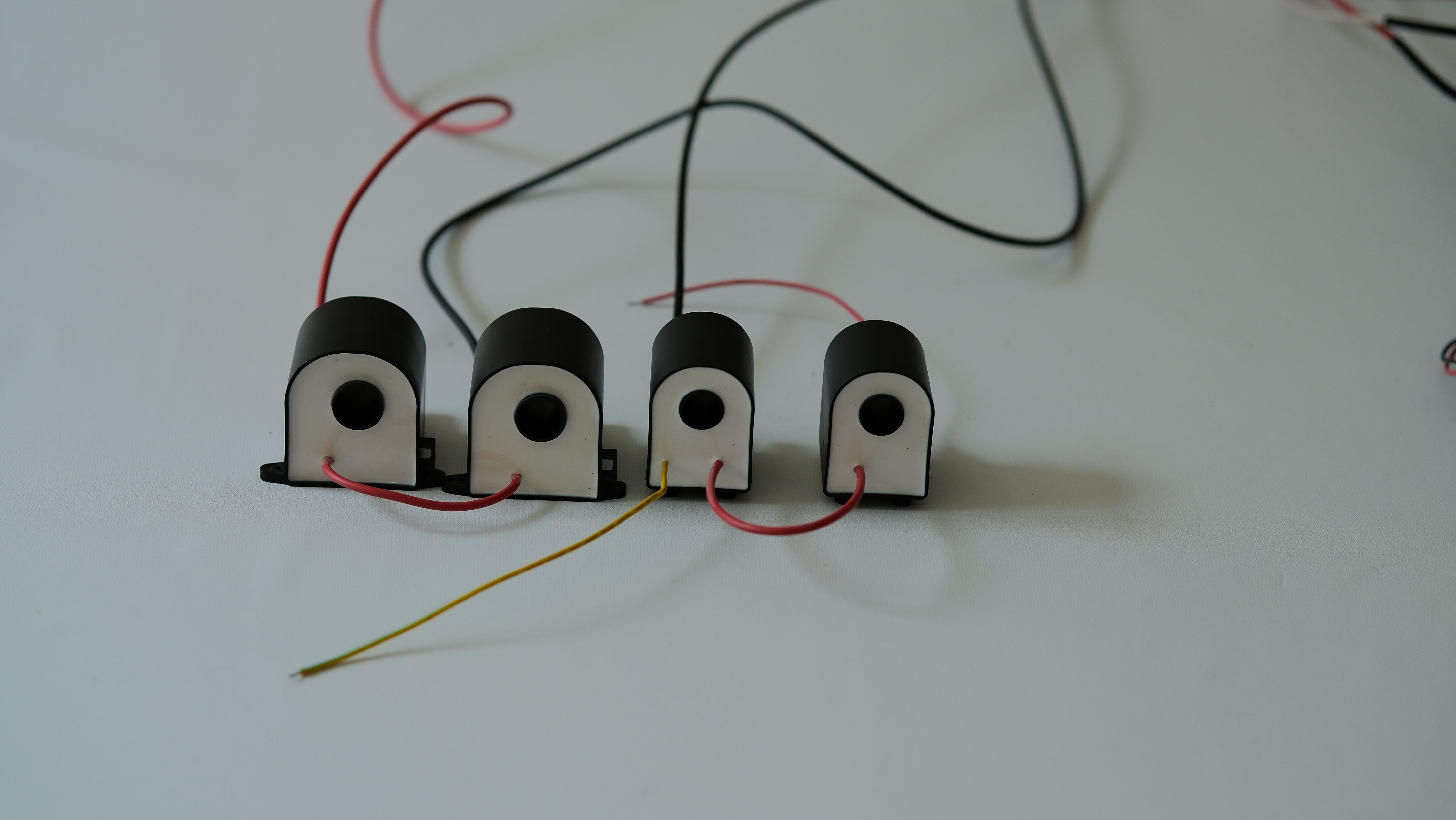
Selecting the right flyback transformer model and specification is a critical engineering decision that directly impacts power supply performance, reliability, and cost-effectiveness in switched-mode power supply (SMPS) applications. Engineers and procurement specialists often face challenges when navigating technical datasheets, evaluating core materials, and matching transformer characteristics to load requirements. A properly selected flyback transformer ensures optimal energy transfer, minimizes electromagnetic interference, and prevents thermal failures, while an incorrect choice can lead to efficiency losses, voltage regulation issues, and premature component failure. Understanding the systematic approach to transformer selection—from analyzing power requirements to verifying electrical and mechanical specifications—empowers technical teams to make informed decisions that balance performance objectives with manufacturing constraints.
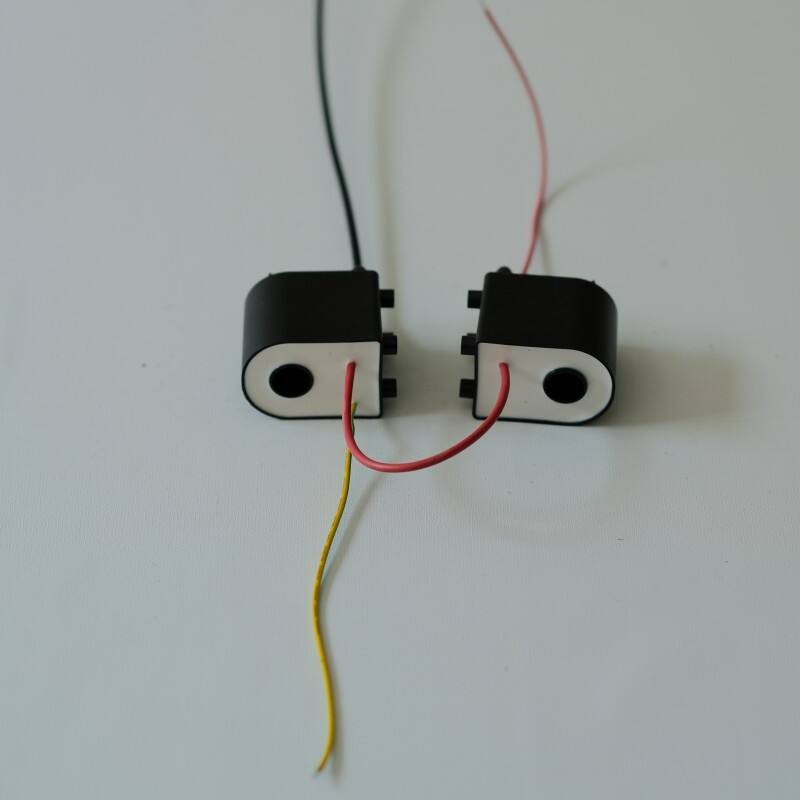
The selection process for a flyback transformer involves multiple interdependent parameters including input voltage range, output power requirements, operating frequency, isolation requirements, and environmental conditions. Each specification influences the transformer's core geometry, winding configuration, and material composition. This comprehensive guide walks through the systematic methodology professional engineers use to evaluate transformer models, explaining how to interpret manufacturer specifications, calculate design margins, and verify compatibility with existing power supply topologies. Whether you are designing a new power converter from scratch or replacing an existing component in an established product line, following a structured selection framework reduces design iterations and accelerates time-to-market while maintaining safety and regulatory compliance.
Understanding Power Requirements and Operating Conditions
Determining Output Power and Voltage Specifications
The foundation of flyback transformer selection begins with accurately defining the output power requirements across all operating conditions. Engineers must calculate the maximum continuous power output, accounting for multiple output rails if present, and include appropriate design margins—typically fifteen to twenty percent above nominal load—to accommodate transient conditions and component tolerances. Output voltage specifications must include not only the nominal voltage but also acceptable regulation ranges, ripple voltage limits, and load transient response requirements. For applications with multiple output voltages, the transformer must be evaluated for cross-regulation performance, ensuring that changes in one output load do not excessively affect other output voltages. These power and voltage parameters directly determine the required transformer turns ratio, core size, and winding configuration that will form the basis for model selection.
Input voltage range presents another critical specification that shapes transformer design requirements. Wide input voltage applications, such as universal AC input power supplies accepting 90-264VAC, impose greater stress on the flyback transformer compared to narrow input range designs. The transformer must handle the maximum reflected voltage at minimum input conditions while avoiding core saturation at maximum input voltage. This necessitates careful evaluation of the transformer's voltage-time product capabilities and the selection of appropriate core materials with adequate saturation flux density. Additionally, the input voltage range affects the required primary inductance value, which influences both the transformer's physical size and its ability to store energy during the switching cycle. Engineers should request or calculate the primary inductance specification based on the desired operating mode—continuous conduction mode versus discontinuous conduction mode—as this fundamentally changes the transformer's energy transfer characteristics.
Evaluating Operating Frequency and Switching Topology
Operating frequency represents a pivotal specification that affects multiple aspects of flyback transformer performance and selection. Higher switching frequencies enable smaller transformer core sizes and reduced component footprint, making them attractive for space-constrained applications, but they also increase core losses, proximity effects in windings, and electromagnetic interference challenges. Typical flyback converter frequencies range from 50kHz to 200kHz for standard industrial applications, with some high-density designs operating above 500kHz. The selected transformer must be designed with core materials and winding techniques appropriate for the intended frequency range. Ferrite core materials dominate modern flyback transformer designs due to their low losses at high frequencies, but the specific ferrite grade must match the frequency and temperature operating conditions. Engineers should verify that the manufacturer has optimized the transformer design for the target frequency, including considerations for skin effect and proximity effect losses that become significant as frequency increases.
The switching topology and control scheme also influence transformer selection parameters. Flyback converters operating in discontinuous conduction mode require different transformer characteristics compared to continuous conduction mode designs, particularly regarding primary inductance values and peak current handling capabilities. Quasi-resonant and resonant switching topologies impose unique voltage and current stress profiles on the transformer that must be accommodated through appropriate insulation systems and thermal management. The reset mechanism—whether active clamp, RCD snubber, or simple resistor-capacitor-diode clamp—affects the voltage stress on the primary winding and influences the required voltage rating of the transformer construction. When selecting a transformer model, engineers must communicate these topology-specific requirements to manufacturers or carefully review datasheets to ensure the component is validated for the intended switching architecture and control methodology.
Accounting for Environmental and Regulatory Requirements
Environmental operating conditions directly impact flyback transformer selection by defining the thermal, mechanical, and electrical stress levels the component must withstand throughout its service life. Ambient temperature range affects both the core material temperature rise and the current-carrying capacity of the windings, with high-temperature applications requiring conservative current density specifications and potentially upgraded insulation materials. Industrial applications may specify operating temperatures from negative forty to positive eighty-five degrees Celsius, while automotive under-hood applications may extend to one hundred twenty-five degrees Celsius or higher. The transformer's thermal resistance from core to ambient must be evaluated in conjunction with the expected power losses to ensure internal temperatures remain within material limits. Altitude considerations affect insulation clearance and creepage requirements, with high-altitude applications requiring increased spacing to prevent voltage breakdown in lower-density air. Humidity and contamination exposure may necessitate conformal coating or encapsulation to protect the transformer windings and terminations from corrosion and electrical leakage paths.
Regulatory compliance requirements significantly constrain the selection of appropriate flyback transformer models, particularly regarding safety isolation and electromagnetic compatibility standards. Medical, industrial control, and information technology equipment often require reinforced or double insulation between primary and secondary windings, mandating specific creepage and clearance distances that affect transformer construction and physical size. Safety agency certifications such as UL, CSA, VDE, or CQC verify that the transformer meets minimum insulation integrity, thermal endurance, and fault condition performance standards. Electromagnetic interference standards like CISPR 22 or FCC Part 15 impose limits on conducted and radiated emissions that the transformer construction must support through proper winding techniques, shielding strategies, and termination arrangements. When evaluating transformer models, engineers should verify that existing agency approvals cover the intended application and end-product certification requirements, as obtaining custom approvals for modified transformers can significantly extend development timelines and increase costs.
Analyzing Electrical Specifications and Performance Parameters
Interpreting Inductance and Turns Ratio Specifications
Primary inductance represents one of the most fundamental electrical specifications of a flyback transformer, determining the energy storage capability and the operating mode boundary between continuous and discontinuous conduction. The required primary inductance depends on the maximum input voltage, minimum switching frequency, maximum duty cycle, and the desired peak-to-peak inductor current ripple. For discontinuous conduction mode operation, lower inductance values allow the core to fully reset during each switching cycle, enabling simplified control and eliminating the risk of transformer saturation in transient conditions. Continuous conduction mode designs require higher inductance values to maintain current flow throughout the switching period, reducing peak currents and improving efficiency at high power levels but increasing transformer size. When reviewing manufacturer specifications, engineers should note the inductance tolerance—typically ranging from plus or minus ten to twenty percent—and verify that the worst-case inductance value still satisfies the power supply control loop requirements and stability criteria.
The turns ratio between primary and secondary windings directly establishes the voltage transformation relationship and must be selected to match the desired output voltage while accounting for component voltage drops and regulation requirements. The ideal turns ratio calculation considers the minimum input voltage, maximum duty cycle limit, forward voltage drops in the output rectifier, and the desired DC output voltage including regulation tolerance. Multiple output flyback transformer designs require careful turns ratio optimization to balance the competing regulation requirements of different output channels, often necessitating post-regulation on one or more outputs. Manufacturers typically specify turns ratios as primary-to-secondary ratios such as ten-to-one or may provide detailed winding information listing the number of turns for each winding. Engineers should verify that the specified turns ratio produces acceptable voltage regulation across the full input voltage range and load conditions, and should consider the impact of turns ratio on reflected voltage stress experienced by the primary-side switching transistor. Leakage inductance, though often considered a parasitic parameter, is intrinsically related to the winding geometry and turns ratio implementation, affecting voltage spikes and requiring snubber circuit consideration during transformer selection.
Evaluating Current Ratings and Thermal Performance
Current ratings for flyback transformer windings must be evaluated in terms of both DC current-carrying capacity and AC ripple current capability, as the combination determines the total copper losses and thermal rise. Primary winding current ratings typically specify the maximum DC current or RMS current that the winding can continuously handle while maintaining temperature rise within acceptable limits—commonly thirty to forty degrees Celsius above ambient at rated power. The current rating depends on the wire gauge, number of parallel strands in litz wire constructions, winding technique, and the thermal dissipation characteristics of the core and bobbin assembly. Engineers must calculate the actual RMS current in their application, accounting for the switching waveform shape—triangular in discontinuous mode, trapezoidal in continuous mode—and verify that it remains below the manufacturer's specified rating with appropriate derating for elevated ambient temperatures or reduced cooling conditions. Secondary winding current ratings follow similar principles but must additionally account for the rectification scheme, with peak current ratings becoming critical in applications using fast recovery diodes or synchronous rectification.
Thermal performance specifications provide critical guidance for ensuring reliable operation throughout the flyback transformer's service life. Core loss and copper loss combine to generate heat within the transformer structure, with the temperature rise directly affecting insulation longevity, magnetic properties, and electrical performance. Manufacturers may specify maximum hot spot temperature, average winding temperature rise, or surface temperature rise under defined operating conditions. When selecting a transformer model, engineers should evaluate the specified thermal performance against the actual power losses expected in the application, considering that losses increase with higher frequencies, higher current densities, and suboptimal operating points. Thermal resistance values from windings to ambient or from core to ambient enable more detailed thermal modeling when standard operating conditions do not match the intended application profile. Applications with limited airflow, high ambient temperatures, or compact enclosures may require uprating the transformer selection to a larger model with improved thermal dissipation characteristics, accepting the size and cost penalty to ensure adequate reliability margins.
Assessing Parasitic Elements and High-Frequency Behavior
Leakage inductance emerges as a critical parasitic parameter in flyback transformer selection because it directly influences voltage stress on switching components, efficiency losses, and electromagnetic interference generation. Leakage inductance results from imperfect magnetic coupling between primary and secondary windings, with energy stored in leakage inductance being released as voltage spikes during transistor turn-off rather than being transferred to the output. Lower leakage inductance values—typically achieved through interleaved winding techniques, sectioned bobbin construction, or tight coupling geometries—reduce snubber losses and switching stress. Manufacturer datasheets should specify leakage inductance referenced to the primary side, measured with secondary windings shorted, typically expressed as a percentage of primary inductance or as an absolute inductance value. Engineers should target leakage inductance below three to five percent of primary inductance for general-purpose applications, with more stringent requirements for high-efficiency or high-voltage designs. The selected flyback transformer model must demonstrate leakage inductance values that allow the existing snubber circuit design to adequately clamp voltage spikes or provide sufficient design margin for snubber optimization during prototype development.
Interwinding capacitance represents another significant parasitic parameter affecting high-frequency performance and electromagnetic compatibility. Capacitance between primary and secondary windings provides a path for common-mode noise currents, directly impacting conducted emissions performance and potentially creating ground loop issues in sensitive applications. The interwinding capacitance also affects the transformer's high-frequency impedance characteristics and influences the voltage transient coupling between isolated sections. Transformer construction techniques such as electrostatic shields, increased insulation thickness, and optimized winding arrangements can reduce interwinding capacitance, though often at the expense of increased leakage inductance or larger physical size. When selecting a flyback transformer for applications with stringent electromagnetic interference requirements, engineers should review the specified interwinding capacitance—typically measured in picofarads and specified at a standard test frequency—and evaluate whether additional common-mode filtering or shielding will be necessary. Some specialized transformer designs incorporate internal Faraday shields between primary and secondary windings, providing controlled capacitance distribution and improved noise performance while maintaining necessary safety isolation clearances.
Evaluating Physical Construction and Mechanical Specifications
Assessing Core Material and Geometry Selection
Core material selection fundamentally affects flyback transformer performance characteristics including saturation flux density, core loss behavior, temperature stability, and cost. Manganese-zinc ferrite materials dominate modern flyback transformer designs due to their combination of high permeability, low losses at switching frequencies above 20kHz, and moderate saturation flux density around 300-500 millitesla. Different ferrite grades offer optimized performance for specific frequency ranges and temperature conditions, with material manufacturers providing extensive technical data on loss curves, temperature coefficients, and aging characteristics. When selecting a flyback transformer model, engineers should verify that the specified core material matches the application frequency range and thermal environment, recognizing that operating the core near or beyond its specified frequency range dramatically increases losses and reduces efficiency. Power ferrite materials exhibit frequency-dependent loss characteristics that must be considered during transformer evaluation, with core losses increasing proportionally to frequency raised to an exponent typically between 1.5 and 2.5 depending on flux density and material formulation.
Core geometry affects the transformer's energy storage capability, thermal dissipation characteristics, and physical footprint. Standard core shapes for flyback transformer applications include E-cores, EE-cores, EI-cores, pot cores, and planar cores, each offering distinct advantages for specific applications. E-core and EE-core configurations provide good accessibility for winding, efficient use of bobbin volume, and moderate cost, making them suitable for general-purpose industrial applications. Pot cores offer superior magnetic shielding and reduced electromagnetic interference radiation but typically exhibit higher cost and more complex winding procedures. Planar core geometries enable low-profile designs and excellent thermal performance through large surface area, ideal for space-constrained applications willing to accept premium pricing. The effective cross-sectional area, magnetic path length, and core window area collectively determine the transformer's power handling capability for a given core material and operating frequency. When comparing flyback transformer models, engineers should evaluate whether the core geometry provides adequate design margins for the intended power level while fitting within mechanical envelope constraints, recognizing that undersized cores risk saturation and thermal failures while oversized cores unnecessarily increase cost and weight.
Examining Winding Construction and Terminal Configuration
Winding construction techniques significantly impact flyback transformer electrical performance, reliability, and manufacturing consistency. Manual winding methods offer flexibility for custom designs and prototype quantities but exhibit higher unit-to-unit variability in parameters like leakage inductance and interwinding capacitance. Automated winding equipment provides superior consistency and repeatability, essential for production volumes where tight parameter tolerances affect power supply performance and reduce manufacturing yield losses. Wire selection between conventional solid or stranded magnet wire versus litz wire construction affects AC resistance at high frequencies, with litz wire offering reduced proximity effect and skin effect losses but requiring more complex termination processes. The number of winding layers, the layer sequencing between primary and secondary windings, and the use of insulation tape between layers all influence the transformer's parasitic characteristics and safety compliance. When evaluating transformer models, engineers should inquire about the winding technique and construction methodology, particularly for critical applications where parameter consistency across production volumes affects end-product performance or certification compliance.
Terminal configuration and mounting style affect both the ease of assembly and the electrical performance of the flyback transformer in the final application. Through-hole mounting with pin terminals provides robust mechanical attachment and straightforward integration into conventional printed circuit board layouts, with pin spacing and length standardized for common core sizes. Surface-mount terminals enable automated pick-and-place assembly and support compact board layouts, though they require careful consideration of mechanical stress during thermal cycling and board flexure. Terminal current rating must match or exceed the winding current specifications, with adequate copper cross-section to avoid hot spots at the termination points. Some transformer models incorporate integrated mounting hardware such as clips, brackets, or adhesive pads, simplifying mechanical installation but potentially limiting board layout flexibility. Pin configuration should be evaluated for compatibility with the power supply board layout, verifying that primary and secondary terminals provide adequate creepage and clearance distances per safety standards while minimizing circuit board trace routing complexity. Engineers should also consider whether the terminal configuration facilitates electrical testing during manufacturing, with accessible test points enabling in-circuit verification of transformer parameters and polarity verification before powering the circuit.
Verifying Safety Compliance and Insulation Integrity
Safety isolation represents a non-negotiable requirement for flyback transformer applications involving hazardous voltages or where user-accessible outputs must be isolated from AC mains inputs. Isolation voltage ratings specify the maximum voltage differential the transformer insulation system can withstand between primary and secondary windings without breakdown, typically tested using high-potential dielectric strength tests at voltages ranging from 1500VDC to 4000VDC or higher depending on the application's safety classification. Basic insulation provides fundamental protection against electric shock and is appropriate for class II equipment with double insulation systems, while reinforced insulation combines the characteristics of two layers of basic insulation for applications requiring single-component isolation integrity. The physical separation between windings, the insulation material properties, and the manufacturing process control collectively determine the achieved isolation performance. When selecting a flyback transformer model, engineers must verify that the isolation rating meets or exceeds the system requirements with adequate margin for voltage transients and aging effects, recognizing that insulation degradation over time reduces the effective isolation capability below the initial rating.
Creepage and clearance distances represent the physical spacing requirements enforced by safety standards to prevent electrical breakdown through surface tracking or air breakdown between conductors at different potentials. Creepage distance measures the shortest path along the surface of insulating material between conductive parts, while clearance distance measures the shortest direct air path. Required distances depend on the working voltage, the pollution degree of the operating environment, and the material group classification of the insulation material. Flyback transformer construction must provide adequate spacing between primary and secondary terminals, between winding layers, and between windings and the core structure to satisfy applicable safety standards such as IEC 60950, IEC 62368, or UL 1446. Transformer models designed for safety-critical applications typically incorporate physical barriers such as insulation walls in the bobbin structure, triple-insulated wire for secondary windings, or margin tape extending beyond winding areas to guarantee compliance. Engineers should request detailed mechanical drawings and safety certification reports to verify that the proposed transformer model provides documented compliance with relevant safety standards, avoiding costly redesign iterations or certification delays when non-compliant components are discovered during final product testing.
Validating Application Compatibility and Design Margins
Calculating Worst-Case Operating Stress Conditions
Comprehensive worst-case analysis ensures the selected flyback transformer model maintains reliable operation across all combinations of input voltage, load current, ambient temperature, and component tolerances. The stress analysis begins by identifying the operating point that produces maximum flux density in the core, typically occurring at maximum input voltage and maximum load current, verifying that peak flux density remains below eighty to eighty-five percent of the core material's saturation specification with margin for temperature effects. Voltage stress analysis determines the maximum reflected voltage appearing across the primary-side switch, combining the input voltage with the reflected output voltage and leakage inductance spike contribution, ensuring that switching device ratings provide adequate margin under all fault conditions including output overload and short circuit. Current stress calculations identify the maximum RMS and peak currents in both primary and secondary windings, accounting for tolerance stack-up in turns ratio, input voltage, and inductance values, verifying that worst-case currents remain within the thermal and magnetic saturation limits of the transformer construction.
Temperature rise analysis under worst-case conditions prevents thermal failures and ensures adequate insulation life expectancy. The combined power loss from core losses and copper losses generates heat within the transformer structure, with temperature rise dependent on thermal resistance and ambient cooling conditions. Engineers should calculate power losses at the highest expected operating frequency, maximum duty cycle, and highest RMS currents, then apply the thermal resistance specification to predict hot spot temperatures. Worst-case thermal conditions typically occur at maximum ambient temperature combined with maximum input voltage and maximum load current, though some applications experience worst thermal stress at low input voltage where primary currents reach maximum values. The predicted maximum temperature should remain within the thermal class rating of the insulation materials—typically class B (130°C), class F (155°C), or class H (180°C)—with sufficient margin to account for localized hot spots, aging effects, and thermal model uncertainties. Applications with inadequate thermal margin should consider uprating to a larger transformer model or implementing active cooling measures such as forced air ventilation across the transformer location.
Verifying Compatibility with Control IC and Protection Circuits
The flyback transformer electrical characteristics must be compatible with the selected PWM control integrated circuit specifications and operating modes. Controller integrated circuits specify maximum duty cycle limits, typically in the range of 0.45 to 0.50, which directly constrains the achievable voltage conversion ratio and influences transformer turns ratio selection. The transformer inductance value affects the current sense signal slope and magnitude, which must be compatible with the controller's current limit threshold and slope compensation requirements for stable operation. Peak current mode control requires accurate representation of the transformer primary current through a current sense resistor, necessitating verification that the transformer inductance tolerance and saturation characteristics do not cause false current limit triggering or allow excessive currents under transient conditions. Voltage mode control schemes are less sensitive to inductance tolerances but require careful open-loop gain and phase margin analysis to ensure stable regulation with the selected transformer parameters. Engineers should simulate the complete control loop including the transformer parasitics to verify adequate phase margin and transient response before committing to a specific transformer model.
Protection circuits including overvoltage protection, overcurrent protection, and short-circuit protection must function reliably with the selected flyback transformer characteristics. Output overvoltage protection detectors must respond quickly enough to prevent damage when the transformer delivers excessive voltage due to control failure or load disconnection, requiring consideration of the transformer's energy storage and transfer dynamics. Overcurrent protection schemes sense either primary-side current or secondary-side current, with sensing accuracy and response time affected by the transformer leakage inductance and interwinding capacitance. Primary-side sensing provides inherent cycle-by-cycle current limiting but must account for the reflected secondary current through the turns ratio and the magnetizing current component. Secondary-side sensing offers more direct load current measurement but requires isolation of the sensing signal back to the primary control circuit. Short-circuit protection must safely handle the condition where output terminals are shorted, verifying that neither the transformer nor associated components experience destructive stress levels. The transformer's inductance value and saturation characteristics determine how quickly fault current builds during short-circuit conditions, affecting the required response speed of protection circuits and influencing component stress levels during fault events.
Conducting Design Margin and Reliability Assessment
Adequate design margins separate successful products from field failures, requiring systematic evaluation of component stress levels relative to specifications across all operating conditions. Industry-standard practice targets operating stress levels at fifty to seventy percent of component ratings for commercial applications, with military and aerospace applications requiring even more conservative derating. For flyback transformer selection, key margin assessments include peak flux density versus saturation limit, operating temperature versus material thermal rating, voltage stress versus insulation system rating, and current density versus thermal capacity. Insufficient margin in any parameter creates risk of premature failure, performance degradation, or unpredictable behavior under worst-case conditions. The margin analysis should account for component tolerance distributions, recognizing that statistical variation means some production units will operate closer to limits than nominal calculations suggest. Engineers should request or measure actual transformer parameter distributions from the manufacturer to inform statistical worst-case analysis rather than relying solely on datasheet maximum tolerance values.
Reliability prediction methodologies such as MIL-HDBK-217 or IEC 61709 provide frameworks for estimating mean time between failure based on component stress levels, operating temperature, and environmental conditions. While transformer failure rates are typically low compared to semiconductor components, operating near stress limits significantly accelerates aging mechanisms including insulation degradation, core material property changes, and termination fatigue. The dominant failure mechanisms in flyback transformers include insulation breakdown from electrical overstress or thermal degradation, winding opens from mechanical fatigue or poor termination integrity, and parametric drift from core material aging or contamination. Long-term reliability assessment should include accelerated life testing or analysis of field return data to validate that the selected transformer model meets target reliability specifications. Critical applications may warrant qualification testing including thermal cycling, humidity exposure, vibration testing, and high-potential isolation testing to verify that the transformer construction withstands the intended operating environment without degradation. Specifying qualified transformer models with demonstrated field performance history reduces program risk compared to selecting untested designs or marginal specifications that lack validation data.
FAQ
What is the typical lead time for custom flyback transformer designs versus standard catalog models?
Standard catalog flyback transformer models typically offer delivery lead times ranging from two to six weeks depending on inventory availability and order quantity, providing the fastest path to prototype and production. Custom-designed transformers require engineering time for electromagnetic design, prototype fabrication, and validation testing, resulting in development cycles of six to twelve weeks for the initial samples. Production lead times for custom transformers typically range from four to eight weeks after design approval, though tooling costs and minimum order quantities may apply. Many manufacturers offer semi-custom options where existing bobbin and core tooling is used with modified winding specifications, providing a compromise between standard and fully custom designs with moderate lead time and cost implications.
How do I determine if a flyback transformer requires additional thermal management or heatsinking?
Thermal management requirements depend on the transformer's power dissipation, thermal resistance characteristics, and the maximum allowable temperature rise in the application environment. Calculate total power loss by summing core losses and copper losses at the operating frequency and current levels, then multiply by the thermal resistance specification to predict temperature rise above ambient. If the predicted hot spot temperature exceeds the insulation temperature rating or reduces reliability margins below acceptable levels, additional thermal management is necessary. Solutions include forced air cooling with fans, thermally conductive mounting interfaces to spread heat into the circuit board or chassis, or selecting a larger transformer model with improved thermal dissipation capability through increased surface area or better core-to-ambient coupling.
Can a single flyback transformer design work across different input voltage ranges such as 110VAC and 220VAC applications?
Universal input flyback transformer designs can accommodate wide input voltage ranges from 90VAC to 264VAC by selecting appropriate core size, turns ratio, and primary inductance values that satisfy requirements at both voltage extremes. The transformer must handle maximum flux density at high input voltage without saturating while maintaining sufficient energy storage and acceptable duty cycle at low input voltage. The turns ratio is typically optimized for the geometric mean of the input range to balance reflected voltage stress and duty cycle limits. Wide input range designs generally require larger core sizes compared to narrow input specifications due to the increased volt-second product and the need to prevent saturation across the full range. Alternatively, some applications use voltage-selectable input designs with switchable primary winding taps or separate transformers optimized for each voltage range, trading increased complexity for improved performance and efficiency at each operating point.
What documentation should I request from the manufacturer when selecting a flyback transformer for a safety-certified product?
Comprehensive technical documentation for safety-certified applications should include detailed electrical specifications with tolerances, mechanical drawings showing all critical dimensions including creepage and clearance distances, material certifications identifying the insulation system and thermal class, safety agency approval certificates with file numbers and applicable standards, high-potential test reports demonstrating isolation voltage integrity, and manufacturing process documentation establishing quality control procedures. Request the transformer specification sheet listing primary and secondary inductances, turns ratios, voltage and current ratings, leakage inductance, interwinding capacitance, and core material properties. Obtain safety certification documentation proving compliance with relevant standards such as UL 1446, IEC 60950, or IEC 62368 for the specific isolation classification required by your application. Manufacturing capability data including process capability indices and quality management system certifications provide confidence in consistent production quality across volume manufacturing.
Table of Contents
- Understanding Power Requirements and Operating Conditions
- Analyzing Electrical Specifications and Performance Parameters
- Evaluating Physical Construction and Mechanical Specifications
- Validating Application Compatibility and Design Margins
-
FAQ
- What is the typical lead time for custom flyback transformer designs versus standard catalog models?
- How do I determine if a flyback transformer requires additional thermal management or heatsinking?
- Can a single flyback transformer design work across different input voltage ranges such as 110VAC and 220VAC applications?
- What documentation should I request from the manufacturer when selecting a flyback transformer for a safety-certified product?