
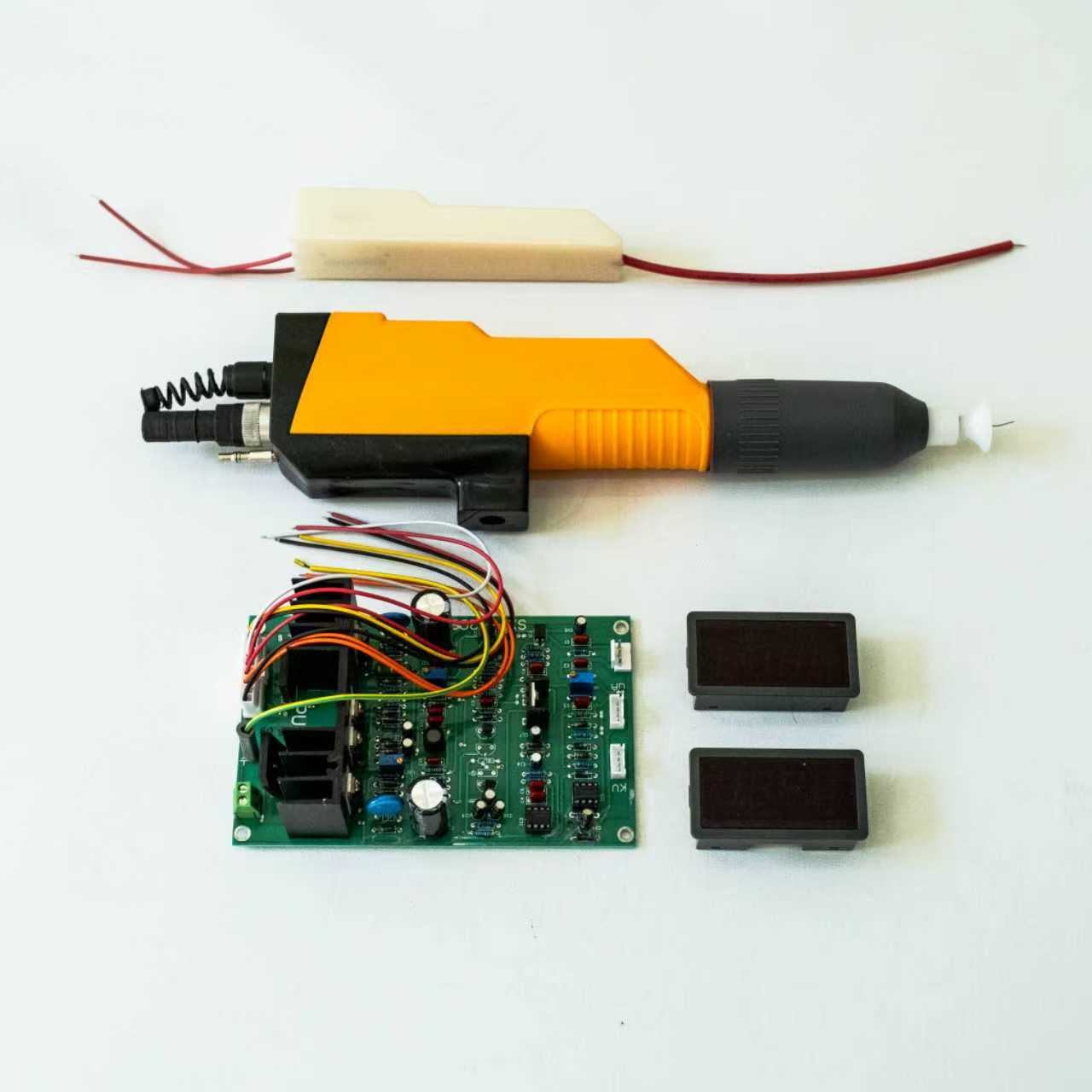
In modern industrial finishing operations, the powder coating spray gun has become one of the most critical tools for achieving consistent, high-quality surface finishes. As manufacturers face increasing pressure to reduce material waste, improve throughput, and meet tighter quality standards, the technology embedded within the spray gun itself plays a decisive role. Electrostatic technology, in particular, has fundamentally changed how powder is applied, transferred, and bonded to workpiece surfaces, making it a cornerstone of efficient modern coating lines.
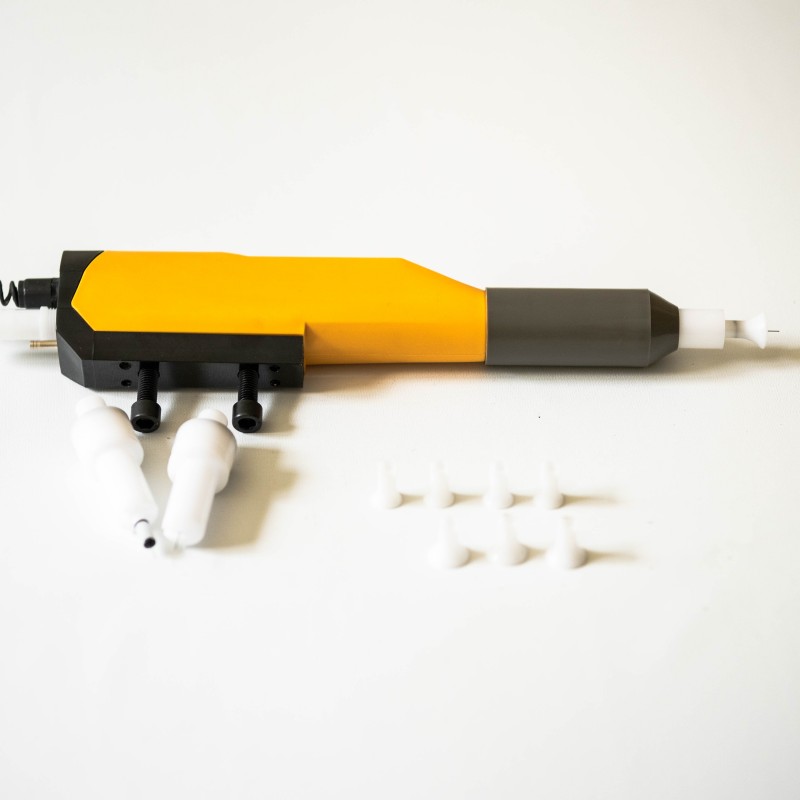
Understanding how electrostatic technology enhances the performance of a powder coating spray gun requires looking at the physics behind charge generation, the mechanics of powder attraction, and the practical outcomes that result on the production floor. This article breaks down the mechanism step by step, explains why it matters for transfer efficiency and finish quality, and outlines the operational conditions that allow electrostatic systems to deliver their full potential. Whether you are evaluating equipment upgrades or optimizing an existing line, this analysis provides the decision-useful context you need.
The Electrostatic Principle Behind Powder Coating Spray Gun Performance
How High-Voltage Charging Works Inside the Gun
At the heart of every electrostatic powder coating spray gun is a high-voltage module that generates a controlled electrostatic field, typically operating in the range of 60 to 100 kilovolts. As powder particles pass through the gun barrel and exit the nozzle, they travel through this electrostatic field and acquire a negative charge. The workpiece, which is grounded through the conveyor or hanging system, carries a positive potential relative to the charged powder. This charge differential creates a powerful attractive force that pulls powder particles toward the substrate surface.
The charging mechanism itself can follow one of two primary approaches: corona charging or tribo charging. In corona charging, a high-voltage electrode at the gun tip ionizes the surrounding air, and powder particles pick up charge as they pass through the ion cloud. In tribo charging, powder particles gain charge through friction as they travel through a specially designed barrel material, typically PTFE. Each method produces charged particles, but the distribution pattern, wrap-around behavior, and suitability for different part geometries differ meaningfully between the two approaches.
The quality and stability of the charge generated by the powder coating spray gun directly determines how uniformly powder deposits across the workpiece. A well-designed high-voltage module maintains consistent output even as environmental conditions such as humidity and temperature fluctuate, which is essential for maintaining finish quality across long production runs.
The Role of the Electrostatic Field in Directing Powder Flow
Beyond simply charging particles, the electrostatic field generated by the powder coating spray gun actively shapes the trajectory of powder in flight. Charged particles do not simply travel in a straight line from nozzle to surface. Instead, they follow the field lines that form between the gun electrode and the grounded workpiece. This means that powder can curve around edges, reach into recessed areas, and coat complex geometries with far greater coverage than uncharged powder could achieve through air pressure alone.
This field-guided behavior is what gives electrostatic systems their characteristic 'wrap-around' effect. When a powder coating spray gun is directed at one face of a part, charged particles that miss the direct line of sight will follow field lines around the edges and deposit on adjacent surfaces. For fabricated metal components with multiple faces, brackets, or internal cavities, this wrap-around effect significantly reduces the number of spray passes required and improves overall coverage uniformity.
The strength and geometry of the electrostatic field can be adjusted through gun-to-part distance, voltage settings, and electrode configuration. Operators who understand these variables can tune the powder coating spray gun to match the specific geometry of each part type, optimizing both coverage and efficiency simultaneously.
Transfer Efficiency Gains Enabled by Electrostatic Technology
Why Transfer Efficiency Is the Central Efficiency Metric
Transfer efficiency refers to the percentage of powder that leaves the gun and actually adheres to the workpiece surface, rather than falling to the floor, floating in the booth air, or being captured by the exhaust system. For any powder coating spray gun operating without electrostatic assistance, transfer efficiency is largely governed by air velocity, nozzle geometry, and operator technique. In practice, non-electrostatic systems often achieve transfer efficiencies in the range of 30 to 50 percent under typical production conditions.
Electrostatic powder coating spray guns routinely achieve transfer efficiencies of 70 to 95 percent under optimized conditions. This dramatic improvement is a direct result of the attractive force between charged powder and the grounded workpiece. Powder that would otherwise miss the target is pulled back toward the surface, dramatically reducing overspray. The practical consequence is that significantly less powder is consumed per part, booth cleaning intervals are extended, and the cost per finished unit decreases substantially.
For high-volume production environments, even a 10 percent improvement in transfer efficiency translates into measurable reductions in powder consumption, waste disposal costs, and booth maintenance downtime. The powder coating spray gun is therefore not just a delivery tool but a direct lever on operational cost structure.
Factors That Influence Electrostatic Transfer Efficiency in Practice
While electrostatic technology provides a strong baseline advantage, several operational variables determine how close a powder coating spray gun comes to its theoretical maximum transfer efficiency. Grounding quality is one of the most critical factors. If the workpiece is not properly grounded due to contaminated hooks, worn conveyor contacts, or insulating coatings on hanging points, the electrostatic field weakens and powder attraction diminishes. Maintaining clean, low-resistance grounding paths is a non-negotiable requirement for electrostatic systems to perform as intended.
Gun-to-part distance also plays a significant role. Moving the powder coating spray gun too close to the workpiece concentrates the field and can cause back-ionization, a condition where excessive charge buildup on the surface repels incoming powder and creates surface defects such as pinholes or orange peel texture. Maintaining the recommended standoff distance, typically between 150 and 300 millimeters depending on the system, allows the field to distribute evenly and powder to deposit smoothly.
Powder flow rate, air pressure, and booth airflow all interact with the electrostatic field in ways that affect transfer efficiency. A well-calibrated powder coating spray gun balances these parameters so that powder velocity is sufficient to reach the workpiece but not so high that it overcomes the attractive force of the electrostatic field. Operators who treat these variables as an integrated system rather than independent settings consistently achieve better results.
Finish Quality Improvements Driven by Electrostatic Spray Gun Technology
Uniform Film Thickness as a Quality Outcome
One of the most visible quality benefits of electrostatic technology in a powder coating spray gun is the ability to achieve highly uniform film thickness across complex part geometries. In conventional air-spray systems, film thickness varies significantly between areas that receive direct spray and areas that are shielded or recessed. Electrostatic field guidance compensates for this by directing charged powder into areas that would otherwise receive insufficient coverage.
Uniform film thickness matters for both aesthetic and functional reasons. From an aesthetic standpoint, variations in film thickness produce visible differences in gloss, color depth, and texture that are unacceptable in many end markets. From a functional standpoint, thin spots in the coating reduce corrosion resistance, impact resistance, and chemical resistance, potentially causing premature coating failure in service. The powder coating spray gun's ability to deliver consistent film thickness is therefore directly linked to the long-term performance of the finished product.
Electrostatic systems also reduce the tendency for powder to accumulate excessively on sharp edges and corners, a phenomenon known as 'edge build-up.' Because the electrostatic field is strongest at points and edges, powder can over-deposit in these areas if voltage is not properly managed. Modern powder coating spray gun designs incorporate field-shaping features and adjustable voltage controls that allow operators to minimize edge build-up while maintaining adequate coverage on flat surfaces.
Reduced Defects and Rework Through Controlled Deposition
Electrostatic control of powder deposition significantly reduces the incidence of common coating defects that drive rework and scrap rates. Back-ionization, as mentioned earlier, is a defect mode specific to electrostatic systems, but it is entirely preventable through proper voltage management and gun-to-part distance control. When the powder coating spray gun is operated within its designed parameters, the electrostatic field promotes smooth, even deposition without the charge saturation that causes surface disruption.
Contamination-related defects such as fish-eyes, craters, and inclusions are also reduced in electrostatic systems because the strong attraction between charged powder and the grounded workpiece minimizes the time powder spends airborne in the booth environment. Less airborne dwell time means less opportunity for powder particles to pick up contaminants from booth air before reaching the surface. A well-maintained powder coating spray gun operating in a clean booth environment produces consistently defect-free finishes that require minimal rework.
The reduction in rework has compounding efficiency benefits. Every part that requires stripping and recoating consumes additional powder, energy, and labor while also occupying oven and conveyor capacity that could be used for new production. By improving first-pass quality, the electrostatic powder coating spray gun effectively increases the productive capacity of the entire finishing line without any increase in equipment investment.
Operational Efficiency and Line Productivity Considerations
Speed and Automation Compatibility of Electrostatic Spray Guns
Electrostatic powder coating spray guns are well-suited to automated and reciprocating spray systems, which are the backbone of high-volume industrial finishing lines. Because the electrostatic field compensates for minor variations in gun-to-part distance and part orientation, automated systems can maintain consistent coating quality even as part geometry varies within a product family. This tolerance for variation is a significant advantage over purely mechanical spray systems, which require precise positioning to achieve acceptable results.
In reciprocating automatic systems, multiple powder coating spray guns are mounted on a vertical or horizontal reciprocator that moves them past the workpiece as it travels along the conveyor. The electrostatic field from each gun interacts with the fields from adjacent guns, and the combined effect produces highly uniform coverage across the full part height. Proper gun spacing, voltage settings, and reciprocator speed must be calibrated together to achieve optimal results, but once set, these systems can run at high conveyor speeds with minimal operator intervention.
Manual electrostatic powder coating spray guns offer similar efficiency advantages for job-shop environments where part variety is high and automation is not practical. Operators using electrostatic guns can cover parts more quickly than with non-electrostatic equipment because the wrap-around effect reduces the number of passes required. Training time for new operators is also reduced because the electrostatic field provides a degree of self-correction that makes technique less critical.
Color Change Efficiency and Powder Recovery Integration
Color change efficiency is a major productivity factor in facilities that run multiple colors or formulations. The powder coating spray gun must be purged and cleaned between color changes to prevent cross-contamination, and the time required for this process directly affects line utilization. Modern electrostatic spray guns are designed with smooth internal surfaces, minimal dead zones, and quick-release components that reduce purge time and simplify cleaning.
The high transfer efficiency of electrostatic systems also improves the economics of powder recovery. In a well-designed booth, overspray powder that does not adhere to the workpiece is captured by the recovery system and returned to the feed hopper for reuse. Because electrostatic powder coating spray guns produce less overspray than non-electrostatic alternatives, the recovered powder is cleaner and more consistent in particle size distribution, making it more suitable for reuse without quality degradation.
Facilities that operate dedicated color booths can maximize recovery efficiency by running a single color continuously, allowing the recovered powder to be blended back into the virgin supply with minimal quality impact. In multi-color operations, the decision to recover or discard overspray depends on the economics of each color run, but the reduced overspray volume from an electrostatic powder coating spray gun always improves the baseline economics of the recovery decision.
FAQ
What voltage range is typical for an electrostatic powder coating spray gun?
Most electrostatic powder coating spray guns operate in the range of 60 to 100 kilovolts. The optimal voltage for a given application depends on part geometry, powder type, gun-to-part distance, and booth conditions. Many modern guns offer adjustable voltage output so operators can fine-tune the electrostatic field to match specific production requirements without changing hardware.
Can electrostatic powder coating spray guns coat non-conductive substrates?
Standard electrostatic powder coating spray guns rely on the workpiece being grounded to create the attractive field that draws charged powder to the surface. Non-conductive substrates such as plastics, composites, and ceramics do not naturally provide this ground path. However, specialized pretreatment processes, conductive primers, or humidity conditioning can make non-conductive surfaces receptive to electrostatic powder coating. Some advanced gun systems also use modified field geometries to improve deposition on partially conductive surfaces.
How does back-ionization affect powder coating spray gun performance and how is it prevented?
Back-ionization occurs when excessive charge accumulates on the workpiece surface, creating a repulsive field that deflects incoming powder and causes surface defects such as pinholes, craters, or a mottled texture. It is most common when the powder coating spray gun is operated at too high a voltage, too close to the part, or when powder flow rate is excessive. Prevention involves maintaining proper gun-to-part distance, reducing voltage when coating recessed areas, and ensuring that powder flow rate is matched to the electrostatic field strength. Regular calibration of the gun's high-voltage module also helps maintain consistent field output and reduces the risk of back-ionization during long production runs.
What maintenance practices keep an electrostatic powder coating spray gun performing at peak efficiency?
Consistent maintenance of the powder coating spray gun is essential for sustaining electrostatic performance. Key practices include regular cleaning of the gun barrel and nozzle to prevent powder buildup that disrupts airflow and field geometry, inspection and replacement of the electrode tip when wear is detected, verification of high-voltage output using a calibrated meter, and checking all air and powder hose connections for leaks or blockages. Grounding continuity throughout the conveyor and hanging system should also be tested periodically, as degraded grounding is one of the most common causes of reduced electrostatic efficiency in production environments.
Table of Contents
- The Electrostatic Principle Behind Powder Coating Spray Gun Performance
- Transfer Efficiency Gains Enabled by Electrostatic Technology
- Finish Quality Improvements Driven by Electrostatic Spray Gun Technology
- Operational Efficiency and Line Productivity Considerations
-
FAQ
- What voltage range is typical for an electrostatic powder coating spray gun?
- Can electrostatic powder coating spray guns coat non-conductive substrates?
- How does back-ionization affect powder coating spray gun performance and how is it prevented?
- What maintenance practices keep an electrostatic powder coating spray gun performing at peak efficiency?