
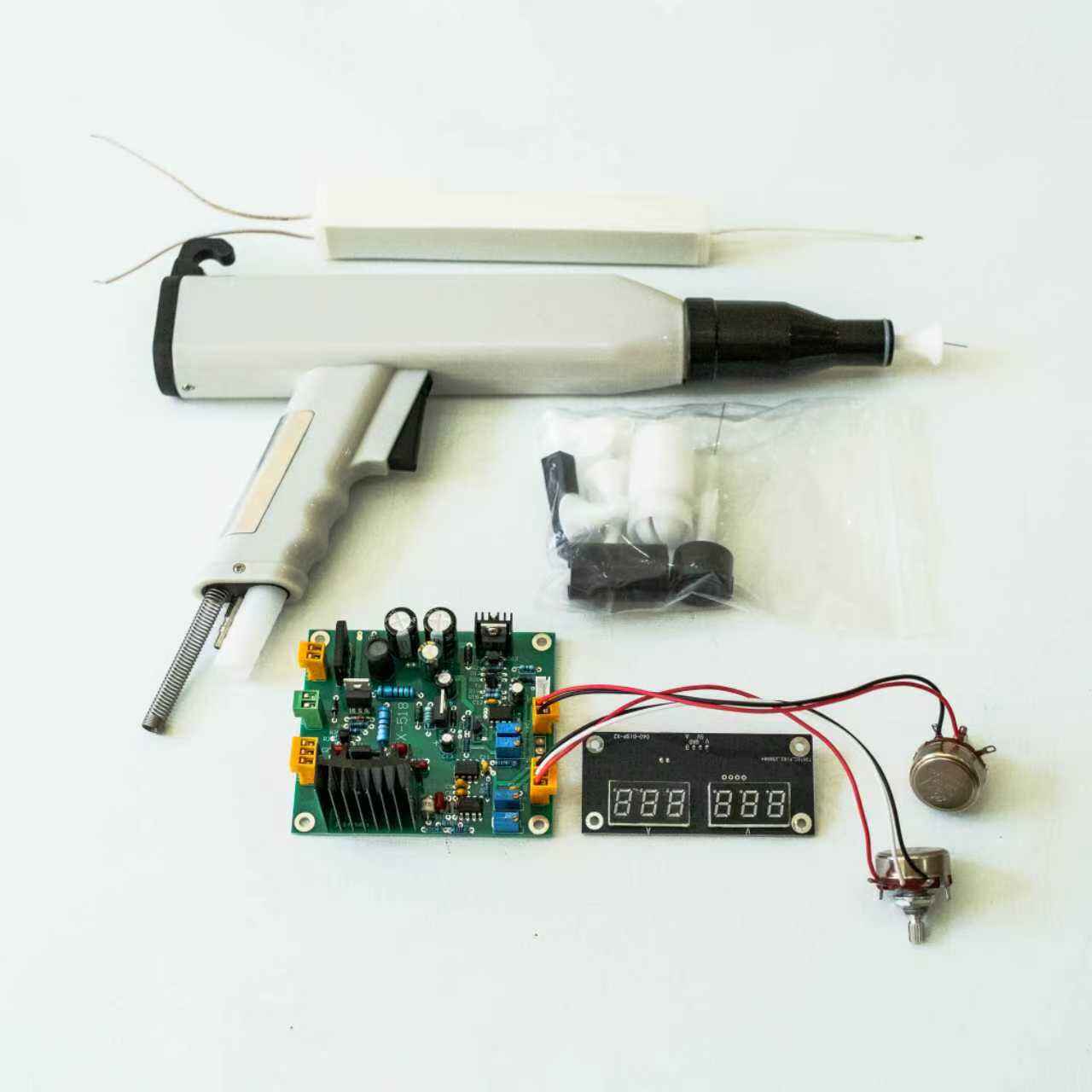
Understanding the performance differences between various powder coating spray gun models is critical for achieving optimal finishing results in industrial coating operations. Different spray gun designs, delivery mechanisms, voltage outputs, and control systems produce vastly different transfer efficiencies, coating uniformity, and operational costs. For manufacturers and coating professionals seeking to maximize throughput while minimizing powder waste, recognizing these performance distinctions enables informed equipment selection that directly impacts production quality and profitability.

The primary performance variables that distinguish one powder coating spray gun from another include electrostatic charging efficiency, powder delivery consistency, operator ergonomics, maintenance requirements, and adaptability across different coating applications. Manual guns prioritize precision control for complex geometries, while automatic systems emphasize repeatability and speed for high-volume production. Between these categories exist significant technical differences in electrode configuration, powder flow regulation, voltage stability, and feedback control mechanisms that determine real-world coating outcomes.
Electrostatic Charging Systems and Transfer Efficiency
Corona Charging Technology in Powder Coating Spray Guns
Corona charging remains the most widely deployed electrostatic method in powder coating spray gun technology, utilizing high-voltage electrodes to ionize air molecules surrounding powder particles. This ionization process imparts negative electrical charges to powder particles, creating attraction to grounded workpieces. Performance differences among corona-based powder coating spray gun models stem primarily from voltage consistency, electrode geometry, and the ability to maintain stable charging under varying environmental conditions.
High-quality corona systems in professional powder coating spray guns deliver voltage outputs ranging from 60 to 100 kilovolts with minimal fluctuation, ensuring uniform particle charging throughout extended production runs. Lower-grade units often exhibit voltage drift under thermal stress or when exposed to powder buildup on electrode surfaces, resulting in inconsistent transfer efficiency and coating appearance defects. The electrode tip design also significantly influences charging performance, with pointed configurations generating more intense corona fields but requiring more frequent cleaning compared to rounded electrode profiles.
Transfer efficiency variations between corona-equipped powder coating spray gun models typically range from 60% to 85% depending on voltage control quality and electrode maintenance status. Advanced systems incorporate automatic voltage adjustment algorithms that compensate for electrode wear and environmental changes, maintaining consistent charging performance across thousands of operating hours. Budget-oriented models lacking these compensation features often experience transfer efficiency degradation of 10-15% over similar operational periods, directly impacting material costs and coating consistency.
Tribo Charging Mechanisms and Application Specifics
Tribo charging technology represents an alternative electrostatic approach where powder particles acquire charge through friction against specially designed gun barrel materials rather than through corona discharge. Performance characteristics of tribo-based powder coating spray gun systems differ substantially from corona equivalents, particularly in coating recessed areas, penetrating Faraday cage geometries, and reducing back-ionization effects on complex workpiece configurations.
The fundamental performance advantage of tribo powder coating spray gun equipment lies in superior penetration into recessed areas and interior corners where corona systems typically struggle due to Faraday cage shielding effects. Since tribo charging occurs through mechanical friction rather than ionized air fields, charged particles maintain electrostatic attraction without generating competing ion clouds that repel powder from deep recesses. This results in more uniform coating distribution on complex geometries including tubular structures, perforated panels, and assemblies with multiple depth planes.
However, tribo powder coating spray gun performance remains highly dependent on powder formulation compatibility, ambient humidity levels, and barrel material condition. Certain powder chemistries generate insufficient friction charging for effective coating, while high humidity conditions can dissipate surface charges before particles reach workpiece surfaces. Transfer efficiency for tribo systems typically ranges from 50% to 75%, generally lower than optimized corona systems but with superior coating uniformity on geometrically challenging components.
Powder Delivery and Flow Control Performance
Venturi Feed Systems and Consistency Characteristics
The powder delivery mechanism fundamentally determines coating consistency and the ability to maintain uniform film builds across production runs. Venturi-based powder coating spray gun designs utilize compressed air flowing through a constricted throat to create negative pressure that draws powder from feed hoppers or supply lines. Performance differences between venturi systems center on air pressure stability requirements, powder flow linearity, and sensitivity to powder characteristics including particle size distribution and bulk density variations.
Premium venturi powder coating spray gun models incorporate precision-machined venturi chambers with optimized throat geometries that maintain consistent powder draw rates across varying air supply pressures. These systems typically operate effectively across air pressure ranges of 15-25 PSI with minimal flow rate variation, enabling stable coating application even when compressed air systems experience normal pressure fluctuations during production cycles. Entry-level venturi designs often require tighter pressure control tolerances and exhibit significant flow rate changes with modest pressure variations, complicating process control and coating uniformity.
Powder feed consistency also depends on venturi pickup tube design and positioning relative to the powder stream. High-performance powder coating spray gun systems feature adjustable pickup tubes with anti-clogging geometries that accommodate powders with different flow characteristics without requiring equipment reconfiguration. This adaptability enables quick changeovers between powder types and reduces downtime associated with flow disruptions, directly impacting production efficiency and operational costs.
Injector Feed Technology and Precision Control
Injector-based powder delivery systems represent advanced powder coating spray gun technology where powder injection occurs independently from atomizing air streams, providing superior flow control and consistency compared to venturi mechanisms. Performance advantages include more precise powder output regulation, reduced sensitivity to air pressure variations, and improved capability for applying thin film coatings where exact powder quantities determine coating quality.
The critical performance distinction of injector powder coating spray gun equipment lies in the separation of powder metering from pattern formation air, enabling independent optimization of each function. This architectural difference allows operators to adjust spray pattern geometry without affecting powder delivery rates, simplifying setup procedures and reducing the trial-and-error typically required with integrated venturi systems. For applications requiring frequent adjustments or coating diverse component geometries, injector systems substantially reduce setup time and material waste.
Transfer efficiency performance with injector powder coating spray gun technology typically exceeds venturi equivalents by 5-10 percentage points under comparable operating conditions, primarily due to more consistent particle charging and reduced turbulence in powder streams. The improved consistency also translates to tighter film build tolerances, with coefficient of variation measurements frequently below 5% for injector systems compared to 8-12% for standard venturi designs across equivalent production runs.
Voltage Control Systems and Coating Quality Impact
Fixed Voltage Output Limitations
Basic powder coating spray gun models typically employ fixed voltage output systems where electrostatic potential remains constant regardless of operational conditions or coating requirements. While these simple systems reduce equipment cost and complexity, performance limitations become apparent when coating workpieces with varying geometries, grounding conditions, or when switching between powder formulations with different electrical properties.
The primary performance constraint of fixed-voltage powder coating spray gun equipment manifests as inability to optimize charging levels for specific coating scenarios. Thin sheet metal components often require reduced voltage to prevent excessive powder buildup and orange peel texture defects, while heavy castings with complex geometries benefit from maximum voltage for adequate penetration. Fixed systems force operators to accept suboptimal results or invest time in mechanical adjustments rather than electronic voltage optimization.
Back-ionization issues also affect fixed-voltage powder coating spray gun performance more severely than adjustable systems, particularly when coating recessed areas or building thick film layers. As powder accumulates on workpiece surfaces, localized electrical resistance increases, potentially triggering corona discharge from coated surfaces back toward the gun electrode. This phenomenon repels incoming powder particles and creates bare spots or thin coating zones, defects that adjustable voltage systems can mitigate through real-time output reduction.
Adaptive Voltage Regulation Technologies
Advanced powder coating spray gun systems incorporate adaptive voltage control that automatically adjusts electrostatic output based on feedback from coating conditions, workpiece characteristics, or operator-defined parameters. These intelligent systems deliver measurable performance improvements in coating consistency, first-pass transfer efficiency, and reduction of appearance defects across diverse production scenarios.
Performance benefits of adaptive voltage powder coating spray gun technology include automatic compensation for electrode contamination, which gradually reduces effective voltage delivery in fixed systems until manual cleaning occurs. Adaptive controllers detect voltage drops and increase power supply output to maintain target charging levels at gun electrodes, extending productive operating periods between maintenance interventions. This capability proves particularly valuable in high-volume production environments where unplanned downtime directly impacts throughput and delivery schedules.
Coating appearance quality improvements with adaptive powder coating spray gun systems stem from optimized voltage delivery that matches workpiece geometry and coating thickness requirements. Algorithms adjust voltage downward when sensors detect coating thickness approaching target specifications, reducing back-ionization risks and orange peel texture formation. For components with mixed geometry including flat panels and deep recesses, programmable voltage profiles enable optimal charging throughout the coating cycle, achieving uniform coverage that fixed-voltage systems cannot replicate.
Ergonomic Design and Operator Performance Factors
Manual Gun Weight Distribution and Fatigue Impact
Physical ergonomics significantly influence operator performance with manual powder coating spray gun equipment, particularly in production environments requiring extended coating sessions or precise application control. Weight distribution, grip comfort, trigger responsiveness, and control placement determine operator fatigue rates, coating consistency maintenance over shift durations, and workplace injury risk factors that impact both quality outcomes and operational costs.
High-performance manual powder coating spray gun designs prioritize balanced weight distribution with center of gravity positioned near the operator's grip point, minimizing wrist strain during extended use. Premium models typically weigh between 400-600 grams with major mass components located close to the handle rather than concentrated at the barrel or electrode assembly. Poorly balanced designs weighing 700-900 grams with forward weight bias generate measurably higher operator fatigue scores and correlate with increased coating defect rates during later production hours as operator precision degrades.
Grip ergonomics on professional powder coating spray gun equipment incorporate contoured handles with anti-slip materials that accommodate various hand sizes while maintaining comfortable trigger access. Trigger force requirements also impact operator performance, with optimal designs requiring 8-12 Newtons of activation force compared to budget models demanding 15-20 Newtons, a difference that becomes significant over hundreds of trigger cycles per shift. Reduced activation force directly translates to maintained precision throughout extended coating operations and lower reported rates of repetitive strain injuries.
Control Accessibility and Adjustment Efficiency
The accessibility and intuitiveness of adjustment controls substantially affect real-world powder coating spray gun performance by determining how quickly operators can optimize settings for different coating scenarios. Critical controls include powder flow rate adjustment, spray pattern width, and voltage output when variable systems are employed. Performance differences between gun models manifest in adjustment precision, control durability under industrial conditions, and whether changes can be made during operation or require coating interruption.
Premium powder coating spray gun systems feature easily accessible rotary controls with clear position indicators and detent mechanisms that prevent unintended adjustment during operation. These designs enable operators to fine-tune powder delivery and pattern geometry without breaking coating rhythm, maintaining productivity while optimizing application parameters. Control placement on the gun body rather than requiring reach to remote power supplies or control boxes reduces adjustment time by 30-50% compared to systems with distributed controls.
Adjustment precision capabilities differentiate professional powder coating spray gun equipment from basic models through finer control graduations and more stable setting retention. High-quality powder flow adjusters provide 20-30 distinct positions across the operational range compared to 8-12 positions on entry-level units, enabling more precise optimization for specific coating requirements. This granularity becomes particularly important when coating thin films or working with expensive specialty powders where excess application directly impacts material costs.
Maintenance Requirements and Operational Durability
Cleaning Accessibility and Downtime Minimization
Maintenance accessibility directly impacts productive uptime with powder coating spray gun equipment, as powder buildup on internal components inevitably requires periodic cleaning to maintain performance specifications. Design differences in component accessibility, quick-disconnect fittings, and tool-free disassembly capabilities determine whether routine maintenance consumes 10 minutes or 45 minutes, a distinction with substantial cumulative impact on production efficiency.
Professional powder coating spray gun designs incorporate quick-release electrode assemblies that enable removal and cleaning without tools in under two minutes, compared to budget models requiring screwdriver disassembly and 8-10 minutes of downtime. This architectural difference becomes critical in color-change scenarios where cross-contamination prevention demands thorough cleaning between powder types. Advanced systems also feature self-cleaning electrode geometries that shed powder buildup during operation, extending intervals between manual cleaning interventions from every 4 hours to every 8-12 hours under comparable operating conditions.
Internal pathway design affects cleaning thoroughness and powder coating spray gun performance consistency after maintenance procedures. Smooth bore configurations without internal ledges or sharp transitions prevent powder accumulation in hidden areas that gradually migrate into coating streams, causing sporadic contamination issues. Premium models incorporate removable barrel liners that can be quickly exchanged and batch-cleaned offline, enabling near-instantaneous gun return to service while contaminated components undergo thorough cleaning without production pressure.
Component Durability and Replacement Economics
Long-term powder coating spray gun performance stability depends on component durability under continuous industrial use, particularly for wear-prone elements including electrodes, powder delivery tubes, seals, and control mechanisms. Quality differences between equipment grades manifest in component lifespan variations ranging from hundreds to thousands of operating hours, directly impacting total cost of ownership beyond initial purchase price considerations.
Electrode durability represents a critical performance differentiator, with premium powder coating spray gun systems utilizing tungsten or specialized alloy electrodes that maintain geometry and electrical properties for 2000-3000 operating hours. Standard steel electrodes in entry-level equipment typically require replacement every 500-800 hours as corona erosion degrades tip sharpness and charging efficiency. Given electrode replacement costs of $50-150 per unit depending on design complexity, material selection directly influences long-term operational economics.
Seal and bearing durability in powder flow mechanisms affects coating consistency and maintenance frequency, with high-performance powder coating spray gun components engineered from powder-resistant materials that prevent abrasive wear. Premium systems employ ceramic bearings and fluoropolymer seals that maintain dimensional stability and smooth operation for 5000+ hours, while standard components may exhibit increased friction and flow irregularities after 1500-2000 hours. Progressive wear in budget systems gradually degrades coating consistency rather than causing sudden failure, making performance degradation difficult to detect until quality issues emerge.
FAQ
How does powder coating spray gun voltage affect transfer efficiency?
Higher voltage generally increases electrostatic attraction between charged powder particles and grounded workpieces, improving initial transfer efficiency up to optimal threshold levels typically between 70-90 kilovolts. Beyond optimal voltage, back-ionization effects begin reducing efficiency as excessive charging creates repulsive forces between powder layers, particularly when coating recessed areas or building thick films. The relationship between voltage and efficiency is non-linear and depends on workpiece geometry, powder formulation, and application distance, with adaptive voltage systems delivering 8-15% higher average transfer efficiency compared to fixed-output equipment across diverse coating scenarios.
What causes coating quality differences between manual and automatic powder coating spray guns?
Coating quality variations stem primarily from consistency differences rather than theoretical capability limitations, as automatic powder coating spray gun systems maintain identical positioning, traverse speed, and application parameters across every coating cycle while manual application inherently varies with operator technique. Automatic systems excel in repeatability for high-volume production of identical components, achieving film thickness variations under 5 micrometers across production runs. Manual guns provide superior adaptability for complex geometries and mixed production where operator judgment optimizes technique for each component, though consistency depends heavily on operator skill level and fatigue management.
Why do some powder coating spray guns perform better with specific powder types?
Performance compatibility between powder coating spray gun equipment and powder formulations relates to electrical properties, particle size distribution, and flow characteristics that affect charging efficiency and delivery consistency. Fine particle powders below 20 microns charge more readily but require precise air flow control to prevent turbulence, favoring injector feed systems over venturi designs. Coarse powders above 60 microns need higher voltage for adequate charging and benefit from wider spray pattern capabilities. Tribo charging systems work optimally with specific resin chemistries that generate sufficient friction charging, while corona systems provide broader powder compatibility. Matching gun technology to predominant powder characteristics improves transfer efficiency by 10-20% compared to mismatched combinations.
How frequently should powder coating spray gun electrodes be replaced?
Electrode replacement frequency varies substantially based on electrode material quality, operating voltage levels, powder abrasiveness, and cleaning practices, with typical intervals ranging from 500 to 3000 operating hours. Visual inspection should occur every 200 hours to assess tip erosion, with replacement indicated when electrode geometry shows visible rounding or pitting that affects corona discharge patterns. Performance degradation symptoms including reduced transfer efficiency, inconsistent charging, or increased back-ionization often precede visible electrode damage and signal replacement needs. Proactive electrode replacement before complete failure maintains consistent coating quality and prevents defects that require rework, making scheduled replacement more economical than reactive maintenance approaches.
Table of Contents
- Electrostatic Charging Systems and Transfer Efficiency
- Powder Delivery and Flow Control Performance
- Voltage Control Systems and Coating Quality Impact
- Ergonomic Design and Operator Performance Factors
- Maintenance Requirements and Operational Durability
-
FAQ
- How does powder coating spray gun voltage affect transfer efficiency?
- What causes coating quality differences between manual and automatic powder coating spray guns?
- Why do some powder coating spray guns perform better with specific powder types?
- How frequently should powder coating spray gun electrodes be replaced?