
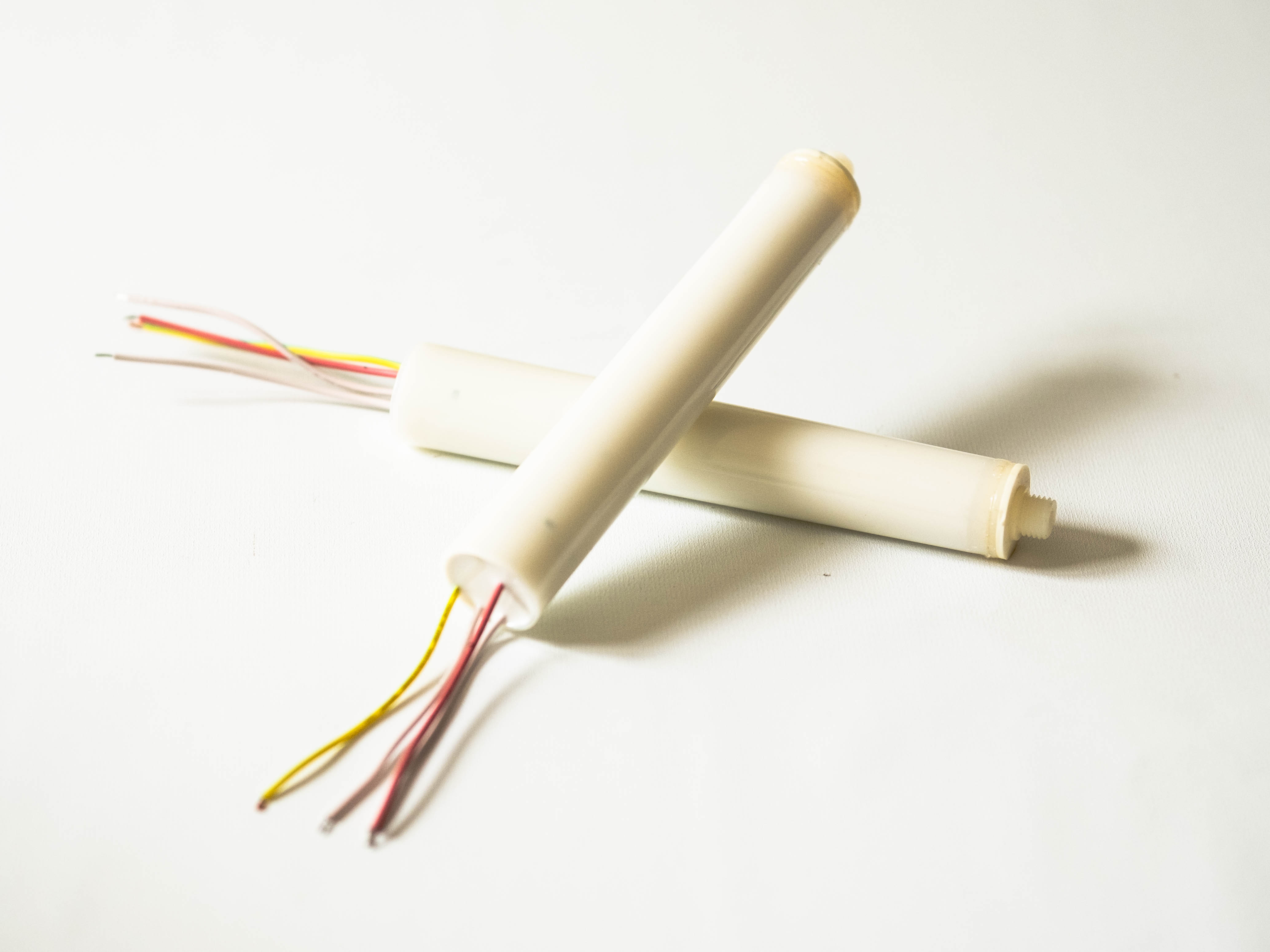
The latest changes in high voltage module technology focus on making power conversion more compact, controllable, and easier to integrate with production equipment. In electrostatic spraying, a high voltage module must deliver a stable output while fitting the applicator’s electrical, mechanical, and safety requirements. Current design directions include improved sensing, more deliberate insulation engineering, and modular construction that supports practical installation and maintenance.

These innovations are best understood as a combination of electrical design and equipment integration, rather than a single breakthrough component. A high voltage module increasingly needs to work as part of a connected spraying system, where the power unit, gun, cable, controls, and grounding arrangements affect overall operation. The following trends show what equipment teams should assess when evaluating a high voltage module for an updated line or a new application.
Smaller designs with more considered integration
Compact packaging for equipment builders
Space is a practical design constraint in spray systems, particularly when equipment must fit into a machine enclosure or be added to an existing production cell. A compact high voltage module can simplify placement, but reducing its footprint cannot come at the expense of suitable clearance, insulation, or heat management. Engineers therefore assess the complete installation envelope, including connectors, cable routing, ventilation, and access for inspection.
A second trend is designing the high voltage module around the system interface from the start. Defined mounting points and accessible connections can reduce awkward installation choices, while clear electrical specifications help integrators match the module to the applicator and control equipment. These details matter because a small unit is only useful if it can be mounted securely, wired correctly, and reached during routine service.
Insulation and thermal design as core features
As packaging becomes denser, insulation design has to be treated as a system-level discipline. A high voltage module relies on suitable spacing, insulating materials, sealed interfaces, and carefully managed paths between high-voltage and low-voltage areas. Designers also consider the actual operating environment, since dust, moisture, coating residue, and temperature can influence electrical reliability and the inspection needs of the installation.
Thermal planning is closely related to compact construction. Components that convert or regulate power generate heat, so a high voltage module needs a thermal path suited to its enclosure and duty cycle. Equipment teams should check the product’s operating conditions and installation guidance rather than assuming that a smaller housing will perform identically in every cabinet. Good integration balances size with space for heat dissipation and safe access.
More precise control and useful feedback
Stable output and coordinated operation
Current development increasingly emphasizes predictable output and coordinated behavior with the spray equipment. A high voltage module may be expected to respond consistently to control inputs as the operator starts, adjusts, or stops a process. For a production engineer, the value is not simply a high electrical rating; it is knowing how output behavior relates to the applicator, workpiece, coating, and operating procedure.
Control interfaces are also becoming more important as lines incorporate automated sequences. A high voltage module that has clearly defined input and output signals can be easier to coordinate with machine controls, provided the system design respects electrical isolation and the module’s specified limits. Integrators should verify signal compatibility, response expectations, and fault behavior before commissioning, then document those settings for repeatable operation.
Sensing, monitoring, and fault awareness
Another notable direction is greater attention to monitoring. Depending on the design, a high voltage module may provide status indications or signals that help an operator distinguish normal operation from a fault condition. Better visibility can support troubleshooting, but it does not replace safe work practices or a qualified inspection. Teams should understand what each indication actually represents and how it connects to their maintenance procedure.
Monitoring becomes most useful when it produces actionable information rather than extra data with no owner. When assessing a high voltage module, ask whether status signals are accessible to the control system, whether fault states are defined, and whether maintenance staff can interpret them. A considered approach can shorten diagnostic steps by helping teams check the right part of the system first, without assuming that monitoring alone prevents downtime.
Serviceability, safety, and application fit
Modular maintenance and lifecycle planning
Modular construction is gaining attention because production equipment must be maintained with minimal disruption. A high voltage module designed for clear connection points and practical replacement can make service planning more straightforward. Before selection, verify how the unit is installed, what must be isolated before access, and whether replacement requires recalibration or checks of connected equipment. These steps make lifecycle planning more realistic.
Serviceability also depends on documentation and the physical layout around the unit. A high voltage module should be installed where qualified personnel can inspect relevant connections without disturbing unrelated equipment. Clear labeling, accessible fasteners, and a recorded wiring arrangement help support consistent maintenance. These are not dramatic innovations, but they influence how reliably a design can be operated across shifts and maintained over time.
Application-specific evaluation for electrostatic spraying
For electrostatic spraying, the correct choice depends on how the power unit works with the complete application. A high voltage module needs to match the spray equipment’s electrical requirements, intended operating conditions, cable arrangement, and control method. Teams should also consider the coating process, the workpiece, grounding practices, and the surrounding environment. Reviewing these factors together is more meaningful than selecting a component by one specification alone.
When comparing design options, focus on documented ratings, installation requirements, interface details, and service procedures. A high voltage module should fit the actual spraying configuration, not an assumed generic setup. Confirm compatibility with the equipment documentation and involve qualified technical personnel where needed. This approach helps connect technology trends with practical operating needs and supports a sound selection decision.
FAQ
What is driving recent high voltage module innovation?
The main drivers are tighter equipment packaging, the need for coordinated control, and more attention to insulation and service access. For electrostatic spraying, a high voltage module must integrate with the applicator and production equipment, while a high voltage module also needs to suit the operating environment and maintenance plan.
Does a smaller high voltage module automatically improve a system?
No. Compact size can ease integration, but it does not guarantee better performance or simpler servicing. A high voltage module still needs appropriate electrical clearances, heat management, and access, and the high voltage module must meet the connected equipment’s documented requirements.
How should teams assess a new module design?
Review ratings, installation instructions, control interfaces, fault indications, and service requirements against the actual spraying application. Confirm that the high voltage module is compatible with connected equipment, and ensure staff understand safe isolation and inspection procedures. Treat the high voltage module as one part of a complete system.