
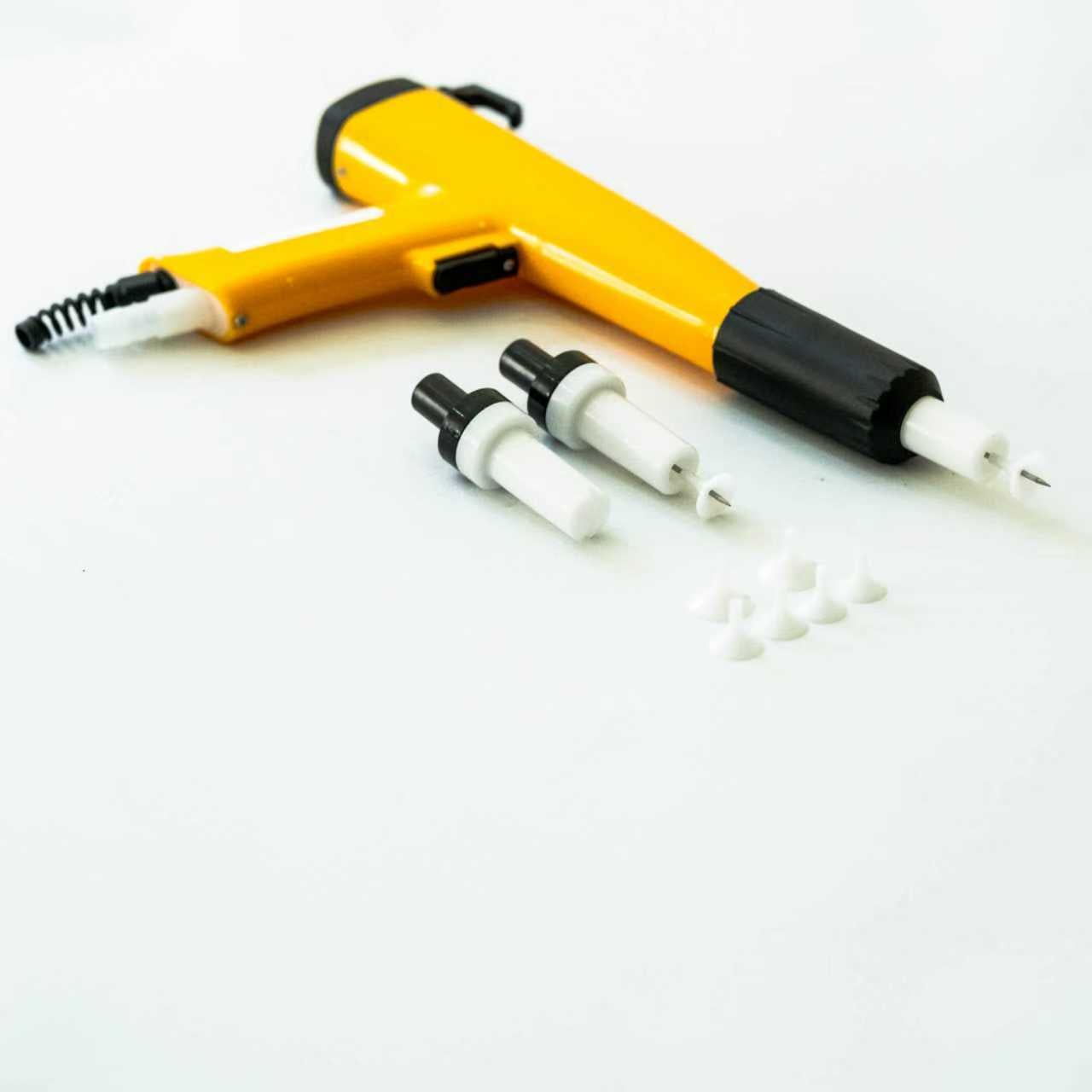
Electrostatic spraying applies a controlled electrical charge to coating droplets so they are attracted to a grounded workpiece. In automotive and home appliance production, the method supports consistent finishing on metal components, but results depend on part geometry, coating properties, grounding, and booth setup. Understanding how electrostatic spraying fits into each production line helps teams choose suitable parts and process controls.

The practical sequence is straightforward: prepare and ground the part, atomize and charge the coating, apply it in a controlled booth, then cure or dry it according to the coating specification. Electrostatic spraying can reduce overspray in suitable applications, but it does not eliminate masking, inspection, or operator training. Automotive and appliance lines adapt the same principle to different shapes, materials, output rates, and appearance requirements.
How the process works on production lines
Charging, attraction, and coating deposition
A spray gun breaks liquid coating into droplets and gives them an electrical charge. The workpiece is grounded, creating an electrostatic field that draws charged droplets toward its surface. With electrostatic spraying, attraction can improve deposition on accessible faces and reduce the amount of material that passes beyond the target. The effect is influenced by droplet size, charge level, distance, airflow, and the electrical properties of the coating.
The electric field is not a substitute for correct gun movement or atomization. Operators set the fluid delivery, air pressure where applicable, voltage, and gun distance to suit the coating and part. Electrostatic spraying requires stable grounding because a poorly grounded component may not attract coating consistently. A production team therefore verifies the grounding path and checks that hooks, hangers, and contact points remain clean during repeated cycles.
Preparation and line integration
Before electrostatic spraying, manufacturers clean surfaces to remove oil, dust, and residues that could interfere with adhesion or appearance. Pretreatment may include washing, conversion coating, or another specified surface preparation step. Parts are then loaded so that contact points provide reliable grounding while leaving the required surfaces exposed. The sequence matters: a clean finish cannot compensate for contamination or weak coating adhesion.
A line trial establishes practical settings before routine production. Teams test representative parts, inspect film coverage, and adjust the gun path, flow, and electrical settings. Electrostatic spraying is integrated with ventilation, filtration, conveyor movement, and coating supply rather than treated as an isolated gun operation. For automated cells, the path and speed need to account for part variation and access to edges, recesses, and openings.
Automotive and appliance applications
Automotive components and finish requirements
Automotive plants use electrostatic spraying for suitable conductive components and finish operations where repeatable coverage is important. Applications may include wheels, brackets, structural parts, and selected body or interior components, depending on the material and coating system. The process can support uniform application on broad exposed surfaces, while designers and process engineers still need to evaluate seams, cavities, sharp edges, and areas shadowed by the part.
Appearance and durability criteria shape the process window. A visible automotive surface may require close control of color, gloss, texture, and film build, while a functional component may prioritize corrosion protection or wear resistance. Electrostatic spraying must be validated against the specific coating and substrate. Teams inspect samples for misses, runs, dry spray, and uneven film, then connect any defect pattern to part positioning, gun access, or application settings.
Production pace also affects equipment and workflow decisions. With electrostatic spraying, a moving conveyor, robot, or manual operator needs sufficient access time to coat the required surfaces without disrupting upstream preparation or downstream curing. Fixture design should keep components stable and avoid blocking important faces. Where part families differ, changeover procedures and recipe control help maintain repeatable settings without assuming that one setup suits every geometry.
Home appliance panels and formed parts
Appliance manufacturers may apply electrostatic spraying to refrigerator panels, washer cabinets, oven components, and other conductive parts. These products often combine large visible surfaces with folded edges, holes, and flanges. The process can help coat broad areas efficiently, but edges and recessed details still require deliberate gun angles and inspection. Part loading should expose the finish surfaces and maintain a sound ground throughout the application cycle.
Appliance finishes are assessed for consistent color and appearance across panels that may be seen together after assembly. Electrostatic spraying settings should therefore account for coating viscosity, surface preparation, panel orientation, and the specified film thickness. Manufacturers may trial a representative set of shapes rather than relying on a flat coupon alone. That approach reveals how corners, returns, and fixture contact points affect actual coverage on the production part.
Process controls, limits, and implementation
Settings, safety, and quality verification
Reliable electrostatic spraying depends on a coordinated set of controls: coating supply, atomization, voltage, gun-to-part distance, airflow, and grounding. Changes to one setting can affect transfer and finish, so teams document approved recipes and verify them after maintenance or material changes. A high-voltage module supplies the electrical function in compatible equipment; the selected unit must match the gun and process design. electrostatic spraying equipment must be assessed as part of the complete application system.
Because the process uses high voltage and may involve flammable coatings or solvents, electrostatic spraying must follow the facility’s applicable electrical, ventilation, grounding, and fire-safety procedures. Operators need training on approved startup, shutdown, cleaning, and fault response. Interlocks and maintenance practices should be reviewed against equipment instructions and site requirements. Safe operation is a process prerequisite, not an optional adjustment made after finish quality is optimized.
Quality checks should connect the coating specification to measurable production evidence. Teams inspect film thickness where required, along with adhesion, color, gloss, and visible defects using the relevant methods for the product. Electrostatic spraying results should be reviewed across representative locations, not just the easiest flat face. Recording defect location and line conditions helps distinguish application problems from preparation, curing, or incoming-part issues.
Fit assessment and practical limitations
Electrostatic spraying is most suitable when the substrate can be grounded, the coating is compatible with the equipment, and the part geometry allows useful field access. Insulating materials, complex recesses, shielded areas, or inconsistent contact may limit the attraction effect. A grounded metal component is not automatically an easy part to coat: fixtures, openings, and neighboring surfaces can alter access and deposition. Testing representative parts is therefore important before production adoption.
A practical evaluation compares finish requirements, coating consumption, line speed, cleaning needs, and capital or maintenance implications. Electrostatic spraying should be judged against the existing process using production-relevant trials, not assumed to offer the same benefit for every component. Include changeovers, operator access, booth conditions, and rework in the assessment. The best decision is the one that meets the product specification safely and consistently within the plant’s operating constraints.
FAQ
How does electrostatic spraying attract coating to a part?
The gun charges atomized coating droplets, while a grounded workpiece creates an attractive electrical field. Electrostatic spraying can improve deposition on accessible surfaces, although geometry and grounding affect the outcome.
Can electrostatic spraying coat recessed automotive or appliance areas?
It may coat some recessed areas, but deep cavities and shielded surfaces can receive less material. Electrostatic spraying should be tested on the actual part, with gun angle, fixture position, and coverage inspected.
What should a plant confirm before using electrostatic spraying?
Confirm coating and equipment compatibility, reliable grounding, safe booth conditions, and achievable quality on representative parts. Electrostatic spraying also requires suitable operator training, process documentation, and maintenance controls.