
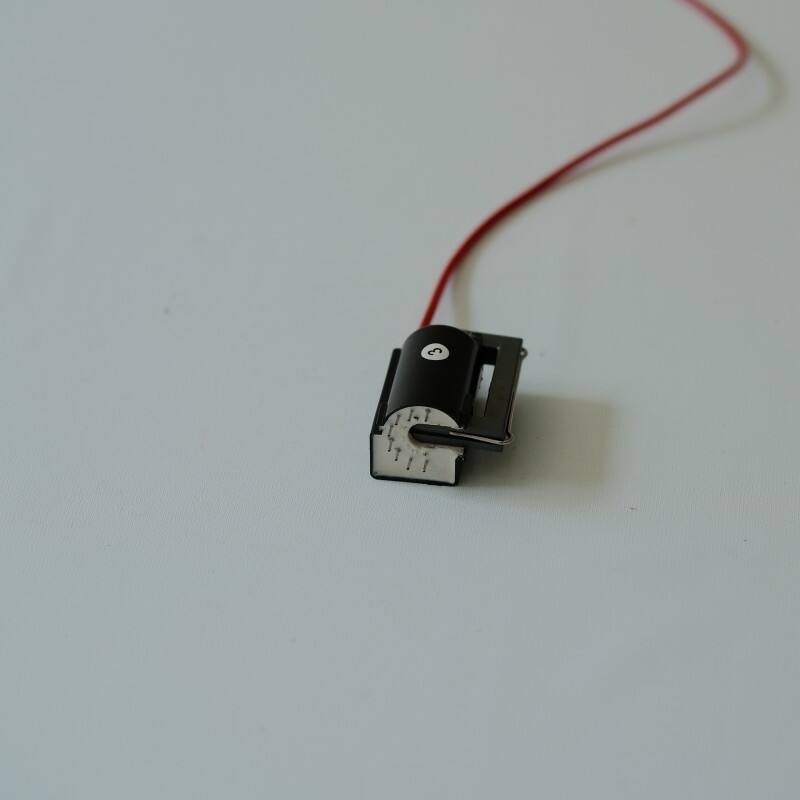
UL Certification: Safety and EMC Foundations for High Voltage Modules
UL certification establishes critical safety benchmarks for high voltage modules in industrial and automotive applications. As a voluntary standard, it validates product reliability through rigorous assessment of electrical insulation, thermal management, and failure-mode containment. The process involves third-party verification of both design integrity and manufacturing consistency—significantly reducing fire risks and operational hazards. Independent analysis shows UL-certified modules experience 72% fewer field failures compared to uncertified equivalents (Safety Components Journal 2023), underscoring the tangible impact of this quality assurance framework.
UL 62368-1 (AV/IT) and UL 61000-1 (EMC): Core Frameworks for High Voltage Module Design
These twin standards form the backbone of modern high voltage module development. UL 62368-1 governs safety for audio/video and information technology equipment—including energy storage systems and power conversion circuits—using a hazard-based approach to mitigate electric shock, fire, and energy-related injury. Complementing it, UL 61000-1 (EMC) ensures electromagnetic compatibility: modules must neither emit disruptive interference nor malfunction when exposed to external electromagnetic disturbances. Engineers implement these requirements through:
- Insulation coordination strategies
- Arc-flash containment structures
- Double or reinforced isolation barriers
- Managed failure-mode propagation
This layered safety philosophy enables designs that safely operate at 3kVDC+ while protecting personnel during maintenance exposure.
Critical Testing Protocols: Dielectric Withstand, Arc Flash, and Creepage/Clearance Validation
Certification hinges on three foundational tests simulating extreme operational stressors. The dielectric withstand test applies 150% of rated voltage across isolation barriers for 60 seconds to verify insulation integrity under transient surges. Arc flash testing subjects conductive pathways to controlled short-circuit events, measuring thermal propagation and containment effectiveness. Creepage/clearance validation ensures physical conductor spacing meets minimum distances based on operating voltage and environmental conditions:
| Voltage Range | Minimum Air Gap | Surface Tracking Distance |
|---|---|---|
| 300–600V | 3.2 mm | 6.4 mm |
| 601–1000V | 6.4 mm | 12.7 mm |
These protocols prevent destructive tracking currents and corona discharge—especially critical in humid or polluted environments. Successful validation confirms stable operation under pollution degree 2 conditions, a key requirement for automotive and industrial deployments.
CE Marking: Navigating EU Conformity for High Voltage Modules
Applying the Low Voltage Directive (2014/35/EU) and EMC Directive (2014/30/EU) to High Voltage Module Systems
High voltage modules intended for the EU market must comply with the Low Voltage Directive (LVD, 2014/35/EU) and the Electromagnetic Compatibility (EMC) Directive (2014/30/EU). The LVD applies to equipment operating between 50–1000 V AC or 75–1500 V DC, mandating dielectric strength validation and creepage/clearance compliance. The EMC Directive requires modules to function reliably in shared electromagnetic environments—neither emitting excessive interference nor succumbing to external disturbances. Non-compliance carries significant consequences, including market access bans and fines exceeding €500,000 per incident (EU Commission 2023).
Technical File Development and Notified Body Engagement for High Voltage Automotive & Industrial Modules
Manufacturers must compile a comprehensive technical file demonstrating conformity, including risk assessments, test reports, schematics, and declarations of performance. For safety-critical applications—such as automotive traction inverters—engagement with an EU Notified Body is typically mandatory. These approved entities conduct on-site audits and sample testing to verify compliance. A well-structured, proactive technical file accelerates CE certification by up to 40% compared to reactive documentation efforts (Global Certification Journal 2023). Post-approval, CE validity is maintained through annual surveillance audits and ongoing production monitoring.
ISO and IEC Integration: Functional Safety and Application-Specific Certification for High Voltage Modules
ISO 26262 ASIL-D Requirements for High Voltage Automotive Modules and Synergy with UL 2271
ISO 26262 defines functional safety for automotive systems via Automotive Safety Integrity Levels (ASILs), with ASIL-D representing the highest risk classification. It mandates rigorous hazard analysis, fault detection, and redundant safety mechanisms—for example, requiring high voltage modules to achieve fewer than 10 FITs (failures in one billion operating hours). This standard complements UL 2271, which focuses on fire resistance and electrical safety for lithium battery systems. Together, they provide a holistic validation framework for resilience, covering both functional behavior and physical failure modes.
IEC 61215 & IEC 61730 for PV-Integrated High Voltage Modules: Harmonizing CE and UL Pathways
IEC 61215 and IEC 61730 set durability and safety benchmarks specifically for photovoltaic-integrated high voltage modules. Key validation protocols include:
- Thermal cycling from –40°C to +85°C over 200 cycles
- 1000-hour humidity exposure at 85% relative humidity
- Mechanical load testing up to 5400 Pa
These standards align closely with CE’s EN 50530 and UL 1703, enabling harmonized testing strategies. Such alignment reduces redundant evaluations by approximately 15%, streamlining global market access for solar high voltage module systems without compromising safety or performance rigor.
FAQ
What is UL certification for high voltage modules?
UL certification establishes critical safety benchmarks for high voltage modules by assessing electrical insulation, thermal management, and failure-mode containment among other parameters to ensure reliability.
What are the benefits of UL certification?
UL-certified modules experience significantly fewer field failures, reducing fire risks and operational hazards, ensuring better reliability in industrial and automotive applications.
What is the significance of CE marking for high voltage modules in the EU?
CE marking ensures compliance with EU standards such as the Low Voltage Directive and EMC Directive, validating safety and performance, and allowing market access to the EU.
How do ISO 26262 and UL 2271 standards complement each other?
ISO 26262 ensures functional safety in automotive systems, while UL 2271 focuses on fire resistance and electrical safety for lithium battery systems, together providing a holistic validation framework.