
Akar Masalah Cacat Orange Peel dan Faraday Cage
Orange Peel: Bagaimana Interaksi Aliran Leleh, Ketebalan Lapisan, dan Profil Pengeringan
Tekstur kulit jeruk muncul akibat interaksi antara viskositas lelehan selama proses pemanasan, ketidakseragaman ketebalan lapisan, dan profil termal yang suboptimal. Ketika partikel bubuk tidak mengalir secara seragam sebelum terjadinya ikatan silang, maka terbentuklah ketidakteraturan permukaan yang menyerupai kulit buah sitrus. Ketebalan lapisan berlebih (120 μm) menjebak udara dan menghambat proses perataan, sementara waktu atau suhu pemanasan yang tidak memadai mencegah terjadinya perataan pada tingkat molekuler. Data industri menunjukkan bahwa faktor-faktor ini secara bersama-sama menyebabkan cacat tekstur pada 30% aplikasi pelapisan industri (Laporan Industri 2023). Faktor utama penyebabnya meliputi:
- Ketidaksesuaian viskositas , yang sering dipicu oleh penguapan pelarut yang terlalu cepat dalam sistem hibrida
- Penyimpangan ketebalan lapisan melebihi ±15% dari spesifikasi target
- Kesalahan profil pengeringan , seperti gradien suhu oven yang melebihi ±5°C
Efek Sangkar Faraday: Kolaps Medan Elektrostatik di Area Cekung dan Geometri Tajam
Efek sangkar Faraday terjadi ketika muatan elektrostatik terakumulasi pada tepi-tepi yang menonjol—sudut tajam, sambungan las, atau flens—membentuk penghalang medan lokal yang mengusir bubuk dari lekukan di sekitarnya. Kejenuhan muatan ini menyebabkan kolapsnya medan deposisi di rongga, sehingga menghasilkan lapisan tipis atau area tanpa lapisan sama sekali. Saluran dalam, lubang berulir, dan penampang kotak sangat rentan terhadap efek ini; kekuatan medan dapat turun hingga 60% di sudut dibandingkan permukaan datar. Penyebab utamanya meliputi:
- Konsentrasi tegangan tinggi pada tepi tajam
- Jalur pentanahan yang tidak memadai pada substrat kompleks atau terisolasi
- Kepadatan awan bubuk yang tidak seimbang akibat operasi pistol yang tidak konsisten atau aliran udara yang tidak stabil
Kedua cacat tersebut menegaskan bahwa variabel proses yang belum dioptimalkan—diperparah oleh keterbatasan peralatan dan ketidakstabilan lingkungan—melemahkan integritas lapisan.
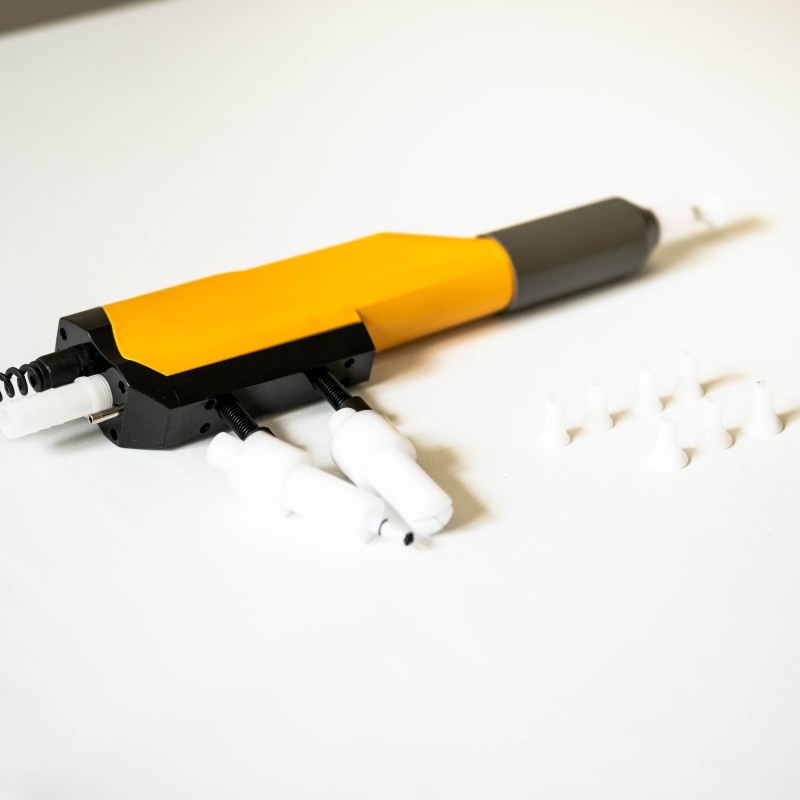
Peran Kritis dari Pistol semprot pelapis bubuk dalam Pencegahan Cacat
Tegangan, Arus, dan Jarak: Pengendalian Presisi untuk Deposisi Seragam
Tegangan (biasanya 40–100 kV), arus (dalam kisaran mikroampere), dan jarak semprot (15–30 cm) secara langsung mengatur daya tarik elektrostatik, kecepatan partikel, serta penyebaran awan cat. Mengoptimalkan parameter-parameter ini mencegah terbentuknya lapisan tidak merata—penyebab utama efek kulit jeruk—dan mengurangi efek sangkar Faraday dengan menyeimbangkan saturasi tepi dan penetrasi ke area cekung. Tegangan yang tidak memadai melemahkan daya lekat di rongga-rongga; arus berlebih mempercepat akumulasi muatan di tepi, sehingga memperparah kolaps medan listrik. Jarak konsisten sebesar 20–30 cm memaksimalkan efisiensi transfer (60–80%) sekaligus mendukung cakupan melingkar (wrap-around) pada geometri tajam. Penelitian menunjukkan bahwa penyesuaian presisi waktu pemicuan hanya sebesar 0,5 detik mampu mengurangi limbah semprot berlebih sebesar 18% serta meningkatkan konsistensi ketebalan lapisan hingga dalam rentang ±2 μm.
Teknologi Pistol Canggih: Modulasi Lebar Pulsa dan Sistem Muatan Ganda
Pistol semprot pelapis bubuk modern menggunakan modulasi lebar pulsa (PWM) untuk menyesuaikan secara dinamis keluaran tegangan dalam interval 10 milidetik—mengimbangi kolaps medan elektrostatik di area cekung dan mengurangi cacat kandang Faraday hingga 70% (Studi Efisiensi Pelapisan, 2022). Sistem pengisian ganda memancarkan ion positif dan negatif secara bersamaan: ion positif meningkatkan adhesi permukaan, sedangkan ion negatif secara aktif menembus zona medan rendah seperti rongga dalam. Pendekatan bipolar ini mencapai efisiensi transfer pertama kali sebesar 95% pada komponen yang sangat kompleks. Ketika dipasangkan dengan sensor pemetaan medan elektrostatik, teknologi-teknologi ini secara otomatis mengkompensasi distorsi medan akibat geometri—menghilangkan kebutuhan kalibrasi ulang manual serta menstabilkan deposisi pada berbagai keluarga komponen.
Strategi Proses Terintegrasi untuk Mitigasi Cacat Secara Bersamaan
Mengatasi tekstur kulit jeruk dan efek sangkar Faraday memerlukan pendekatan terpadu di mana kemampuan peralatan, perilaku material, dan pengendalian lingkungan saling bersinergi. Mulailah dengan Pengendalian Proses Statistik (SPC) untuk memantau metrik secara real-time—termasuk tegangan pistol (target: 60–90 kV), efisiensi transfer (70%), dan ketebalan lapisan akhir (60–80 μm). Sebuah studi Institut Finishing tahun 2023 menemukan bahwa penerapan SPC mengurangi kejadian ulang tekstur kulit jeruk sebesar 92%, terutama melalui pengendalian yang lebih ketat terhadap viskositas leleh resin dan kinetika pengeringan. Lengkapi pendekatan ini dengan Desain Eksperimen (DOE) untuk mengoptimalkan pengaturan secara sistematis pada geometri yang menantang: modulasi lebar pulsa (PWM) yang dapat disesuaikan meningkatkan cakupan area cekung sebesar 47%, sementara pengurangan waktu tinggal dalam oven meminimalkan gelasi dini dan gangguan aliran. Terakhir, validasi kecepatan aliran udara kontinu di dalam ruang semprot pada kisaran 0,3–0,5 m/detik untuk menekan kontaminasi partikulat udara selama proses aplikasi. Secara bersama-sama, strategi-strategi ini menggeser manajemen cacat dari koreksi reaktif menjadi keunggulan proses prediktif dan dapat diulang—meningkatkan hasil yield pertama kali dan memperkuat keandalan operasional.
Pertanyaan yang Sering Diajukan
Apa penyebab utama munculnya tekstur kulit jeruk (orange peel) pada pelapisan bubuk?
Tekstur kulit jeruk (orange peel) terutama disebabkan oleh interaksi antara viskositas lelehan, ketidakseragaman ketebalan lapisan, dan profil termal yang tidak optimal selama proses pelapisan.
Bagaimana efek sangkar Faraday memengaruhi pelapisan bubuk?
Efek sangkar Faraday menyebabkan akumulasi muatan elektrostatik di tepi-tepi komponen, menciptakan penghalang yang menolak partikel bubuk sehingga menghasilkan area lapisan tipis atau tanpa lapisan (bare spots) di bagian cekung.
Bagaimana teknologi pistol pelapis canggih dapat membantu mengurangi cacat?
Teknologi pistol pelapis canggih seperti modulasi lebar pulsa (pulse width modulation) dan sistem muatan ganda (dual-charge systems) secara dinamis menyesuaikan tegangan serta memancarkan ion untuk mengatasi cacat seperti efek sangkar Faraday serta meningkatkan efisiensi transfer.
Strategi apa saja yang dapat digunakan untuk mitigasi cacat dalam pelapisan bubuk?
Strategi terintegrasi yang melibatkan Pengendalian Proses Statistik (Statistical Process Control), Perancangan Eksperimen (Design of Experiments), dan pengendalian lingkungan terbukti efektif dalam mengurangi cacat seperti tekstur kulit jeruk (orange peel) dan efek sangkar Faraday.
Daftar Isi
- Akar Masalah Cacat Orange Peel dan Faraday Cage
- Peran Kritis dari Pistol semprot pelapis bubuk dalam Pencegahan Cacat
- Strategi Proses Terintegrasi untuk Mitigasi Cacat Secara Bersamaan
-
Pertanyaan yang Sering Diajukan
- Apa penyebab utama munculnya tekstur kulit jeruk (orange peel) pada pelapisan bubuk?
- Bagaimana efek sangkar Faraday memengaruhi pelapisan bubuk?
- Bagaimana teknologi pistol pelapis canggih dapat membantu mengurangi cacat?
- Strategi apa saja yang dapat digunakan untuk mitigasi cacat dalam pelapisan bubuk?