
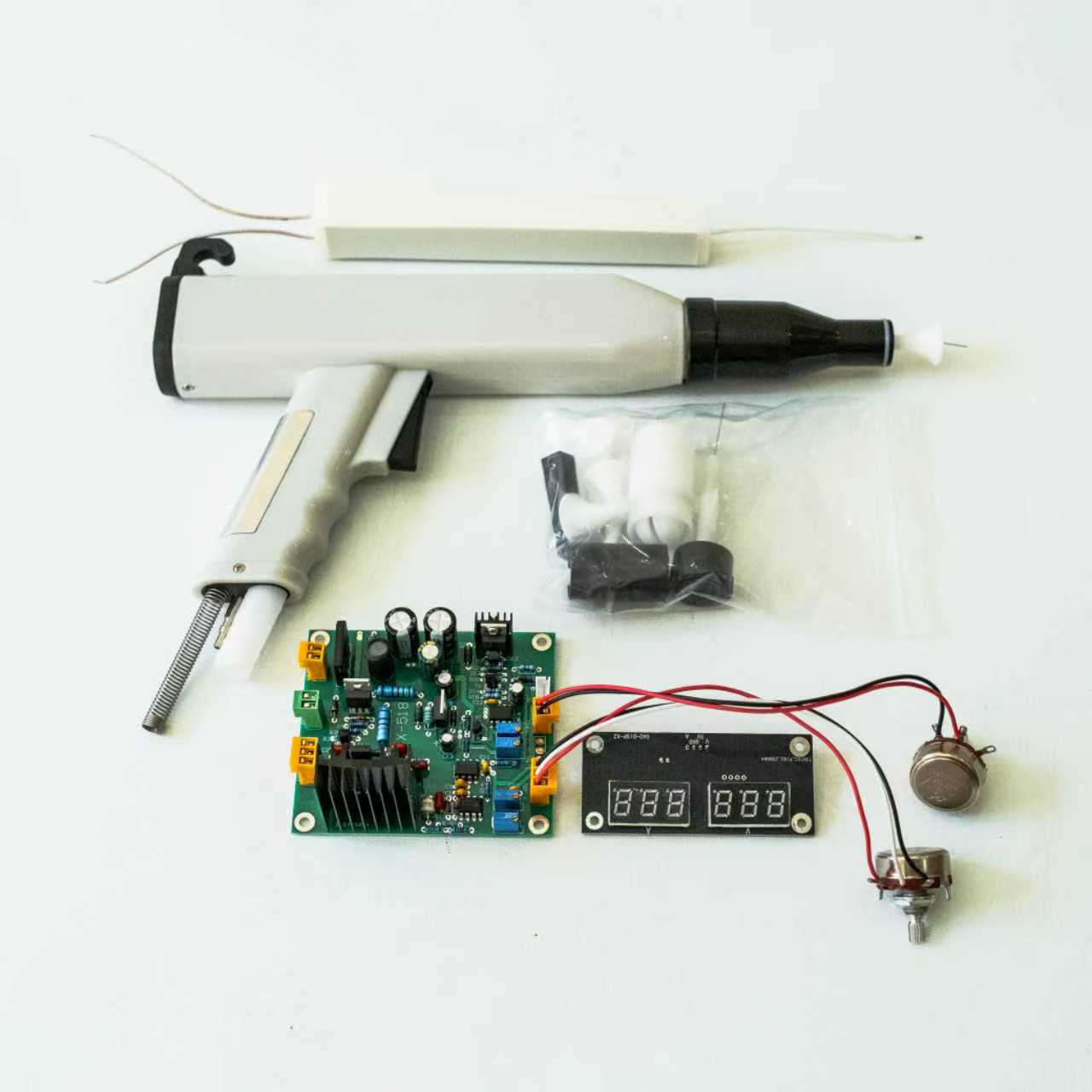
The latest innovations in powder coating spray gun design focus on making application more controlled, repeatable, and adaptable to changing production needs. Rather than changing the basic electrostatic process, newer designs refine how powder is delivered, charged, and adjusted. For production teams, a powder coating spray gun is increasingly a connected part of the coating system, not simply a handheld applicator.

These changes matter because finish consistency depends on more than voltage or operator technique. A modern powder coating spray gun must work within a coordinated setup that includes powder feed, air supply, grounding, booth airflow, and part geometry. Understanding the design developments helps engineers and coating managers assess which features solve real process issues and which require supporting equipment or operator training.
Electrostatic charging and control advances
More deliberate charge adjustment
Electrostatic charging remains central to a powder coating spray gun, but control interfaces are becoming more precise and accessible. Operators can adjust output to suit part shape, powder behavior, and the distance between the gun and the workpiece. That flexibility can support a stable application, provided settings are selected through process trials rather than treated as universal presets.
Newer designs also make it easier to understand the relationship between charge and powder flow. A powder coating spray gun with clearly presented controls can help operators repeat a validated recipe across shifts, reducing reliance on memory. The practical innovation is not just a digital display; it is the ability to connect an adjustment to an observable coating result and document the setting used.
High-voltage modules built for system integration
Compact high-voltage modules are another design development, especially in automatic installations where space, cable routing, and service access matter. Integrating the power component with a powder coating spray gun can simplify equipment layout, but system designers still need to consider insulation, grounding, environmental conditions, and safe maintenance procedures.
Module design influences how reliably the gun can maintain its intended charging behavior. When evaluating a powder coating spray gun, teams should check compatibility with the controller, cable arrangement, and operating duty. Clear service documentation and accessible connections can make a more meaningful difference to uptime than compactness alone.
Powder delivery and application consistency
Airflow and powder-flow coordination
Design improvements increasingly address the interaction between conveying air, atomizing air, and powder feed. A powder coating spray gun must deliver a cloud that is stable enough for the target part without disturbing the coating already deposited. Better adjustment ranges and more consistent internal passages can help operators tune that balance for different powders and production speeds.
The benefit depends on the complete feed system. A powder coating spray gun cannot compensate for damp powder, an obstructed hose, inconsistent fluidization, or fluctuating compressed air. For that reason, process teams should evaluate delivery features alongside hose length, pump performance, powder condition, and routine cleaning. Controlled trials on representative parts reveal whether a design change improves coverage or transfer in the actual line.
Nozzle options for complex part geometry
Nozzle design continues to evolve to manage different coating patterns, access angles, and part shapes. A powder coating spray gun may use a different nozzle arrangement to reach recesses or produce a wider pattern on larger surfaces. Selecting a nozzle involves balancing coverage with overspray, edge build, and the risk of uneven deposition on corners or deep cavities.
Quick-change arrangements can make trials and product changeovers more manageable, but operators still need to use a consistent setup procedure. Record the powder, nozzle, distance, and relevant settings when validating a powder coating spray gun for a part family. That practical record helps distinguish a genuine design advantage from variation caused by setup or operator technique.
Ergonomics, diagnostics, and maintenance
Operator-focused handling and feedback
Ergonomic refinements aim to make a powder coating spray gun easier to handle during repeated passes and long shifts. Grip shape, trigger feel, balance, and cable flexibility can affect operator control, particularly when coating large assemblies or working around awkward edges. A comfortable design does not replace training, but it can support consistent movement and reduce avoidable handling strain.
Controls are also being arranged to provide useful feedback without distracting from the work. Depending on the system, a powder coating spray gun may give operators more direct access to recipes or operating information. The useful question is whether feedback helps identify a setting change, a feed issue, or a maintenance need quickly enough to support the line’s actual workflow.
Serviceability and practical diagnostics
Easier access to wear components and powder-contact surfaces is a significant design priority. A powder coating spray gun that can be inspected and cleaned efficiently may help teams carry out planned maintenance more consistently. Design teams should consider how easily operators can remove nozzles, clear passages, and inspect connections using approved procedures and suitable protective measures.
Diagnostics are most useful when they point toward a checkable cause rather than simply displaying an alert. For a powder coating spray gun, useful troubleshooting guidance may direct attention to air supply, grounding, charging components, or powder delivery. Maintenance records, operator observations, and test panels together provide a stronger basis for corrective action than an indicator viewed in isolation.
FAQ
What is the most important recent design improvement?
There is no single improvement that suits every line. For many users, a powder coating spray gun with clearer adjustment and dependable powder delivery is valuable because it supports repeatable setup. The right priority depends on whether the main challenge is complex geometry, frequent changeovers, operator handling, or maintenance access.
Do newer controls guarantee a more consistent finish?
No. A powder coating spray gun with advanced controls can help operators repeat settings, but finish quality also depends on grounding, powder condition, part preparation, airflow, and application technique. Validate settings with production-representative parts and maintain a documented process before assuming a control feature will resolve variation.
How should a plant assess a new gun design?
Compare the proposed powder coating spray gun with the process requirements, not with feature count alone. Trial it on representative parts, verify system compatibility, and assess cleaning, service access, operator training, and repeatability. Record results under controlled conditions so the decision reflects production needs rather than a brief demonstration.