
Why High Voltage Modules Demand Predictive—Not Preventive—Maintenance
High voltage modules face unique failure risks—insulation degradation, partial discharge, and thermal runaway—where traditional preventive maintenance consistently underperforms. Preventive approaches rely on fixed schedules, replacing components after arbitrary time intervals regardless of actual condition. This wastes resources: 30% of preventive maintenance spend is unnecessary (Ponemon 2023), while latent defects still trigger unplanned failures. Predictive maintenance, by contrast, leverages IoT sensors to monitor real-time parameters—temperature, vibration, and current anomalies—enabling intervention only when data signals imminent failure. It reduces downtime by 45% and cuts maintenance costs by 25% versus calendar-based methods. For high-voltage assets, where unplanned outages cost over $740k/hour (Ponemon 2023), shifting from time-based to condition-based upkeep isn’t optional—it’s essential for reliability, safety, and lifecycle optimization.
Core IoT Sensor Modalities for High Voltage Module Health Monitoring
Temperature Sensing: Detecting Thermal Runaway and Insulation Degradation
Embedded infrared and thermistor-based sensors continuously track localized temperature profiles across windings, bushings, and terminations. Sustained temperatures above 65°C correlate strongly with accelerated insulation aging and are an early indicator of thermal runaway—a self-sustaining heat cascade responsible for 23% of transformer failures (NERC 2023). Real-time detection enables proactive load shedding or cooling adjustments, reducing unplanned downtime by up to 40% compared to periodic manual inspections.
Vibration Analysis: Identifying Bearing Fatigue and Mechanical Looseness
Triaxial accelerometers capture high-frequency mechanical signatures in rotating or resonant components—such as cooling fans, oil pumps, or grounded hardware. Frequency-domain analysis isolates fault frequencies linked to bearing wear, misalignment, or loose mounting bolts. Amplitudes exceeding 7 mm/s at characteristic bearing defect frequencies reliably indicate advanced fatigue, allowing interventions 8–12 weeks before failure. This extends mechanical asset life by 3–5 years and prevents cascading damage to adjacent insulation systems.
AC Current Monitoring: Spotting Partial Discharge and Load Imbalance
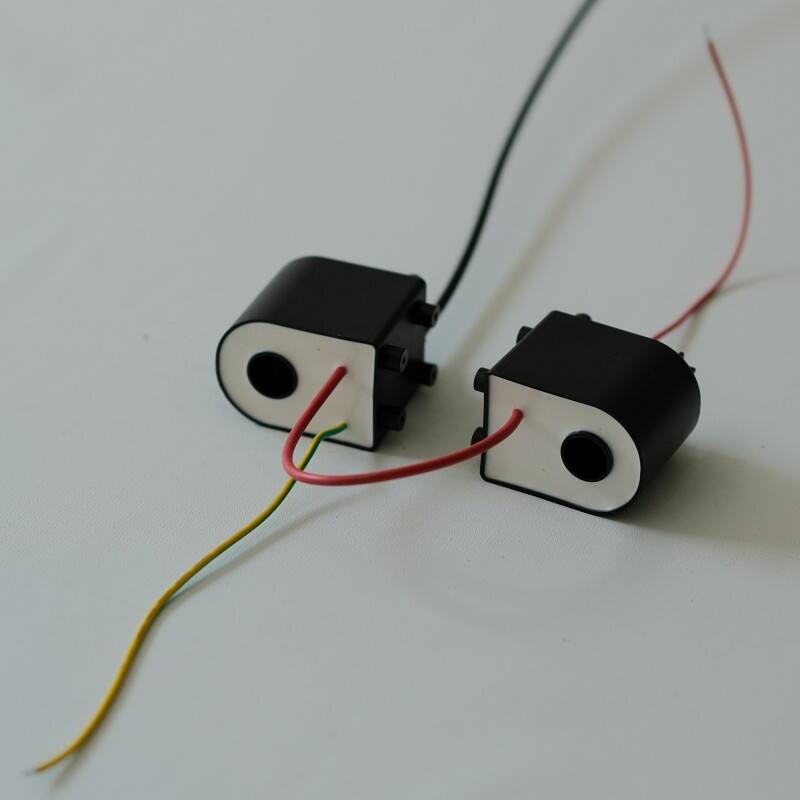
Current transformers and Rogowski coils deliver high-fidelity, phase-resolved current waveforms. Machine learning–enhanced analytics detect sub-cycle anomalies—including partial discharge pulses (<5 pC) and harmonic distortions—that erode solid or oil-impregnated insulation over time. Early PD detection mitigates arc flash risk—the average incident cost of which is $740k (Ponemon 2023). Continuous monitoring also reveals persistent load imbalances that accelerate conductor heating and joint degradation.
| Sensor Modality | Failure Mode Detected | Detection Threshold | Impact Mitigated |
|---|---|---|---|
| Temperature | Thermal runaway | 65°C sustained | Insulation breakdown |
| Vibration | Bearing fatigue | 7 mm/s amplitude | Mechanical seizure |
| AC Current | Partial discharge (PD) | 5 pC charge pulses | Arc flash explosions |
From Raw Data to Decision: AI-Driven Failure Prediction for High Voltage Modules
Edge-to-Cloud Analytics: Real-Time Anomaly Detection and RUL Estimation
AI transforms sensor data into predictive insight through a coordinated edge-to-cloud architecture. At the edge, resource-efficient models perform low-latency anomaly detection—flagging sudden temperature spikes, vibration bursts, or PD pulse trains within milliseconds. Only validated, compressed event data flows to secure cloud platforms, where ensemble ML models cross-correlate multi-sensor streams with historical failure records, environmental context, and manufacturer specifications. These models identify subtle, non-linear precursors—like rising PD repetition rates amid stable temperature—to estimate Remaining Useful Life (RUL) for critical components such as SF₆ circuit breakers or epoxy-insulated bushings. A 2023 industry study found AI-driven RUL forecasting reduced unplanned outages by 41% in high-voltage substations, enabling precise, minimal-disruption maintenance scheduling and extending equipment service life by up to 20%.
FAQ
Why is predictive maintenance superior to preventive maintenance for high voltage modules?
Predictive maintenance uses IoT sensors to monitor real-time parameters, enabling interventions based on actual conditions rather than arbitrary schedules. This approach reduces downtime and costs while improving reliability and asset lifespan.
What sensors are commonly used in predictive maintenance for high voltage modules?
Key sensors include temperature sensors (infrared and thermistor-based), triaxial accelerometers for vibration analysis, and current transformers or Rogowski coils for monitoring AC current anomalies.
How does AI assist in maintaining high voltage modules?
AI-driven models analyze sensor data to detect anomalies, predict failures, and estimate the Remaining Useful Life (RUL) of critical components, enabling precise and timely maintenance actions.
What are the cost savings of predictive maintenance compared to preventive maintenance?
Predictive maintenance can reduce downtime by 45% and maintenance costs by 25% compared to calendar-based methods.
Is predictive maintenance widely adopted in the industry?
While adoption is increasing, especially for high-value assets like high voltage modules, some companies still rely on traditional preventive maintenance strategies despite the proven benefits of predictive maintenance.