
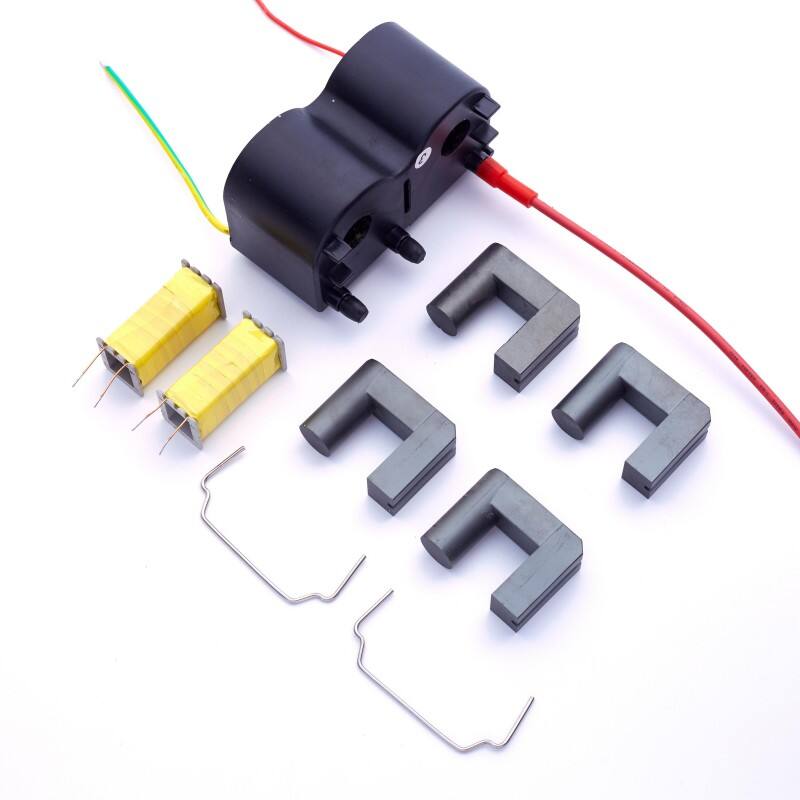
Ferrit Çekirdekler Flyback transformatörleri : Performans ve Sınırlamalar
Geçirgenlik, doyum manyetik akı yoğunluğu (Bsat) ve 100–500 kHz aralığındaki termal kararlılık
Ferrit çekirdekler, yüksek geçirgenlikleriyle (genellikle 2.000–5.000) yüksek frekanslarda kompakt boyut ve verimli enerji aktarımını sağlayan flyback transformatör tasarımlarında hakim konumdadır. Bu durum, gerekli manyetize edici endüktansı azaltır ve sarım tasarımını kolaylaştırır. Ancak doyuma ulaşma manyetik akı yoğunlukları (Bsat) 0,3–0,5 T ile sınırlıdır; bu da tepe akım taşıma kapasitesini kısıtlar ve geçici yükler altında erken doyum riskini artırır. Isıl kararlılıkları 150 °C’ye kadar sağlam kalırken, 300 kHz üzerindeki frekanslarda kalan akımların artması ve sıcaklıkla birlikte direncin azalması nedeniyle çekirdek kayıpları önemli ölçüde yükselir. 500 kHz’te verim, 100 kHz’teki çalışmaya kıyasla %5–%10 oranında düşebilir; bu durum, yüksek yoğunluklu güç kaynaklarında dikkatli bir ısı yönetimi gerektiren bir uzlaşma durumudur.
DCM çalışması altında çekirdek kaybı davranışı ve verim uzlaşmaları
Kesintili iletim modunda (DCM), ferrit çekirdekler, histerezis ve örtük akımlar kaynaklı belirgin çekirdek kaybı (Pcv) ile karşılaşırlar—bu kayıplar frekansla neredeyse karesel olarak artar. 100 kHz ile 300 kHz aralığında Pcv genellikle iki katına çıkar ve orta-ile yüksek güçteki geri beslemeli (flyback) tasarımarda toplam sistem verimini %8–12 oranında düşürür. Bu durum pratik bir uzlaşmayı zorunlu kılar: Daha düşük frekanslar termal performansı iyileştirir ancak daha büyük çekirdekler ve daha fazla bakır sarım gerektirir; daha yüksek frekanslar manyetik bileşenlerin boyutlarını küçültür ancak soğutma gereksinimlerini artırır. Optimize edilmiş aralık ayarı (gapping) ve ara sargılı (interleaved) sarımlar kayıpları azaltmaya yardımcı olsa da, DCM’de doğasından gelen sıfır akım anahtarlama (ZCS), çekirdek uyarım stresini CCM’e göre hâlâ artırır. Özellikle 300 kHz’in üzerinde miniyatürleştirilmeden ziyade güvenilirlik öncelikli olan uygulamalar için ferrit, en tahmin edilebilir ve üretimi en kolay malzemedir.
Geribeslemeli (Flyback) Transformatörler İçin Nanokristalin Çekirdekler: Avantajlar ve İşletimsel Sınırlar
Aşırı yüksek Bs<sub>sat</sub> değeri (1,2–1,3 T) ve 200 kHz altındaki minimum çekirdek kaybı
Nanokristalin çekirdekler, öncelikle standart Mn-Zn ferritlerin yaklaşık üç katı olan 1,2–1,3 T'lik olağanüstü doygunluk akı yoğunluğu (Bsat) sayesinde, orta frekanslı flyback tasarımlarında dönüştürücü bir performans sunar. Bu, daha az sarım ve %50'ye kadar daha küçük çekirdek hacmiyle eşdeğer güç aktarımına olanak tanıyarak, ultra kompakt, yüksek güç yoğunluklu dönüştürücüleri doğrudan destekler. 200 kHz'in altında, nanokristalin, amorf bir matrise gömülü nano ölçekli tane yapısı (<100 nm) sayesinde ultra düşük çekirdek kayıpları (<50 kW/m³ 100 kHz'de) sergiler; bu da alan duvarı hareketini bastırır ve histerezisi ve girdap akımı dağılımını en aza indirir. Termal boşluğun dar olduğu DCM topolojilerinde bu, ölçülebilir verimlilik kazanımlarına ve aktif soğutmaya olan bağımlılığın azalmasına dönüşür.
Frekans tavanı, kırılganlık ve sarım uyumluluğu zorlukları
Nanokristalin çekirdekler, 200 kHz’yi aşan frekanslarda işlevsel olarak sınırlıdır: cilt etkisi sınırlamaları ve domain duvarı rezonansı, çekirdek kayıplarının üstel olarak artmasına neden olur ve bu da onları güvenilir megahertz sınıfı çalışma için uygun hale getirmez. Mekanik kırılganlıkları—%0,3’ü aşan gerilim altında kırılma eğilimi göstermeleri—koruyucu kaplama gerektirir ve montaj sırasında elle tutulmalarını imkânsız kılar. Sarım işlemi de ek zorluklar yaratır: yüzey pürüzlülüğü, yalıtım aşınma riskini artırır; bu nedenle düşük gerilimli sarım teknikleri ve özel bobin geometrileri gereklidir. Isıl genleşme uyumsuzluğu (nanokristalin: ~7 ppm/°C karşılaştırıldığında bakır: 17 ppm/°C), tekrarlayan termal çevrimler altında uzun vadeli güvenilirliği daha da zorlaştırır. Bu faktörler üretim karmaşıklığını ve nitelendirme çabasını artırır; dolayısıyla nanokristalin, manyetik avantajlarının üretim ve dayanıklılık açısından yapılan uzlaşmalardan açıkça üstün olduğu uygulamalara en uygun seçenektir.
Doğrudan Karşılaştırma: Flyback Trafo Tasarımı İçin Ferrit Karşılaştırması ile Nanokristalin
Doyma marjı, boyut küçültme potansiyeli ve DCM/CCM tasarım sonuçları
Nanokristalinin Bsatt değeri 1,2–1,3 T aralığındadır ve bu değer, ferritin 0,3–0,5 T’lik Bsatt değerine kıyasla belirleyici bir avantaj sağlar; bu da alt-200 kHz tasarımında çekirdek kesit alanının %50’ye varan oranda küçülmesini ve primer sarım sayısının %20–30 oranında azalmasını mümkün kılar. Bu nedenle nanokristalin, yüksek geçici akım dayanımı ve doyuma direnç gerektiren, yer kısıtlı ve sürekli iletim modu (CCM) çalışan geri beslemeli dönüştürücüler (flyback) için idealdir. Buna karşılık, ferrit 200 kHz’in üzerinde açık üstünlüğünü korur: sabit geçirgenliği ve yönetilebilir kayıpları, güvenilir şekilde 1 MHz’e kadar uzanır ve hızlı sıfırlama ve öngörülebilir kayıp davranışı sayesinde termal tasarımı kolaylaştıran yüksek frekanslı DCM (kesintili iletim modu) çalışmasını destekler. Mühendisler, çekirdek malzemesi seçerken kararlarını yalnızca tepe gücü değil, hedef frekans ve iletim modu temelinde vermelidir. Nanokristalin, 200 kHz’in altında çalışan, kompakt ve termal olarak hassas CCM sistemlerinde üstün performans gösterir; ferrit ise 300 kHz DCM veya maliyet duyarlı, yüksek hacimli platformlar için pratik standart olarak kalmaya devam eder.
Anahtarlamalı frekans aralığı 100 kHz–1 MHz için çekirdek kaybı (Pcv) ve sıcaklık artışı
Çekirdek kaybı sapması, malzemeler arasındaki çalışma sınırını tanımlar. 200 kHz altındaki frekanslarda nanokristalin kaybı <50 kW/m³ değerindedir; bu da eşdeğer derecelendirilmiş ferrit çekirdeklerine kıyasla sıcaklık artışını 20–30 °C azaltır. 200–500 kHz aralığında kayıplar birbirine yaklaşır; çünkü bu aralıkta nanokristalin performansı hızla düşerken ferrit kararlılığını korur. 500 kHz’de ferritin Pcv değeri yaklaşık 300 kW/m³ civarındadır ve iyi havalandırılmış tasarımlar için hâlâ güvenli termal sınırlar içinde kalır. 500 kHz’in üzerindeki frekanslarda ferritin üstün yüksek frekans kararlılığı, nanokristaline kıyasla sıcaklık artışını %30–40 oranında azaltır; bu da sıkıştırılmış paketlemeye sahip ve megahertz seviyesinde anahtarlamaya çalışan flyback dönüştürücülerde termal kaçak olayını önler. Bu belirgin termal bölgelendirme, nanokristalinin yalnızca optimal frekans bandında soğutma gereksinimlerini en aza indirebileceğini gösterir; bu bandın dışında ise ferritin dengeli kayıp-frekans profili, sürdürülebilir ve tekrarlanabilir performans sağlar.
Flyback Dönüşümü İçin Çekirdek Malzemesi Seçimine Yönelik Uygulamalı Çerçeve
Ferrit ile nanokristalin arasında seçim yapmak, dört birbirine bağlı parametreyi değerlendirmeyi gerektirir: çalışma frekansı, güç seviyesi, termal bütçe ve maliyet duyarlılığı. Malzeme seçiminizi uygulama önceliklerinizle uyumlandırmak için bu karar çerçevesini kullanın:
- Frekans aralığı 200 kHz altı kararlı çalışma için nanokristalin malzeme seçin; 200 kHz için ferrit kullanın, özellikle nanokristalin kayıplarının keskin bir şekilde arttığı 300 kHz ve üzeri frekans aralıklarında
- Güç Taşıma ve Boyut : Nanokristalin, çekirdek boyutlarında %50’ye varan azalmayı ve 200 W altında %20–30’luk boyut küçülmesini sağlar—bu, devre kartı alanı kritik öneme sahip olduğunda ve frekans bunu izin verdiğinde büyük avantaj sağlar
- Soğutma Kısıtlamaları : Nanokristalin’in düşük kayıpları, 200 kHz altındaki ısı atma gereksinimlerini azaltır; ferritin daha düşük termal iletkenliği (3–5 W/mK, nanokristalin’in yaklaşık 80 W/mK’sine kıyasla), 100 °C üzeri sıcaklıklarda ek ısı dağıtımını gerektirebilir—ancak yüksek frekanstaki daha iyi kararlılığı bu dezavantajı genellikle telafi eder
- Maliyeti Etkileyen Faktörler nanokristalin, standart ferritin 3–5 katı kadar daha pahalıdır; bu nedenle ferrit, tüketici sınıfı, yüksek hacimli veya maliyet odaklı uygulamalar için varsayılan seçenektir.
Hakemli güç elektroniği literatüründe doğrulanmış olarak, bu çerçeveyi uygulamak prototipleme yinelemelerini %40’a kadar azaltmaktadır. Endüstriyel kapı sürücüleri veya tıbbi yardımcı güç kaynakları gibi 200 kHz altı frekansta çalışan, boyut ve termal sınırlamaları sıkı olan flyback transformatörleri için nanokristalin teknik avantajları dikkat çekicidir. iF üretim kontrolleri ve termal güvenlik önlemleri titizlikle uygulanır.
SSS
Flyback transformatörlerinde ferrit çekirdeklerin ana avantajları nelerdir?
Ferrit çekirdekler, yüksek frekanslarda kompakt boyut ve verimli enerji aktarımını sağlayan yüksek geçirgenliğe sahiptir; ancak doyuma ulaşma manyetik akı yoğunluğu sınırlı olup, 300 kHz üzerinde çekirdek kayıpları artar.
Birisi ferrit çekirdekler yerine nanokristalin çekirdekleri neden tercih eder?
Nanokristalin çekirdekler, özellikle 200 kHz altındaki frekanslarda daha küçük ve daha verimli tasarımlara olanak tanıyacak şekilde daha yüksek doygunluk manyetik akı yoğunluğu sağlar; ancak bunlar daha maliyetli olabilir ve üretimde zorluklara neden olabilir.
Frekans ve çalışma modu, ferrit ile nanokristalin çekirdekler arasında seçim yaparken nasıl bir etki yaratır?
Yüksek frekanslarda kararlılığı ve daha düşük çekirdek kaybı nedeniyle ferrit, 200 kHz üzerindeki frekanslar için tercih edilir; buna karşılık nanokristalin çekirdekler, boyut küçültülmesi ve düşük kayıpların öncelikli olduğu 200 kHz altındaki uygulamalar için idealdir.
Nanokristalin çekirdeklerin kullanımının dezavantajları nelerdir?
Nanokristalin çekirdekler mekanik gerilim altında kırılgan hâle gelebilir ve daha yüksek maliyete sahiptir; ayrıca 200 kHz üzerinde çalıştırıldıklarında artan çekirdek kaybı nedeniyle sorunlar ortaya çıkabilir.
İçindekiler Tablosu
- Ferrit Çekirdekler Flyback transformatörleri : Performans ve Sınırlamalar
- Geribeslemeli (Flyback) Transformatörler İçin Nanokristalin Çekirdekler: Avantajlar ve İşletimsel Sınırlar
- Doğrudan Karşılaştırma: Flyback Trafo Tasarımı İçin Ferrit Karşılaştırması ile Nanokristalin
- Flyback Dönüşümü İçin Çekirdek Malzemesi Seçimine Yönelik Uygulamalı Çerçeve
- SSS